


Screening Bucket vs. Rotary Screening Bucket: What Are the Differences?
Release time: 2026-09-03
Choosing between a screening bucket and a rotary screening bucket can affect material processing efficiency, equipment compatibility, and operating costs. Although both attachments are designed to separate materials by size, they differ in screening mechanisms, material handling, and suitable working conditions. Understanding these differences helps contractors and equipment buyers select the right attachment for soil screening, construction waste recycling, landscaping, and other applications.
1. How Do Screening Buckets and Rotary Screening Buckets Work Differently?
The main difference lies in their screening mechanisms.
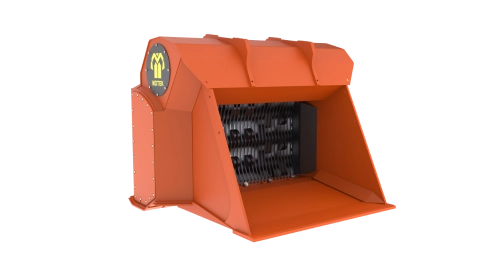
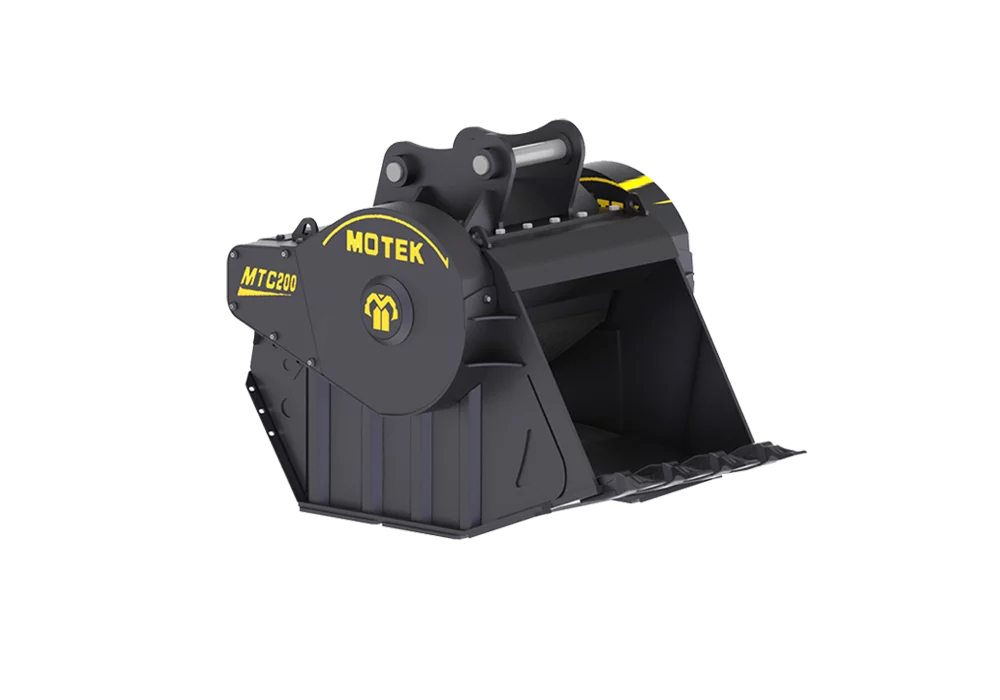
A conventional screening bucket typically uses a fixed or vibrating screening structure, depending on the model, to separate finer materials from larger particles. Material passes through openings as the excavator moves, tilts, or agitates the bucket.
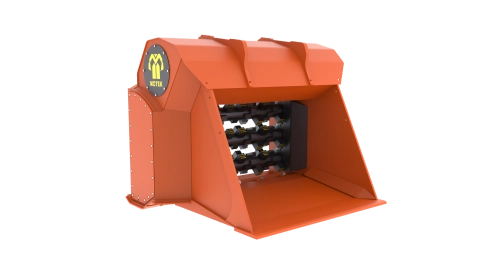
A rotary screening bucket uses rotating drums, shafts, or other rotating screening components, depending on the design. The rotational movement helps loosen, agitate, and separate materials as they move through the screening area.
Because screening buckets cover several different designs, buyers should confirm the actual mechanism of each model rather than assuming that every conventional screening bucket operates in the same way.
2. Which Bucket Offers Better Screening Efficiency?
Screening efficiency depends on the material, screen opening size, moisture content, feed rate, and attachment design.
| Comparison Factor | Conventional Screening Bucket | Rotary Screening Bucket |
|---|---|---|
| Screening mechanism | Fixed or model-dependent screening structure | Rotating screening components |
| Material movement | Depends on excavator movement and bucket design | Driven by the rotating mechanism |
| Material separation | Suitable for general size separation | Suitable for applications requiring controlled material agitation |
| Wet or sticky materials | Performance depends on design and clogging risk | May help loosen material, but clogging can still occur |
| Maintenance | Depends on structural design and wear components | May require inspection of rotating components and drive systems |
| Best-fit applications | General soil screening and material sorting | Soil processing, compost handling, and selected recycling applications |
A rotary screening bucket is not automatically more productive in every situation. Buyers should compare actual throughput, separation quality, energy requirements, and maintenance costs under similar working conditions.
3. Which Materials Are Suitable for Each Type of Bucket?
Both types can be used for soil and aggregate screening, but the most suitable attachment depends on the material’s properties.
- Soil and topsoil: Both types may be suitable. The required final particle size and soil moisture should guide the selection.
- Stones and aggregates: Check the screen opening size, wear resistance, and the maximum particle size that the attachment can handle.
- Compost and organic materials: A rotary screening bucket may be suitable when controlled agitation helps separate coarse and fine organic matter.
- Construction and demolition materials: Evaluate material composition, contamination, impact loads, and the attachment’s structural limitations.
- Wet or clay-rich materials: Request application-specific performance information because both designs can experience screen blockage under difficult conditions.
4. Which Excavator Attachment Is Easier to Operate and Maintain?
Both attachments require compatibility with the excavator’s operating weight, mounting interface, and permitted attachment load. Hydraulic requirements depend on the specific model.
Conventional screening buckets may have a relatively straightforward structure, although maintenance requirements vary by design. Rotary screening buckets may include additional rotating components, drive mechanisms, bearings, or hydraulic parts that require regular inspection.
Before purchasing, confirm the required hydraulic flow and pressure, auxiliary circuit configuration, wear-part availability, cleaning procedures, and recommended maintenance intervals. A suitable attachment should fit both the excavator and the site’s daily operating conditions.
5. How Should Buyers Choose Between a Screening Bucket and a Rotary Screening Bucket?
The right choice starts with the intended application rather than the product name.
Choose a conventional screening bucket when general material separation meets the project’s requirements and the selected design provides sufficient screening performance.
Consider a rotary screening bucket when the material benefits from rotational agitation and the required separation performance can be achieved with the available configuration.
Before making a decision, compare these five factors:
- Target material and moisture content.
- Required screen opening size and separation quality.
- Expected hourly or daily throughput.
- Excavator hydraulic specifications and attachment compatibility.
- Purchase price, maintenance requirements, and total operating cost.
The difference between a screening bucket and a rotary screening bucket is primarily related to their screening mechanisms and material-handling characteristics. A conventional screening bucket may be sufficient for general separation tasks, while a rotary screening bucket can be worth considering for applications that benefit from rotating material agitation. Neither option is universally better; the most appropriate choice depends on material properties, screening requirements, machine compatibility, and operating costs.
MOTEK provides excavator attachment solutions with OEM/ODM customization based on customer requirements and actual working conditions. Contact MOTEK with your excavator model, target materials, and screening requirements to discuss a suitable configuration for your project.
Author

Gershon Zhou
MOTEK R&D Director With 18 years of focused experience in the construction machinery attachment industry. As a National Certified Senior Engineer, he is a well-recognized technical leader in the field of earthmoving machine attachments.
