

How to Select a Soil Improvement Equipment Supplier Based on Different Soil Conditions
Release time: 2026-08-24
Soil improvement equipment involves more than simply using a mixer or stabilization equipment. Soil across different projects can vary significantly in terms of moisture content, particle composition, compaction levels, plasticity, load-bearing capacity, and contamination status. Soft clay requires enhanced load-bearing capacity; high-moisture silt needs solidification; compacted or hard soils require initial breaking and loosening; and soil containing stones or construction debris requires screening, grading, and re-mixing.
Therefore, the value provided by soil improvement equipment suppliers lies not merely in supplying standardized machinery, but in helping clients select the appropriate screening, crushing, mixing, and stabilization equipment—and formulating actionable on-site treatment plans—based on factors such as soil conditions, treatment depth, project area, type of soil amendment, and final strength requirements.
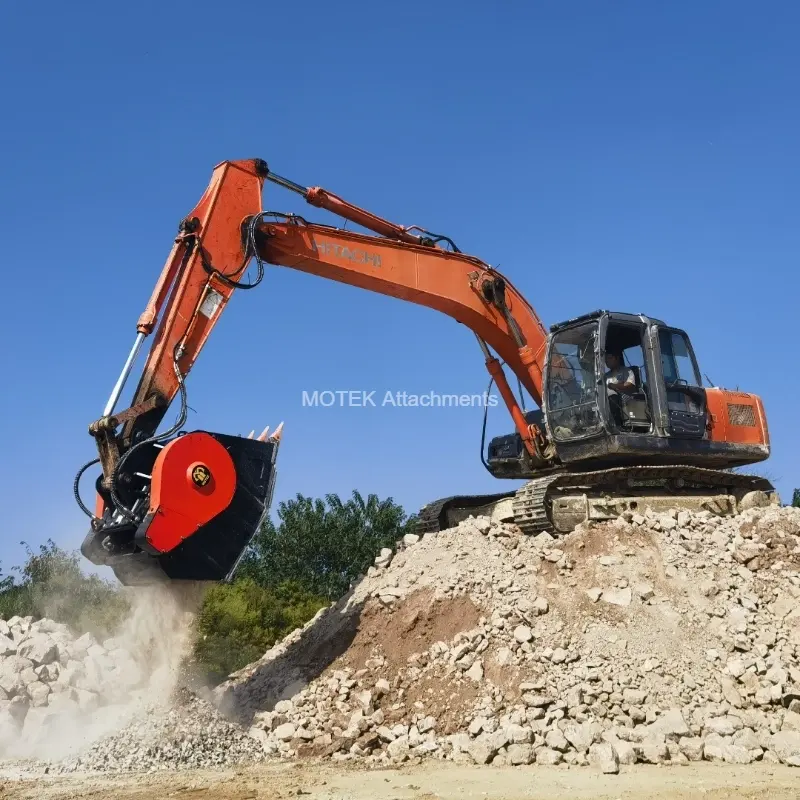
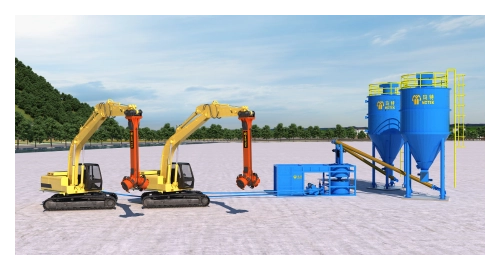
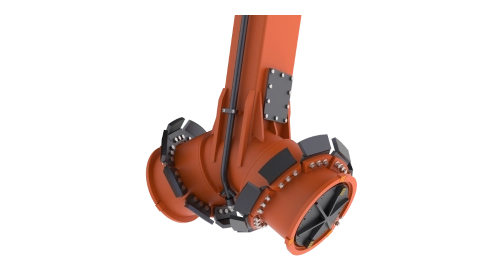
MOTEK is a Chinese manufacturer specializing in construction machinery attachments and in-situ soil treatment equipment. Its product portfolio includes soil power mixers, soil improvement systems, soft soil foundation solidification systems, screening buckets, and crushing buckets. Its soil power mixers can be mounted on excavators to mix soil, silt, and solidifying agents on-site; these systems are applicable to scenarios such as soft soil foundation improvement, roadbed treatment, river silt solidification, and environmental remediation.
Matching equipment to soil types
- High-moisture and soft clay
Soft clay typically has low load-bearing capacity, tends to adhere to equipment during construction, and is difficult to compact directly. For this type of soil, suppliers can provide soil stabilization equipment, deep mixing equipment, and solidifying agent mixing equipment to evenly incorporate lime, cement, fly ash, or other amendments into the soil mass.
Lime stabilization is generally suitable for clays and silty clays with high plasticity; it helps reduce soil plasticity, improve workability, and enhance load-bearing capacity. For roadbeds, embankments, and site foundations, the treatment depth and the ratio of solidifying agents must be determined based on moisture content and target strength requirements.
2. Compacted and hard soils
For sites characterized by long-term compaction, hard soil clods, or hard soil layers, equipment such as soil looseners, soil crushers, and rotary soil improvement machines can be deployed. Soil improvement machines typically break up soil clods using a rotating drum equipped with wear-resistant cutting teeth, while simultaneously mixing aggregates, lime, or other amendments into the soil.
Suppliers must prioritize factors such as the equipment’s crushing capacity, working depth, the material of the cutting teeth, and compatibility with excavators or loaders. For heavily compacted soil, a process of “loosening, then crushing, then mixing” is recommended rather than proceeding directly to surface leveling.
3. Soil with High Stone Content
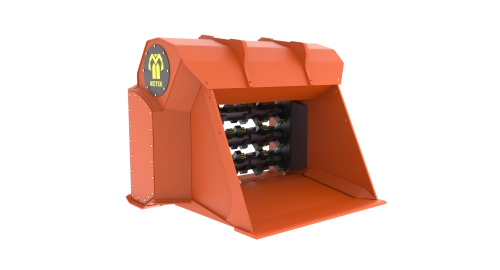
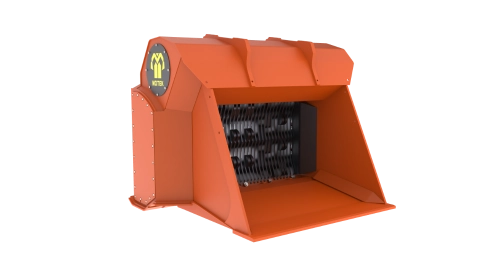
Soil containing large stones, construction debris, roots, or other foreign matter usually requires screening first. Screening equipment separates the soil from stones, roots, and impurities, creating a more uniform feedstock for subsequent mixing and stabilization. Screening is a crucial step in soil preparation, while mixing ensures the uniform blending of components to produce soil material that meets construction specifications.
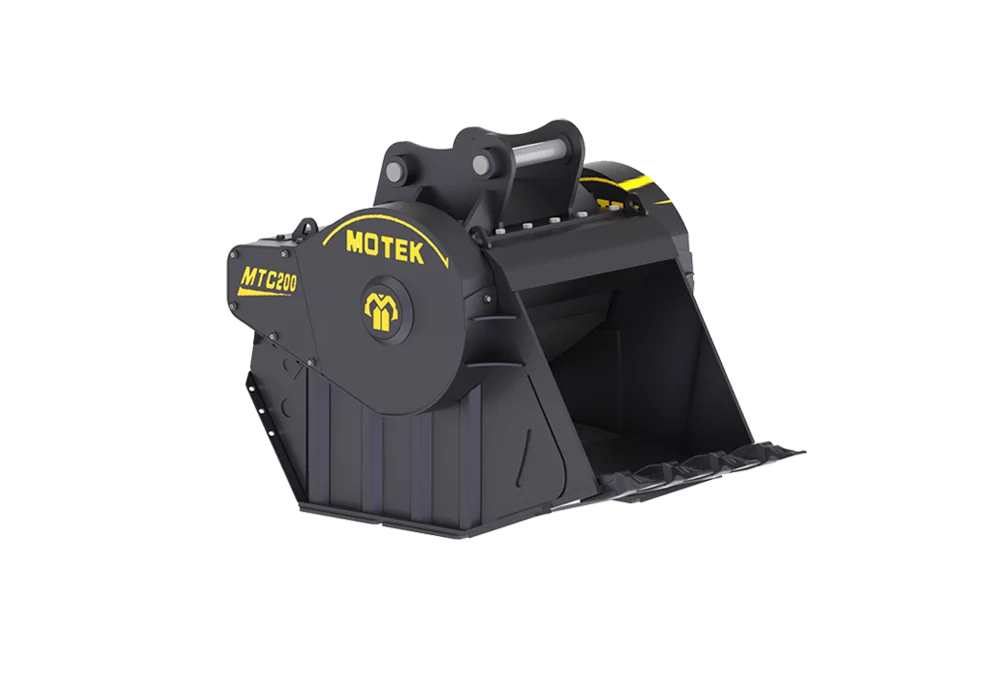
If the stones are large, suppliers may also need to configure crushing buckets, mobile crushers, or dedicated soil crushing equipment. Depending on the project, the choice between a rotary screening bucket, vibrating screen, or trommel screen should be based on input particle size, target particle size, and processing volume.
4. Sandy Soil and Soil with Non-Uniform Gradation
Sandy soil typically drains well but may suffer from poor water retention, loose structure, and unstable load-bearing capacity. For such soil, suppliers can configure screening, continuous mixing, and stabilization equipment to uniformly incorporate cohesive materials, fines, lime, cement, or other amendments.
If the project requires the production of road base or backfill material, strict control over particle gradation, moisture content, and mixing uniformity is essential. Equipment selection should not focus solely on processing speed; the final soil material must also meet the project’s specified requirements for particle size and strength.
Meeting Project Needs through Modular Solutions
Professional soil improvement equipment suppliers typically configure equipment combinations based on the project workflow rather than simply selling individual products. A typical process includes:
Sampling the raw soil to test for moisture content, particle composition, plasticity, and contamination.
Using screening equipment to remove stones, roots, and construction debris.
Using crushing equipment to process large soil clods and stones.
Using soil mixers to incorporate lime, cement, or other amendments.
Using stabilization equipment to perform deep or surface treatment. Subsequent construction steps are carried out using conveying, stockpiling, and compaction equipment.
For projects involving weak foundations, roadbeds, airports, ports, and embankments, excavator-mounted soil mixing equipment can be used to improve unstable soil layers, treat soft soil, and stabilize foundations. This modular approach allows for the adjustment of equipment configurations based on varying on-site soil conditions.
What parameters should suppliers consider?
To provide the appropriate equipment, suppliers should confirm the following details with the client:
Soil type and moisture content.
Maximum feed particle size.
Target output particle size.
Hourly processing capacity.
Treatment depth and working width.
Type and dosage of stabilizing agents.
Excavator, loader, or tractor model.
Hydraulic flow rate and operating pressure.
On-site space and mobility conditions.
Requirements for final strength, compaction, or gradation.
MOTEK positions itself not merely as a manufacturer of soil mixing equipment, but as a provider of comprehensive solutions for in-situ soil improvement, soft soil foundation stabilization, and construction machinery attachments. Its MOTEK Power Mixer can be mounted on excavators of various tonnages; specific models offer treatment depths ranging from approximately 1 to 8 meters and processing efficiencies of 40 to 90 cubic meters per hour, depending on the model and project conditions.
For clients dealing with soft soil, silt, roadbeds, or complex construction sites, MOTEK assists in selecting the right equipment for soil mixing, screening, crushing, and stabilization based on soil type, project scale, and desired treatment outcomes. Ultimately, the ideal solution for a project is not necessarily the equipment with the highest specifications, but a comprehensive solution that aligns with soil conditions, construction machinery, and on-site processes, while balancing treatment effectiveness, construction efficiency, and long-term maintenance costs.
Author

Jack Liu
MOTEK General Manager 20 years of experience in construction machinery. Former agent for several high-end European attachment brands. A visionary leader driving MOTEK's growth.