

Apakah Tersedia Berbagai Model Peralatan Perbaikan Tanah yang Sesuai untuk Operasi Area Kecil dan Area Besar?
Waktu rilis: 21 Juli 2026
Daftar isi
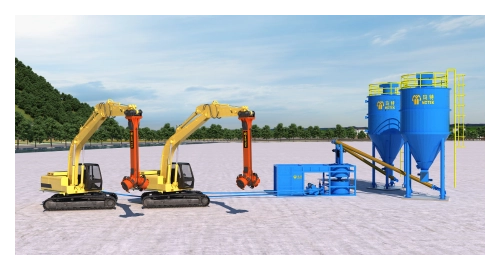
Tidak semua proyek perbaikan tanah itu sama. Rumah kaca kecil membutuhkan solusi yang berbeda dari lokasi pembangunan jalan raya, dan renovasi lapangan golf memiliki persyaratan yang sangat berbeda dari proyek reklamasi pertambangan. Memilih solusi yang tepat sangat penting. peralatan perbaikan tanah sangat bergantung pada ukuran area kerja, kondisi tanah, tujuan proyek, dan anggaran.
Produsen modern menawarkan beragam mesin perbaikan tanah yang dirancang khusus untuk ruang kerja yang sempit maupun operasi skala besar. Memahami perbedaan antara model-model ini dapat secara signifikan meningkatkan produktivitas sekaligus mengurangi biaya operasional.
Dalam panduan ini, kita akan menjelajahi berbagai jenis peralatan perbaikan tanah yang tersedia, aplikasi idealnya, dan cara memilih mesin terbaik untuk proyek Anda.
Mengapa Ukuran Proyek yang Berbeda Membutuhkan Peralatan yang Berbeda?
Perbaikan tanah melibatkan modifikasi tanah yang ada untuk meningkatkan kekuatan, drainase, kesuburan, atau daya dukungnya. Metode-metode tersebut dapat meliputi:
- Pencampuran tanah
- Stabilisasi tanah
- Pelonggaran mendalam
- Menghancurkan tanah keras
- Menambahkan semen atau kapur
- penggabungan bahan organik
- Kondisioning kelembapan
Namun, menyelesaikan tugas-tugas ini secara efisien bergantung pada penggunaan peralatan yang ukurannya sesuai dengan area kerja.
Misalnya:
- Kebun anggur tidak membutuhkan penstabil otomatis bertenaga 400 tenaga kuda.
- Kontraktor jalan raya tidak dapat mengandalkan mesin pengolah tanah putar kompak untuk lahan seluas ribuan meter persegi.
Peralatan yang tepat akan meningkatkan:
- Produktivitas
- Efisiensi bahan bakar
- Kualitas pencampuran
- Biaya operasional
- Waktu penyelesaian proyek
Peralatan Perbaikan Tanah untuk Operasi Area Kecil
Mesin area kecil dirancang untuk proyek-proyek di mana kemampuan manuver, presisi, dan biaya operasional yang lebih rendah lebih penting daripada output maksimum.
Area Kerja Khas
Peralatan perbaikan tanah berukuran kecil sangat ideal untuk:
- Taman
- Rumah kaca
- Proyek lansekap
- Konstruksi perumahan
- Pertanian kecil
- Taman
- Lapangan olahraga
- Pemeliharaan kota
- Pemulihan parit utilitas
Mesin Perbaikan Tanah Kecil yang Umum
1. Mesin Pengolah Tanah Putar Kompak
Mesin pengolah tanah putar kompak memecah tanah yang padat dan mencampur pupuk atau bahan organik ke dalam tanah.
Keuntungannya meliputi:
- Transportasi mudah
- Konsumsi bahan bakar rendah
- Kemampuan manuver yang sangat baik
- Perawatan sederhana
2. Pencampur Tanah Mini
Pencampur tanah mini umumnya digunakan untuk:
- Penataan lanskap
- Persiapan pembibitan
- Budidaya di rumah kaca
- Proyek-proyek yayasan kecil
Mesin-mesin ini memberikan keseragaman pencampuran yang sangat baik meskipun beroperasi di ruang terbatas.
3. Peralatan Perbaikan Tanah yang Dipasang pada Traktor
Banyak pengguna pertanian lebih menyukai peralatan perbaikan tanah yang digerakkan PTO yang dipasang pada traktor kompak.
Manfaatnya meliputi:
- Biaya investasi lebih rendah
- Penggunaan serbaguna
- Penggantian lampiran yang mudah
- Cocok untuk pekerjaan musiman
Keunggulan Model Kecil
Mesin area kecil menawarkan beberapa keuntungan:
- Harga pembelian lebih rendah
- Mengurangi biaya perawatan
- Transportasi mudah
- Gangguan tanah minimal
- Akses yang lebih baik ke ruang terbatas.
- Konsumsi bahan bakar lebih rendah
Mesin-mesin ini sangat menarik bagi kontraktor yang menangani banyak proyek kecil.
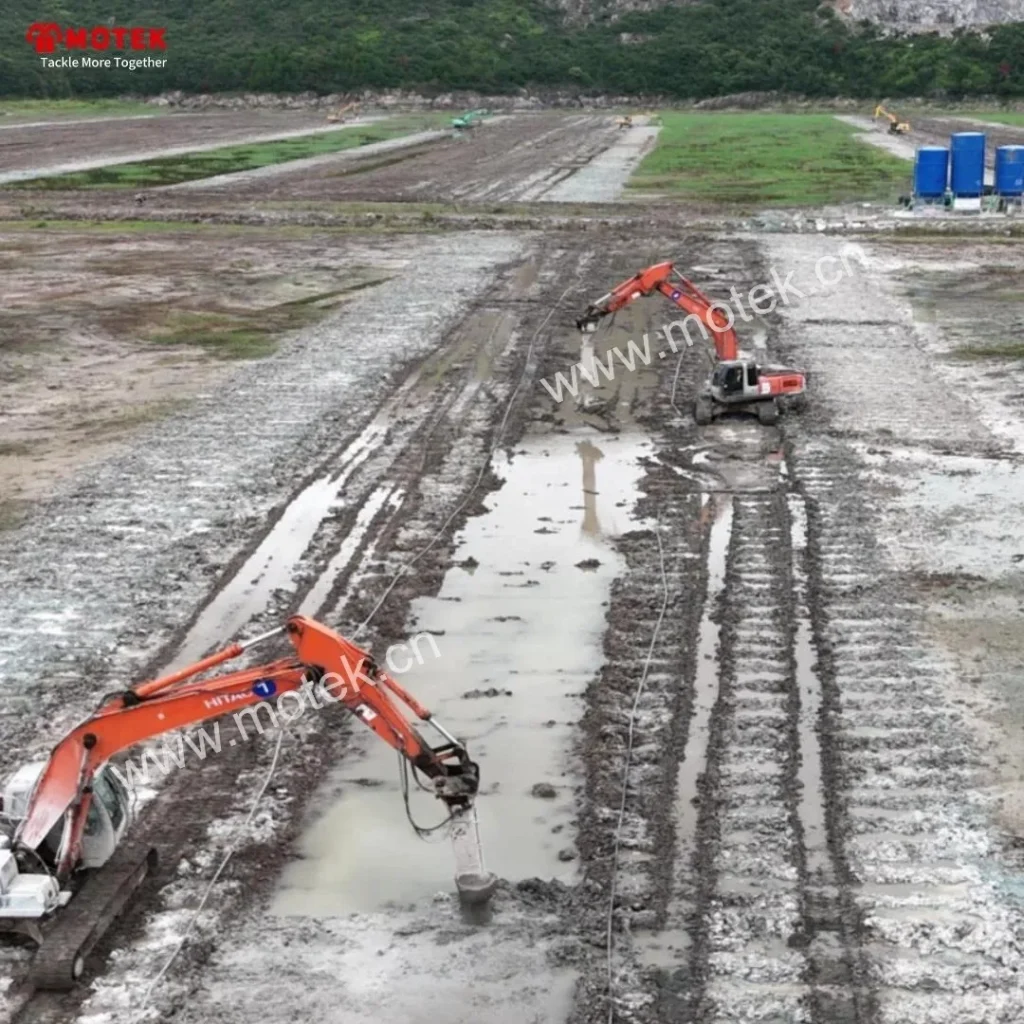
Peralatan Perbaikan Tanah untuk Operasi Area Luas
Proyek perbaikan tanah berskala besar membutuhkan peralatan yang mampu memproses area luas dengan cepat sambil mempertahankan kualitas tanah yang konsisten.
Mesin-mesin ini memprioritaskan:
- Tenaga kuda tinggi
- Lebar kerja yang besar
- Kemampuan pencampuran mendalam
- Pengoperasian berkelanjutan
Aplikasi Umum
Peralatan perbaikan tanah berukuran besar umumnya digunakan dalam:
- Konstruksi jalan raya
- Pengembangan bandara
- Infrastruktur kereta api
- Kawasan industri
- Reklamasi pertambangan
- Pertanian skala besar
- Proyek energi angin dan surya
- Pembangunan bendungan
- Pengembangan pelabuhan
Mesin Perbaikan Tanah Ukuran Besar yang Umum Digunakan
1. Berpenggerak Sendiri Penstabil Tanah
Ini adalah beberapa mesin perbaikan tanah tercanggih yang tersedia.
Fitur-fiturnya meliputi:
- Mesin diesel bertenaga tinggi
- Drum pencampur lebar
- Kedalaman kerja yang dapat disesuaikan
- Sistem kontrol otomatis
- Kompatibilitas panduan GPS
Mereka secara efisien mencampur tanah dengan:
- Semen
- Kapur
- Abu terbang
- Air
- Agen penstabil lainnya
2. Mesin Daur Ulang Tanah Tugas Berat
Mesin-mesin ini mendaur ulang material jalan yang sudah ada sekaligus memperbaiki lapisan dasar jalan.
Keuntungannya meliputi:
- Rehabilitasi jalan yang lebih cepat
- Pengurangan transportasi material
- Biaya konstruksi lebih rendah
- Operasi berkelanjutan
3. Mixer Putar Besar
Dirancang untuk lahan pertanian yang luas, mesin-mesin ini dengan cepat mempersiapkan tanah sebelum penanaman.
Mereka bisa:
- Hancurkan tanah keras
- Menggabungkan sisa tanaman
- Campur pupuk
- Perbaiki aerasi tanah
Perbandingan Peralatan Perbaikan Tanah Skala Kecil dan Besar
| Fitur | Model Kecil | Model Besar |
|---|---|---|
| Lebar Kerja | 1–3 meter | 2,5–8 meter |
| Kedalaman Kerja | Dangkal hingga sedang | Sedang hingga dalam |
| Daya kuda | 20–100 HP | 250–700+ HP |
| Mobilitas | Bagus sekali | Sedang |
| Konsumsi Bahan Bakar | Rendah | Lebih tinggi |
| Produktivitas | Proyek kecil | Infrastruktur besar |
| Biaya Pembelian | Lebih rendah | Lebih tinggi |
| Pemeliharaan | Sederhana | Lebih kompleks |
Faktor-faktor yang Perlu Dipertimbangkan Saat Memilih Peralatan Perbaikan Tanah
Memilih mesin yang tepat memerlukan evaluasi beberapa faktor spesifik proyek.
1. Ukuran Proyek
Pertimbangan pertama adalah total area perawatan.
Peralatan kecil cocok untuk:
- Kurang dari 10 hektar
- Pekerjaan perumahan
- Pemeliharaan kota
Peralatan berukuran besar ideal untuk:
- Ratusan hektar
- Proyek infrastruktur
- Perkembangan industri
2. Jenis Tanah
Kondisi tanah yang berbeda memerlukan kapasitas peralatan yang berbeda pula.
Contohnya meliputi:
- tanah liat
- Tanah berpasir
- Tanah berkerikil
- Medan berbatu
- Tanah berpasir
Tanah liat yang berat seringkali membutuhkan torsi yang lebih tinggi dan kemampuan pencampuran yang lebih dalam.
3. Kedalaman Pencampuran yang Diperlukan
Beberapa proyek hanya memerlukan persiapan permukaan.
Yang lain menuntut stabilisasi beberapa ratus milimeter di bawah permukaan tanah.
Kedalaman yang dibutuhkan menentukan:
- Ukuran rotor
- Tenaga mesin
- Kekuatan rangka
4. Bahan yang Akan Dicampur
Banyak proyek melibatkan penambahan material seperti:
- Kapur
- Semen
- Kompos organik
- Pupuk
- Gips
- Abu terbang
Peralatan harus kompatibel dengan bahan tambahan yang dimaksud.
5. Persyaratan Transportasi
Kontraktor yang sering berpindah-pindah antar lokasi proyek harus mempertimbangkan hal-hal berikut:
- Dimensi mesin
- Kompatibilitas trailer
- Batasan berat badan
- Waktu penyiapan
Model kompak umumnya lebih mudah diangkut.
Teknologi Terkini dalam Peralatan Perbaikan Tanah Modern
Mesin-mesin masa kini menggabungkan teknologi canggih yang meningkatkan produktivitas dan akurasi.
Inovasi populer meliputi:
- Panduan mesin GPS
- Kontrol kedalaman otomatis
- Pengaturan kecepatan rotor yang cerdas
- Manajemen mesin hemat bahan bakar
- Sistem pemantauan waktu nyata
- Diagnostik jarak jauh
- Penerapan agen penstabil secara presisi
Teknologi-teknologi ini membantu mengurangi biaya operasional sekaligus memberikan kualitas perbaikan tanah yang konsisten.
Industri mana yang paling diuntungkan?
Industri yang berbeda bergantung pada ukuran peralatan yang berbeda pula.
Model berukuran kecil populer di:
- Pertanian
- Penataan lanskap
- Manajemen taman
- Pemeliharaan lapangan golf
- Operasi rumah kaca
Mesin-mesin besar mendominasi:
- Konstruksi jalan
- Teknik bandara
- Pertambangan
- Konstruksi kereta api
- Pertanian skala besar
- Infrastruktur industri
Kesimpulan
Ya, ada banyak model peralatan perbaikan tanah yang berbeda yang dirancang khusus untuk operasi area kecil maupun area besar. Mesin kompak memberikan kemampuan manuver yang sangat baik, harga terjangkau, dan fleksibilitas untuk taman, pertanian, dan proyek lansekap, sementara penstabil besar yang digerakkan sendiri dan pendaur ulang tanah tugas berat memberikan daya dan produktivitas yang dibutuhkan untuk jalan raya, bandara, pertambangan, dan pengembangan infrastruktur utama.
Memilih model yang tepat bergantung pada ukuran proyek Anda, jenis tanah, kedalaman pengerjaan, kebutuhan material, dan anggaran operasional. Berinvestasi pada peralatan yang sesuai dengan aplikasi Anda tidak hanya meningkatkan kualitas tanah, tetapi juga mengurangi biaya tenaga kerja, konsumsi bahan bakar, dan jangka waktu proyek. Baik Anda kontraktor kecil atau perusahaan teknik besar, memilih peralatan perbaikan tanah yang tepat sangat penting untuk mencapai hasil yang efisien, berkualitas tinggi, dan hemat biaya.
Pertanyaan yang Sering Diajukan (FAQ)
Apa peralatan perbaikan tanah terbaik untuk pertanian kecil?
Mesin pengolah tanah putar kompak dan pengaduk tanah yang dipasang pada traktor sangat ideal untuk pertanian kecil karena harganya terjangkau, mudah dioperasikan, dan sangat mudah dikendalikan.
Peralatan apa yang digunakan untuk stabilisasi tanah skala besar?
Proyek-proyek besar biasanya menggunakan alat penstabil tanah yang digerakkan sendiri, alat daur ulang tugas berat, dan mixer putar berkapasitas tinggi yang mampu mengolah area luas secara efisien.
Bisakah satu mesin menangani berbagai jenis tanah?
Ya. Banyak mesin perbaikan tanah modern memiliki fitur kecepatan rotor yang dapat disesuaikan, kedalaman kerja, dan alat yang dapat diganti, sehingga memungkinkan mereka untuk beradaptasi dengan tanah liat, pasir, lumpur, dan tanah campuran.
Bagaimana cara memilih mesin perbaikan tanah yang tepat?
Pertimbangkan ukuran proyek, kondisi tanah, kedalaman pencampuran yang diinginkan, bahan yang akan dicampurkan, kebutuhan transportasi, dan anggaran yang tersedia sebelum memilih mesin.
Apakah peralatan perbaikan tanah yang lebih besar selalu lebih baik?
Belum tentu. Mesin yang lebih besar memberikan produktivitas yang lebih tinggi untuk proyek-proyek besar, sementara model yang ringkas seringkali lebih hemat biaya dan praktis untuk lokasi yang lebih kecil dengan akses terbatas.
Pengarang

Jack Liu
Manajer Umum MOTEK dengan 20 tahun pengalaman di bidang mesin konstruksi. Mantan agen untuk beberapa merek perlengkapan kelas atas Eropa. Seorang pemimpin visioner yang mendorong pertumbuhan MOTEK.