


How to Choose Crusher and Screening Buckets for Quarry Operations?
Release time: 2026-11-05
In quarrying operations, the choice between a crusher bucket and a screening bucket depends primarily on your material processing objectives, the characteristics of the rock, and specific operational requirements. If you need to break down large rocks, concrete, or construction waste into smaller fragments, a crusher bucket—such as the MTC200, MTC250, or MTC330 series from Motek—is the ideal choice. Conversely, if you need to classify, screen, or separate soil, stone, or mixed materials by particle size, a screening bucket—such as the MT208, MT312, MT317, MT320, or MT427 series—is more appropriate. For projects requiring both crushing and screening on-site, the two types of equipment can also be used in tandem. Before making a purchase, carefully evaluate factors such as excavator tonnage, hydraulic flow rate, operating pressure, material hardness, target output particle size, and the equipment’s processing capacity to ensure that the chosen attachment is well-suited to your specific quarrying conditions.
Table of Contents
What Is the Difference Between a Crusher Bucket and a Screening Bucket?
A crusher bucket and a screening bucket perform different functions in quarrying operations.
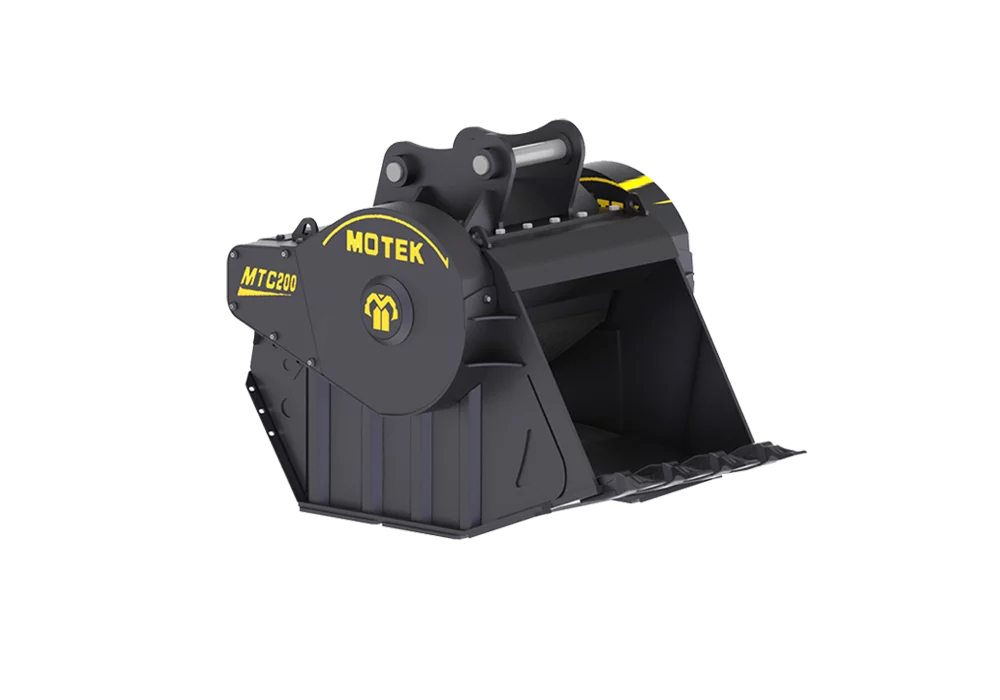
A crusher bucket is designed to reduce the size of rocks, concrete, and other suitable materials through a crushing mechanism. It is particularly useful for on-site crushing, reducing oversized materials, and producing smaller material for subsequent processing or reuse.
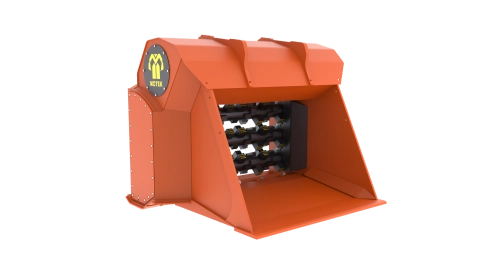
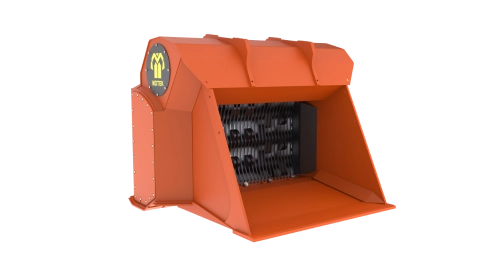
A screening bucket separates materials according to particle size using a rotating or screening mechanism. It helps remove unwanted oversized materials, separate fine particles, and classify excavated materials without requiring a separate stationary screening plant.
| Comparison Factor | Crusher Bucket | Screening Bucket |
|---|---|---|
| Primary Function | Reduce material size | Separate and classify materials |
| Processing Method | Mechanical crushing | Mechanical screening |
| Main Applications | Rock crushing, concrete recycling | Soil screening, aggregate separation |
| Material Output | Smaller crushed materials | Different particle-size fractions |
| Main Selection Factor | Material hardness and feed size | Required screening size and material moisture |
| Typical Users | Quarry contractors and recycling companies | Quarry operators and material processing contractors |
The right choice depends on whether the project requires material size reduction or particle separation.
When Should You Choose a Crusher Bucket for Quarrying?
A crusher bucket is a suitable option when quarrying operations require on-site material reduction.
Typical applications include:
- Rock Size Reduction: Processing suitable oversized rocks into smaller materials for further handling.
- Quarry Waste Recycling: Reducing suitable waste materials for reuse in construction applications.
- On-Site Aggregate Processing: Crushing materials directly at the jobsite to reduce transportation requirements.
- Construction and Demolition Waste: Processing suitable concrete and demolition materials for recycling.
When selecting a crusher bucket, buyers should evaluate material hardness, maximum feed size, desired output size, processing capacity, and excavator compatibility.
Motek offers crusher bucket models including MTC200, MTC250, and MTC330. Buyers should compare the technical specifications of each model against their excavator and material processing requirements before purchasing.
When Is a Screening Bucket Better for Quarrying Operations?
A screening bucket is more appropriate when the primary objective is separating materials rather than crushing them.
It can help quarry operators process excavated soil, weathered rock, fine materials, and mixed aggregates according to project requirements.
Common applications include:
- Soil and Overburden Screening: Separating reusable soil from larger unwanted materials.
- Aggregate Classification: Separating different material fractions according to screening requirements.
- Quarry Material Separation: Removing oversized stones from finer materials.
- Construction Waste Processing: Separating reusable fine materials from larger waste components.
- Material Recovery: Improving the utilization of excavated materials and reducing unnecessary disposal.
Motek provides screening bucket solutions through its MT model range, including MT208, MT312, MT317, MT320, and MT427. The H Series and DB Series also provide additional screening bucket options for different material processing requirements.
When choosing a screening bucket, buyers should consider the required screening size, material moisture, processing volume, and excavator hydraulic specifications.
What Factors Should You Consider Before Choosing?
Selecting the right attachment requires evaluating several technical and operational factors.
| Selection Factor | Crusher Bucket | Screening Bucket |
|---|---|---|
| Material Characteristics | Rock hardness, strength, and feed size | Particle size, moisture, and material composition |
| Processing Objective | Reduce material size | Separate materials by size |
| Output Requirements | Target crushed particle size | Required screening fraction |
| Excavator Compatibility | Machine weight and hydraulic requirements | Machine weight, hydraulic flow, and pressure |
| Processing Capacity | Crushing output per hour | Screening capacity per hour |
| Operating Conditions | Material feeding and crushing environment | Material loading and screening conditions |
Excavator operating weight alone is not enough to determine compatibility. Buyers should also verify hydraulic flow, working pressure, attachment weight, and the manufacturer’s recommended operating range.
Can Crusher Buckets and Screening Buckets Work Together?
Yes. In some quarrying and material recycling operations, crusher buckets and screening buckets can complement each other.
A typical workflow involves two stages:
Stage 1: Crushing
A crusher bucket reduces oversized rocks or suitable waste materials into smaller particles.
Stage 2: Screening
A screening bucket separates the processed material into different size fractions, helping recover usable materials and remove unwanted oversized particles.
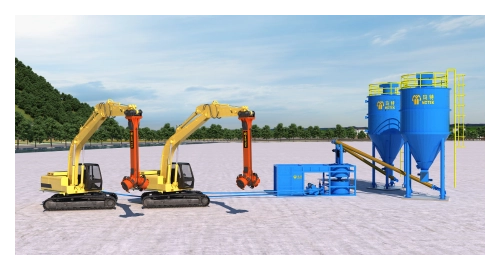
This combination can provide a flexible on-site processing solution, particularly for contractors who handle different material sizes and project requirements.
However, the actual workflow depends on material characteristics, required output specifications, and the processing capacity of each attachment.
Why Choose Motek Crusher and Screening Buckets?
Choosing the right attachment is essential for improving quarrying efficiency and maximizing material utilization. Whether your operation requires rock size reduction or material classification, selecting equipment based on actual working conditions is critical.
With over 10 years of innovative patented technologies and continuous R&D development, Motek provides crusher and screening bucket solutions for construction, quarrying, material recycling, and environmental applications.
From MTC200, MTC250, and MTC330 crusher buckets to the MT screening bucket range, including MT208, MT312, MT317, MT320, and MT427, Motek offers different equipment options to meet diverse material processing requirements.
Looking for a reliable crusher bucket or screening bucket manufacturer? Contact Motek at info@motek.cn to discuss your excavator model, material characteristics, required output size, and processing capacity. Our team can help you evaluate the right attachment configuration for your quarrying operations.
Author

Jack Liu
MOTEK General Manager 20 years of experience in construction machinery. Former agent for several high-end European attachment brands. A visionary leader driving MOTEK's growth.

