


Which Screening Bucket Is Best for Road Construction Projects?
Release time: 2026-11-16
Choosing the right excavator screening bucket is essential for improving material handling efficiency in road construction projects. From roadbed preparation and gravel classification to soil separation and material recycling, different construction stages require different screening capabilities. Factors such as material type, moisture content, required particle size, excavator compatibility, and processing capacity all influence equipment selection. So, which screening bucket is best for road construction? The answer depends on your specific working conditions and material requirements. Understanding the differences between screening bucket designs and their applications can help contractors select suitable equipment, reduce unnecessary material transportation, and make better use of resources directly on the job site.
Table of Contents
1. Why Are Screening Buckets Important in Road Construction?
Screening buckets are excavator attachments designed to separate materials according to particle size. In road construction, they are commonly used for soil preparation, aggregate classification, material recycling, and the removal of oversized particles.
For example, during roadbed preparation, excavated soil may contain stones, roots, and other unwanted materials. A screening bucket can separate these materials and help produce more uniform soil for subsequent construction operations.
When preparing road base and sub-base layers, contractors may also need to classify gravel and crushed stone into different size fractions. Using a screening bucket on-site can reduce the need to transport all excavated materials to an external screening facility.
For road renovation projects, screening buckets can also support the separation of reusable materials from excavated debris, helping improve resource utilization and reduce material disposal costs.
2. What Types of Screening Buckets Are Suitable for Road Construction?
Different screening bucket designs are suitable for different materials and working conditions.
Rotating Screening Buckets
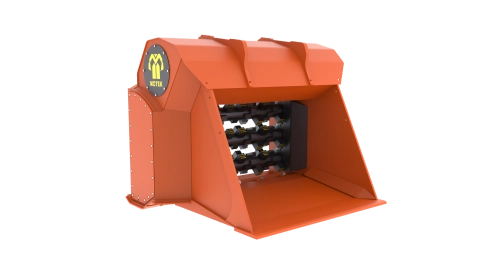
Rotating screening buckets use rotating screening components to separate materials. They are suitable for handling soil, compost, sand, and relatively loose materials. Their screening action helps separate fine materials from larger particles, making them useful for roadbed preparation and landscaping work alongside road construction.
Drum Screening Buckets
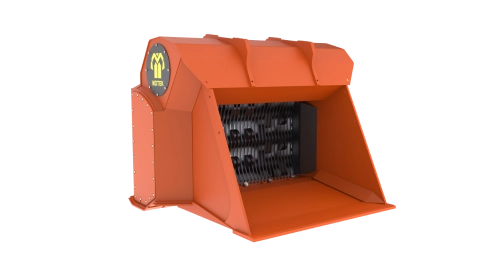
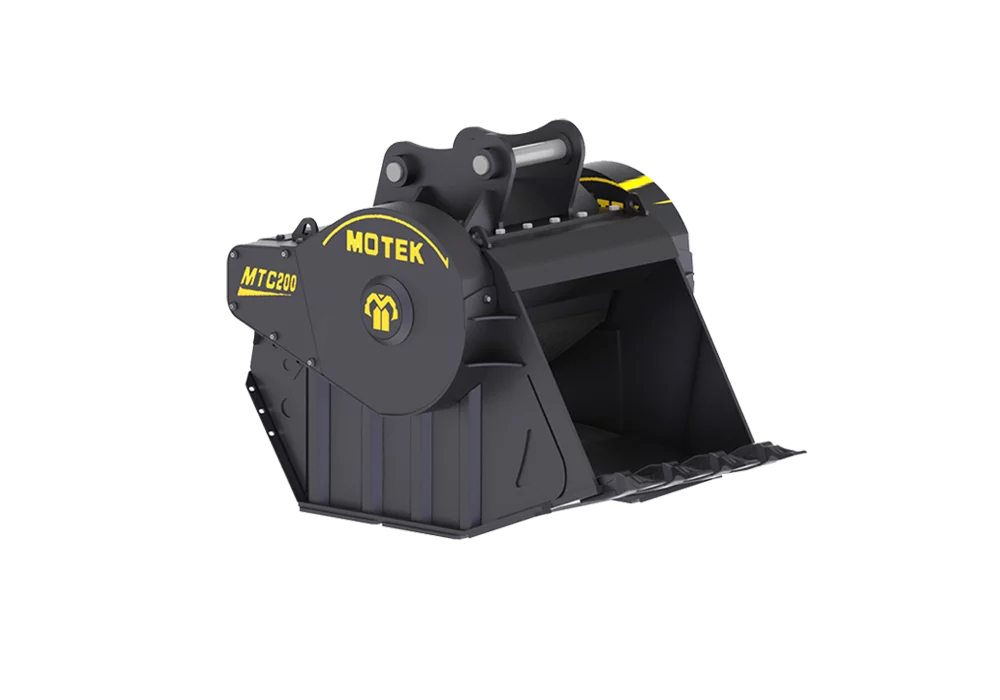
Drum-style screening buckets use rotating drums with screening openings to classify materials. They can be used for separating soil, gravel, and mixed construction materials. Buyers should evaluate drum configuration, screening aperture, and material moisture before selecting this type of equipment.
Star Screening Buckets
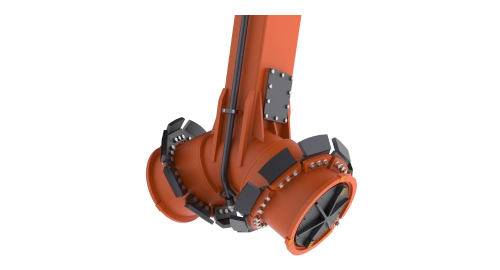
Star screening buckets use rotating star-shaped components to separate materials. They are particularly useful for handling certain loose and mixed materials where continuous screening and material flow are important. Their suitability depends on the material composition and required separation accuracy.
For most road construction applications, the best screening bucket is not necessarily the largest or most powerful model. Contractors should select a design that matches the material characteristics and required screening results.
3. How to Choose a Screening Bucket for Different Road Construction Applications?
The first step is to identify the specific construction task.
- Roadbed preparation: Choose a screening bucket suitable for separating soil from stones, roots, and oversized debris. The objective is to obtain more consistent material for ground preparation.
- Road base and sub-base processing: Select a bucket with an appropriate screening aperture to classify gravel and crushed stone according to project requirements.
- Road renovation and material recycling: Consider a screening bucket capable of handling mixed excavated materials and separating reusable fractions from oversized debris.
- Drainage and backfilling: Choose a screening configuration that can produce relatively consistent granular materials for drainage layers and backfill operations.
The required output size should always be determined by the road design specifications. A screening bucket cannot automatically guarantee that processed materials meet every project grading requirement, so particle-size testing may still be necessary.
4. What Specifications Should Buyers Check Before Purchasing?
Several technical factors should be evaluated before selecting a screening bucket.
Excavator Compatibility: Check the excavator’s operating weight, hydraulic flow rate, working pressure, mounting system, and auxiliary hydraulic line configuration. The attachment must be compatible with the host machine.
Screening Aperture: The opening size determines which particles can pass through the screening structure. Buyers should select an aperture according to the required material grading and intended application.
Material Moisture: Wet clay and cohesive soil can stick to screening components and reduce screening efficiency. For these conditions, the screening structure and operating method should be carefully evaluated.
Processing Capacity: Consider the expected volume of material per hour, bucket capacity, excavator cycle time, and material loading conditions. Actual output varies depending on material type, moisture, excavator performance, and operating conditions.
Wear Resistance and Maintenance: Road construction environments can involve abrasive materials and continuous operation. Durable screening components, accessible maintenance points, and replaceable wear parts can help reduce downtime.
5. Why Choose Motek Screening Buckets for Road Construction?
Selecting the right screening bucket can make road construction operations more efficient by improving material separation, reducing unnecessary handling, and supporting on-site aggregate processing. However, the ideal equipment should match the material characteristics, target screening size, excavator hydraulic specifications, and expected workload. Motek provides H Series and DB Series Screening Buckets for different material screening and construction applications, helping contractors find suitable solutions for soil preparation, gravel classification, and material processing. With over 10 years of experience in patented technology development and continuous product improvement, Motek can recommend equipment configurations based on actual project requirements. Contact Motek at info@motek.cn with your excavator specifications and material details to explore the right screening bucket solution for your road construction project.
Author

Gershon Zhou
MOTEK R&D Director With 18 years of focused experience in the construction machinery attachment industry. As a National Certified Senior Engineer, he is a well-recognized technical leader in the field of earthmoving machine attachments.

