


Crusher Bucket vs. Mobile Crusher: Which Is Better for On-Site Crushing?
Release time: 2026-09-28
Table of Contents
On-site crushing can make a major difference to the way contractors handle concrete, rock, and construction debris. Instead of moving large amounts of material to an off-site crushing plant, contractors can process part of the material closer to where it is generated. The main question is which type of equipment makes more sense for the job: a mobile crusher or a crusher bucket mounted on an excavator.
Both options can reduce unnecessary material handling, but they are not designed for exactly the same working conditions. A mobile crusher is a dedicated crushing machine, while an excavator-mounted crusher bucket uses the hydraulic power and mobility of an existing excavator. The better choice therefore depends on the amount of material, available space, equipment already on site, and the required level of crushing capacity.
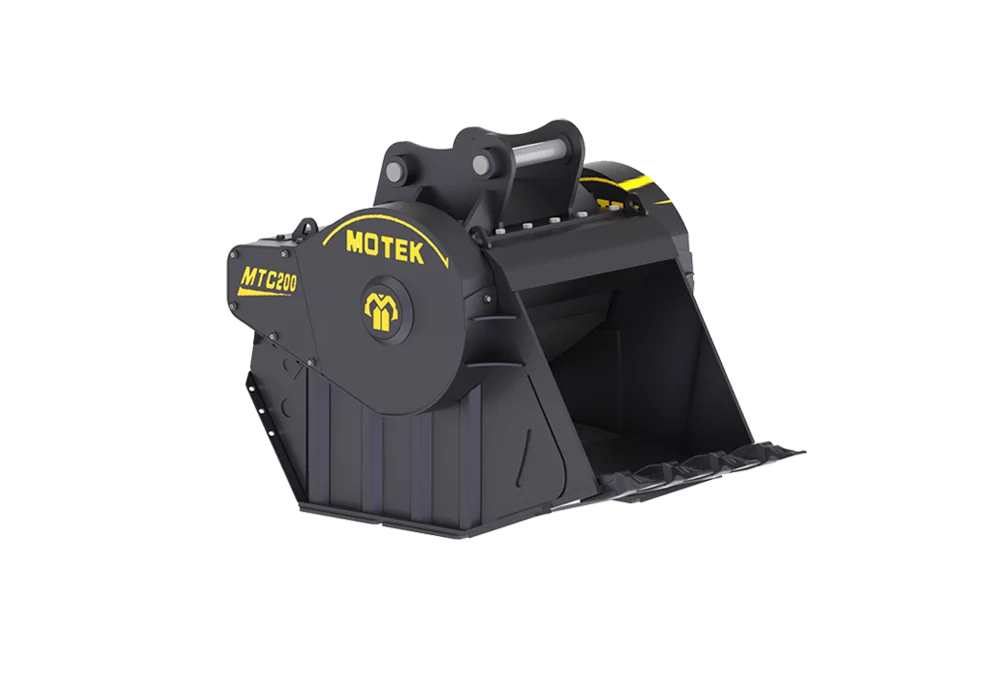
For contractors who already operate suitable excavators, an excavator crusher bucket can provide a practical way to add crushing capability without bringing another complete crushing machine to every project. MOTEK, a manufacturer integrating R&D, production, sales, construction, and technical services for construction machinery attachments, offers crusher bucket models designed for different excavator weight ranges.
What Is a Crusher Bucket?
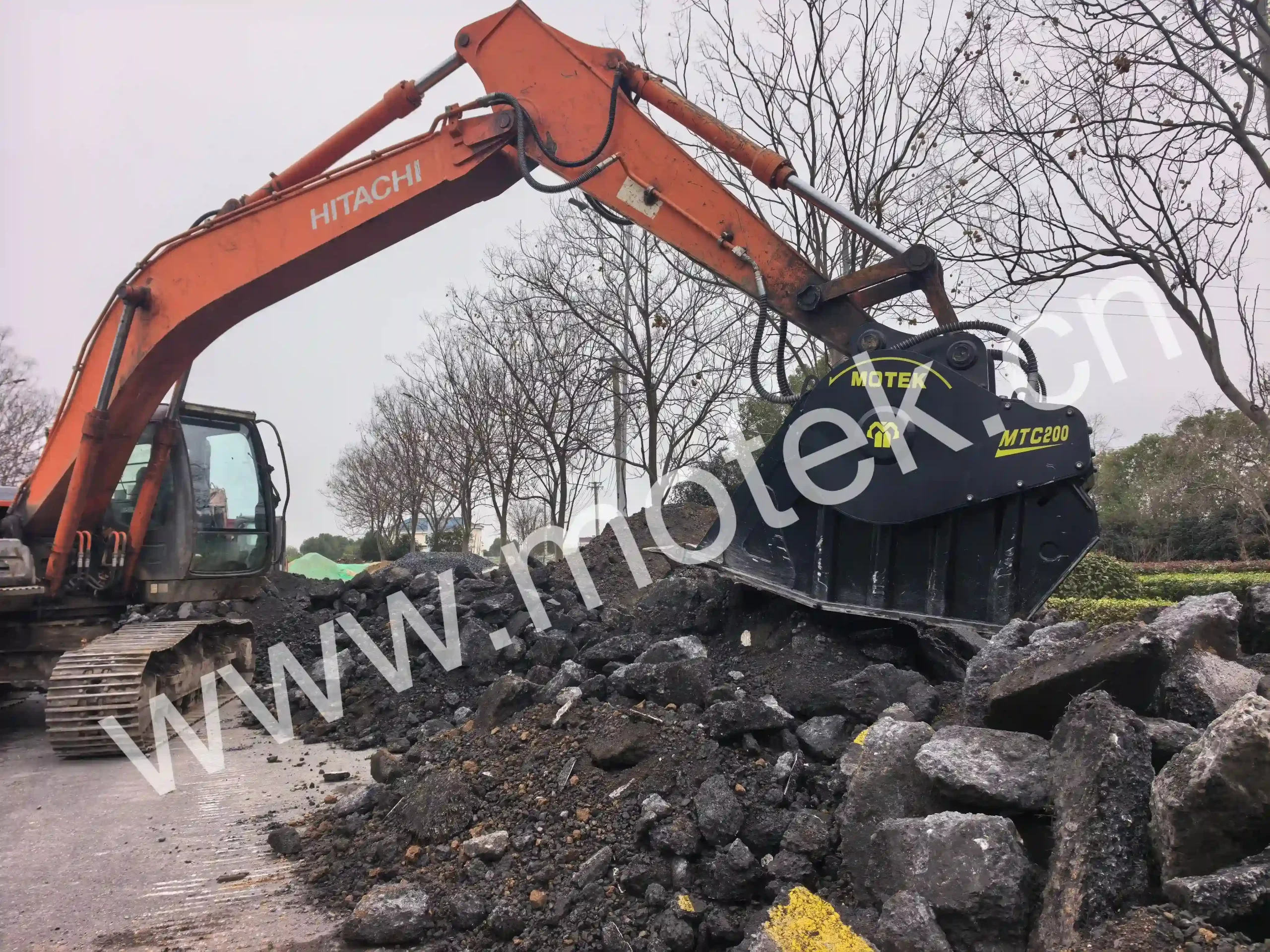
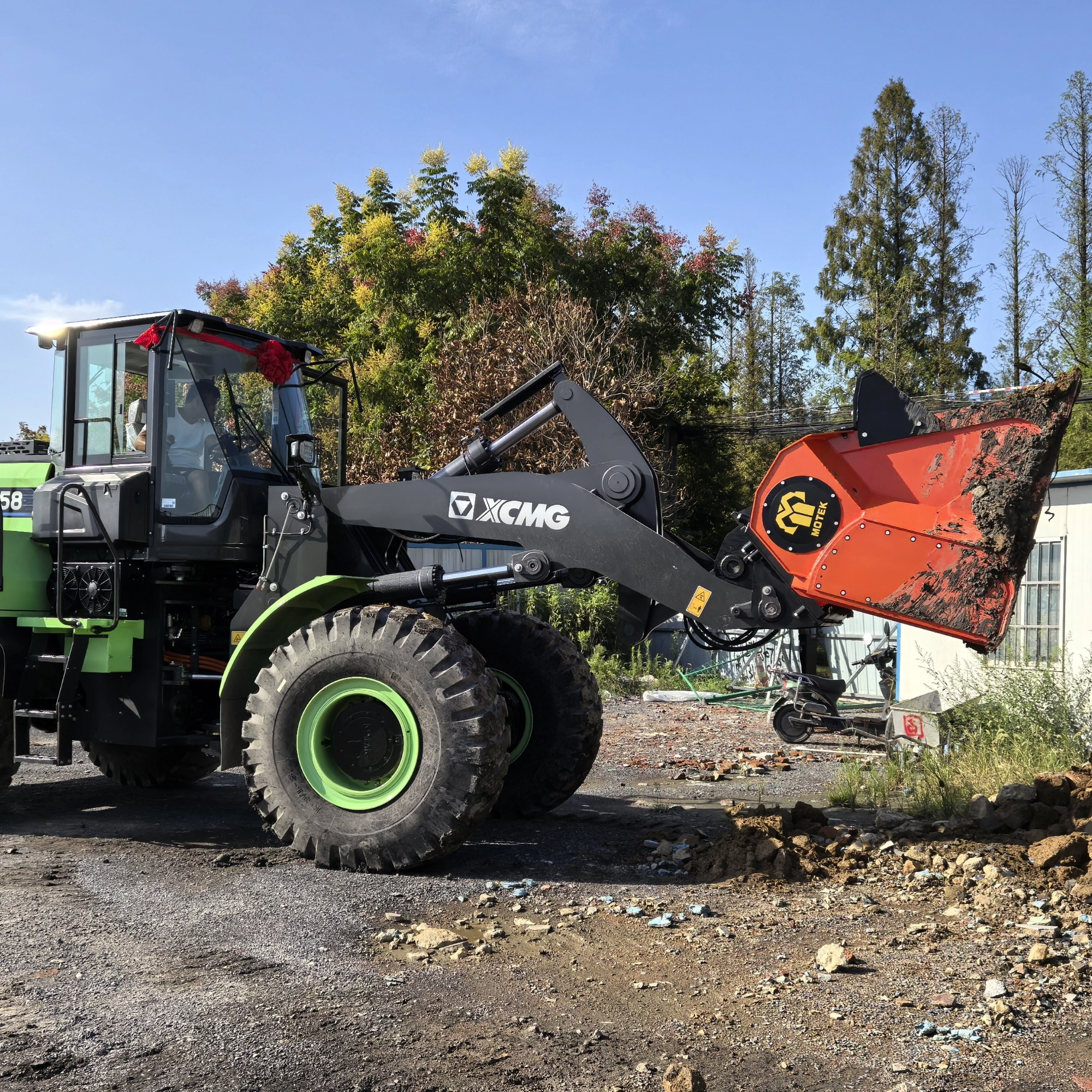
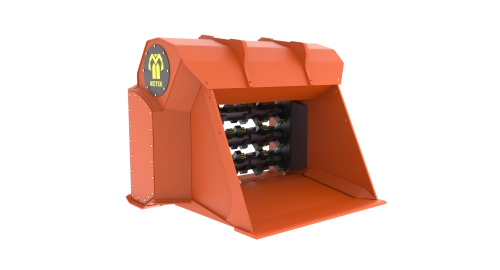
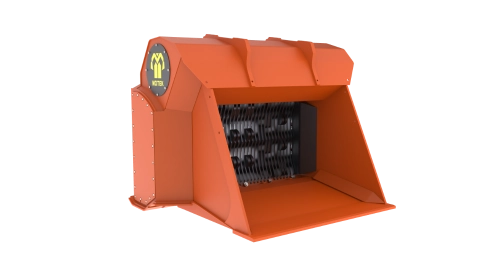
A crusher bucket is an excavator attachment designed to reduce hard materials into smaller pieces directly at the job site. Instead of being a separate crushing plant, it becomes part of the excavator.


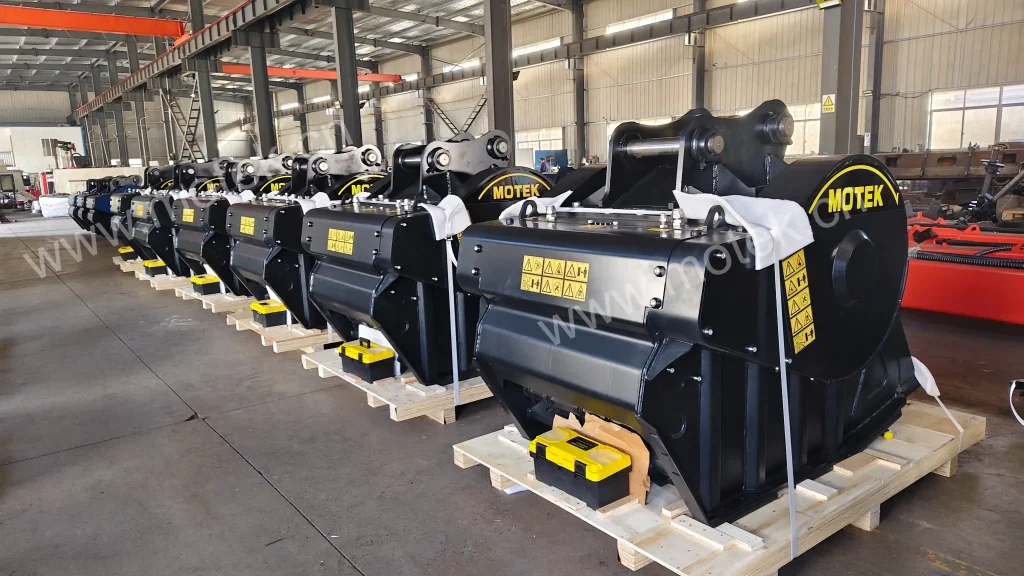
This configuration is useful when material needs to be processed at different points around a construction or demolition site. The excavator can load material into the bucket, move to another working position, and continue crushing without requiring a separate mobile crushing unit.
A typical crusher bucket can be used for materials such as concrete, construction waste, limestone, basalt, and other hard materials. The MOTEK product range includes the MTC200, MTC250, and MTC330, covering excavators from approximately 18.5 to 50 tons depending on the model.
This makes the attachment particularly relevant to contractors who want to make better use of equipment already in their fleet.
What Is a Mobile Crusher?
A mobile crusher is a dedicated crushing machine designed to be transported and operated as an independent unit. Depending on its configuration, it may be tracked or mounted on another mobile platform.
The main advantage of this type of equipment is its dedicated crushing capacity. For projects involving a large and relatively continuous flow of material, a mobile crusher can provide a more suitable production setup.
However, a mobile crusher also means another piece of heavy equipment has to be transported, positioned, operated, and maintained. The overall setup can therefore be more involved than using an attachment on an excavator that is already working on the site.
This does not make mobile crushers unsuitable for on-site work. Rather, they tend to make more sense when crushing volume and continuous production are more important than compact equipment configuration and flexibility.
Crusher Bucket vs. Mobile Crusher: Key Differences
The most useful way to compare the two is to look at how they fit into actual site operations.
| Factor | Crusher Bucket | Mobile Crusher |
| Equipment type | Excavator attachment | Dedicated crushing machine |
| Power source | Excavator hydraulic system | Independent power system |
| Mobility | Moves with the excavator | Moves as a separate machine |
| Setup | Uses an existing excavator | Requires a separate crushing unit |
| Working space | Well suited to confined areas | Usually needs a dedicated operating area |
| Equipment utilization | Adds another function to an excavator | Performs mainly crushing work |
| Small or medium projects | Highly practical | May provide more capacity than required |
| High-volume crushing | Limited by excavator and attachment | Better suited to continuous high-volume work |
| Material handling | Crushing can take place close to the material | Usually requires a defined crushing position |
| Investment approach | Attachment-based | Separate machine investment |
The difference is therefore less about which machine is universally better and more about which setup matches the project.
1. Consider the Available Working Space
Space is often one of the first issues contractors face on urban construction, demolition, roadwork, and renovation projects.
A dedicated mobile crusher needs enough room for positioning, feeding, material movement, and stockpiling. On a large open site, this may not be a major concern. In a confined demolition area or a narrow working zone, however, equipment movement can become more complicated.
An excavator crusher bucket has an advantage in this situation because the attachment follows the excavator. The operator can move the crushing operation closer to the material instead of bringing all material to one fixed crushing position.
The MOTEK product page specifically positions its crusher bucket configuration for on-site crushing in confined spaces, using the excavator’s existing mobility and hydraulic power.
2. Look at the Amount of Material to Be Processed
Production volume is where a mobile crusher can become the stronger option.
If a project generates a very large quantity of material that needs to be processed continuously for long periods, a dedicated crushing machine can provide the production capacity and workflow required for the job.
A crusher bucket is generally more attractive when flexibility matters as much as output. For example, a contractor may need to crush demolition debris at several locations rather than process thousands of tons from one central stockpile.
In such cases, bringing a large dedicated crusher may not always be the most efficient approach. An attachment can allow the excavator already involved in loading, demolition, or material handling to perform an additional task.
3. Consider the Excavator Already on Site
One of the strongest reasons to consider a crusher bucket is existing equipment.
If a contractor already owns or rents an excavator within the appropriate weight and hydraulic range, a crusher bucket can add crushing capability to that machine.
This can be particularly useful for contractors handling mixed tasks. The same excavator may be used for excavation, demolition, loading, and material processing during different stages of a project.
The MOTEK range illustrates this approach with three models:
| Model | Recommended Excavator |
| MTC200 | 18.5–29 tons |
| MTC250 | 21–32 tons |
| MTC330 | 30–50 tons |
For the MTC200, for example, the product specifications list an excavator range of 18.5–29 tons, a 0.85 m³ capacity, and a required excavator flow of 150–220 L/min. The listed hydraulic pressure is above 220 bar.
These specifications show why matching the attachment to the host excavator is important. A bucket should not be selected simply because its physical size looks suitable. Excavator weight, hydraulic flow, pressure, and overall machine stability all need to be considered.
4. Compare Material Handling Requirements
Transportation can account for a significant part of the cost of handling construction waste.
When large pieces of concrete, rock, or demolition debris have to be moved away from the working area before processing, the project may require additional loading, hauling, and handling steps.
On-site crushing changes that workflow.
With a crusher attachment for excavator, material can be processed closer to where it is generated. The resulting smaller material may then be reused on site, transported more efficiently, or prepared for another stage of the project, depending on the material and local requirements.
This approach can be useful for concrete recycling, road construction, demolition, and site preparation where reducing unnecessary material movement is a priority.
5. Evaluate the Required Output Size
The required final material size should also influence the decision.
For some projects, the goal is not maximum production. The contractor may simply need to reduce large pieces of concrete or rock into a more manageable size for backfilling, reuse, transportation, or subsequent processing.
In these cases, an attachment-based crushing setup can be practical.
For other projects, the required output may need to be produced continuously at a high rate and integrated with screening, conveying, or other processing equipment. A dedicated mobile crushing plant may then be a better fit.
The key is to define the required output before selecting the equipment rather than choosing based only on machine size.
6. Think About Equipment Utilization
A separate mobile crusher performs one primary function: crushing.
An excavator fitted with a crusher bucket can perform several functions depending on the attachment being used. This can make a difference for contractors who want to get more value from an existing machine fleet.
For example, an excavator may spend part of the day handling demolition material and another part processing that material. The crushing attachment allows the machine to stay involved in the workflow instead of waiting for another piece of equipment to arrive.
This is especially relevant for smaller contractors and projects where equipment utilization has a direct effect on operating costs.
When Is a Crusher Bucket the Better Choice?
A concrete crusher bucket or similar excavator-mounted attachment can be a strong option when several of the following conditions apply:
- An excavator is already available on the job site.
- The project involves intermittent or moderate crushing requirements.
- Working space is limited.
- Material needs to be processed at different locations.
- Reducing transportation or handling steps is important.
- The contractor wants to add crushing capability without purchasing a separate crushing machine.
- The material consists mainly of concrete, rock, limestone, construction waste, or similar hard materials.
- Equipment flexibility is more important than maximum continuous throughput.
For demolition and construction work, this type of setup can be particularly useful because crushing does not necessarily have to be separated from excavation and material handling.
When Is a Mobile Crusher the Better Choice?
A mobile crusher can be the better option when the project has a different set of priorities.
For example, it may be more appropriate when:
- Large volumes of material must be processed continuously.
- Crushing is a major part of the project rather than a supporting task.
- The site has sufficient space for a dedicated crushing operation.
- High production capacity is a primary requirement.
- The project uses a more structured crushing and screening workflow.
- The contractor needs equipment dedicated primarily to material processing.
In other words, a mobile crusher is not necessarily a competitor that makes a crusher bucket unnecessary. It is better viewed as an alternative for projects with higher or more specialized crushing demands.
How Should Contractors Choose Between the Two?
Before making a decision, contractors should look beyond the initial equipment price.
A useful evaluation should include:
Existing equipment
If a suitable excavator is already available, calculate whether adding an attachment can meet the crushing requirement.
Material volume
Estimate the total amount of material and the expected daily or weekly processing requirement.
Site conditions
Consider access roads, working space, material stockpiles, and the distance between demolition or excavation areas.
Hydraulic compatibility
For an excavator-mounted attachment, check hydraulic flow, pressure, machine weight, lifting capacity, and stability.
Material type
Concrete, natural rock, limestone, basalt, and mixed construction waste may have different crushing requirements.
Output requirements
Define the target material size before selecting the crushing equipment.
Transportation
Estimate how much material has to be moved before and after crushing. In some projects, reducing transportation can be more valuable than simply increasing crushing capacity.
Why Crusher Bucket Selection Should Be Based on the Excavator
Choosing an attachment starts with the host machine rather than the attachment alone.
An undersized excavator may not provide enough hydraulic power or stability. An oversized excavator may also be inefficient if the attachment is not designed for its operating range.
This is why MOTEK’s crusher bucket range is divided according to excavator tonnage. The available models cover different machine sizes, allowing contractors to start with the excavator and then select a compatible crushing attachment.
The MTC200, for instance, is designed for excavators in the 18.5–29 ton range, while the MTC250 and MTC330 extend the range to larger machines.
For a purchasing team, this approach is more practical than comparing bucket capacity alone.
Crusher Bucket or Mobile Crusher: Which Is Better?
There is no single answer for every project.
A mobile crusher is generally the stronger choice when the priority is high-volume, continuous crushing with dedicated equipment. A crusher bucket is often more practical when flexibility, mobility, existing excavator utilization, and on-site processing are more important.
For contractors working in confined areas or handling material at different points around a project, the ability to bring the crushing function directly to the material can simplify the workflow.
For larger operations with a steady supply of material and a dedicated crushing area, a mobile crusher may justify its additional equipment and setup requirements.
The best decision should therefore be based on project volume, site conditions, excavator availability, material type, required output, and total handling costs rather than equipment type alone.
FAQ
1. Can a crusher bucket replace a mobile crusher?
Not in every application. A crusher bucket is better suited to flexible, excavator-based crushing, while a mobile crusher is generally more appropriate for larger and more continuous production requirements.
2. Can a crusher bucket crush concrete?
Yes. Concrete is one of the materials commonly processed with crusher buckets. MOTEK’s product information shows application examples involving concrete as well as basalt, limestone, and construction waste.
3. What excavator size is needed for a crusher bucket?
It depends on the model. The MOTEK range currently includes MTC200 for 18.5–29 ton excavators, MTC250 for 21–32 ton excavators, and MTC330 for 30–50 ton excavators.
4. Is an excavator crusher bucket suitable for small construction sites?
It can be. When a project has limited space or only requires periodic crushing, using an existing excavator with a crusher attachment can be more flexible than bringing in a separate crushing machine.
5. What should I check before buying a crusher bucket?
Check the excavator’s operating weight, hydraulic flow, hydraulic pressure, lifting capacity, material type, required output size, and expected crushing volume. These factors help determine whether the attachment is properly matched to the machine and project.
Final Thoughts
The choice between a crusher bucket and a mobile crusher should start with the job, not the machine.
If the project requires a dedicated high-output crushing operation, a mobile crusher may be the logical choice. If the priority is to process material directly where it is generated, use an existing excavator more effectively, and maintain flexibility between different working areas, an excavator-mounted attachment can offer a more practical approach.
MOTEK provides crusher bucket models for different excavator weight ranges and supports OEM/ODM requirements based on customer needs and working conditions. Its wider business also covers R&D, production, construction, and technical services for construction machinery attachments, giving contractors an option to discuss equipment selection according to actual project requirements.