

Why is a mobile crusher bucket solution needed for trench backfill aggregate?
Release time: 2026-07-01
Table of Contents
In the world of civil engineering, pipeline installation, and utility construction, efficiency is the baseline for profitability. Yet, one of the most persistent bottlenecks in trenching operations isn’t the digging itself—it’s the logistics of material management.
When you dig a trench, you displace a massive amount of earth, rock, and debris. Simultaneously, laying pipe or utility lines requires high-quality, correctly sized trench backfill aggregate to protect the infrastructure and ensure ground stability. Traditionally, this creates a costly, time-consuming “two-way street” of hauling waste out and trucking new aggregate in.
Enter the mobile crusher bucket—an attachment that transforms a standard excavator into an on-site recycling plant. If you are managing trenching projects, understanding why a mobile crusher bucket solution is needed for backfilling is no longer just a logistical advantage; it is a financial necessity.
Here is a deep dive into why contractors are abandoning outdated methods and adopting on-site aggregate crushing equipment.
The Costly Problem with Traditional Trench Backfill Methods
To understand the value of an excavator crusher bucket, we first have to look at the traditional method of trench backfilling. When a crew excavates a trench through rocky terrain or urban concrete, the excavated material (spoil) is often too large or jagged to be reused directly over sensitive pipes.
This forces contractors into a highly inefficient cycle:
- Loading and Hauling Waste: Excavated rock and concrete must be loaded onto dump trucks and hauled away to a landfill or processing facility. This incurs heavy transportation costs and tipping fees.
- Purchasing New Aggregate: To safely backfill the trench, the contractor must purchase virgin aggregate or screened sand from a commercial quarry.
- Transporting New Aggregate: This purchased material must then be trucked back to the job site, resulting in more freight costs, fuel consumption, and logistical coordination.
This double-handling of material bleeds project budgets dry. It also makes job sites heavily dependent on the schedule of third-party trucking companies, opening the door for costly delays.
4 Key Reasons a Mobile Crusher Bucket is Essential for Trenching
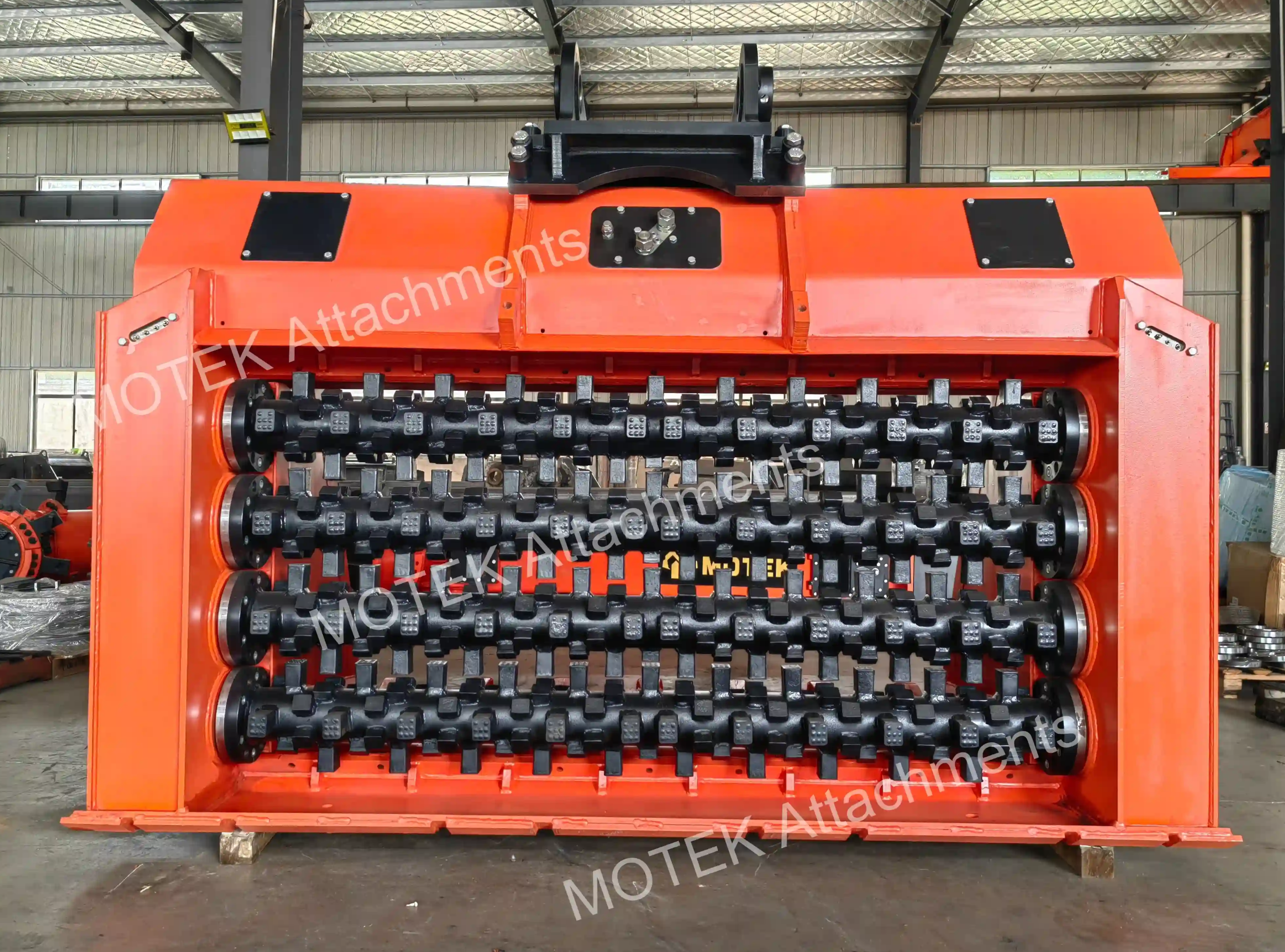
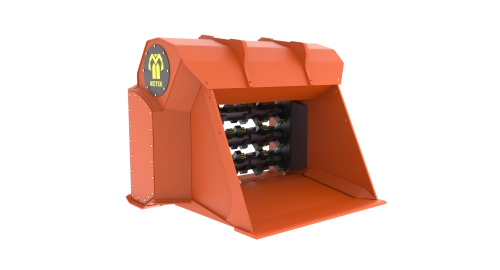
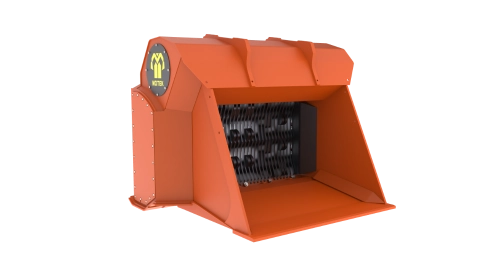
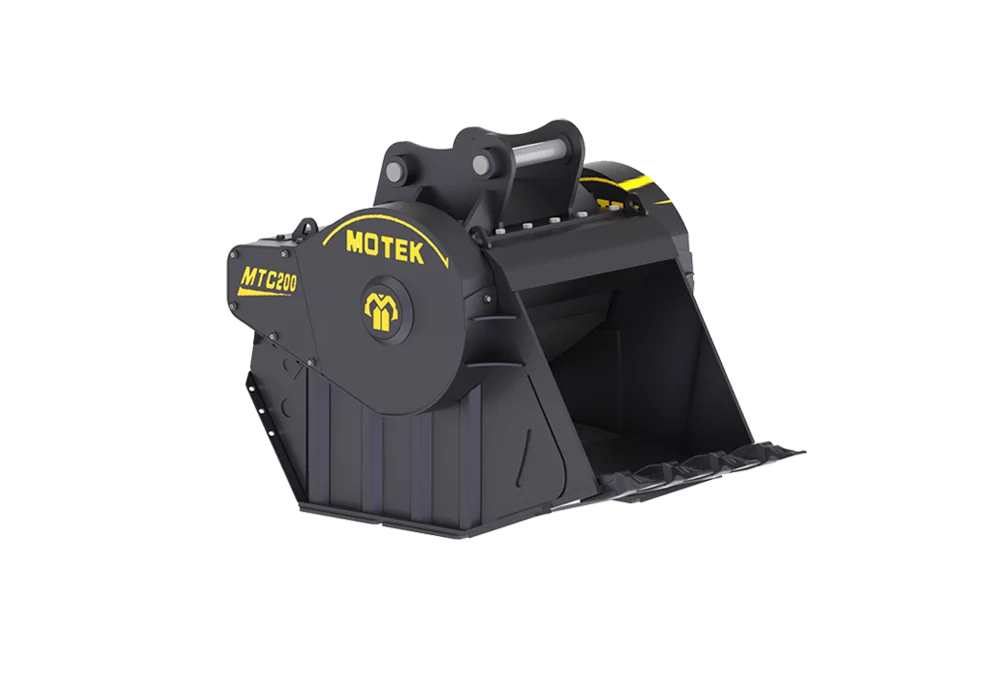
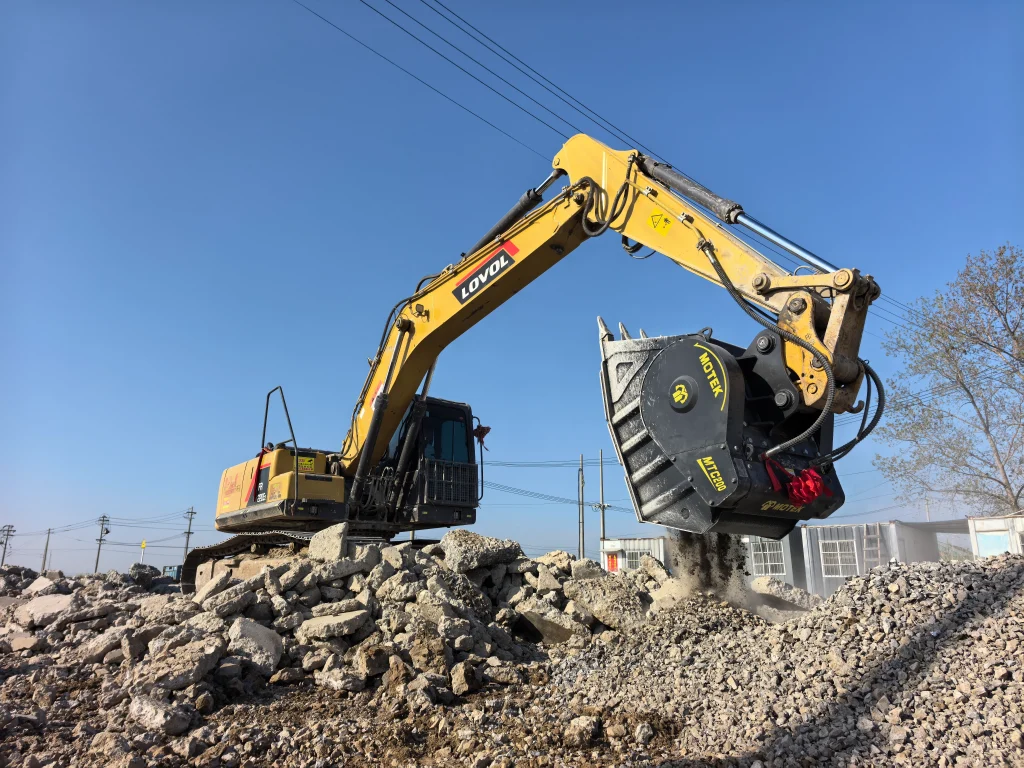
A mobile crusher bucket attaches directly to the excavator already on your site. Using the carrier machine’s hydraulic power, the bucket scoops up the oversized excavated rock, crushes it down to a specified output size, and deposits it right back into the trench as perfect backfill material.
Here is why this heavy equipment attachment is rapidly becoming an industry standard.
1. Drastic Reduction in Transportation Costs
The most immediate and impactful benefit of an excavator crusher bucket is the elimination of transport logistics. By crushing and reusing the excavated rock right where it was dug, you sever the need for hauling trucks.
- Zero hauling away: Stop paying for fuel, driver hours, and wear-and-tear on trucks just to remove spoil.
- Zero hauling in: Eliminate the need to coordinate delivery trucks for virgin aggregate.
For utility trenching projects that span miles, cutting out trucking can save tens of thousands of dollars in a matter of weeks. Explore our range of Mobile Crusher Buckets here.
2. Elimination of Material and Tipping Fees
Tipping fees at landfills and recycling centers are rising globally. Concurrently, the cost of commercial aggregate from quarries is at an all-time high due to inflation and resource scarcity. A crusher bucket completely bypasses both expenses. You stop paying to throw away perfectly good rock, and you stop paying to buy new rock. The raw material is already yours—the attachment simply unlocks its utility.
3. Unmatched Operational Efficiency
Trenching is linear work. The faster you can dig, lay the pipe, backfill, and compact, the faster you finish the job. A mobile crusher bucket streamlines this process beautifully.
While one excavator digs the trench, a second excavator equipped with a crusher bucket can follow right behind, scooping the spoils and crushing them directly over the newly laid pipe. This continuous, flowing workflow eliminates the downtime associated with waiting for material deliveries.
4. Eco-Friendly and Sustainable Construction
Modern construction is facing increasing pressure to adopt green practices, with many municipal and federal contracts requiring strict environmental compliance. On-site recycling is a massive asset for sustainable construction:
- Reduced Carbon Footprint: Fewer heavy trucks on the road means significantly lower greenhouse gas emissions.
- Conservation of Natural Resources: By recycling excavated rock, you reduce the demand on local quarries.
- Less Landfill Waste: Keeping construction debris out of local landfills is a primary goal for modern environmental regulations.
Using a crusher bucket helps contractors meet these sustainability targets, often making them more competitive when bidding on government utility contracts.
Ensuring Pipeline Safety with Crushed Backfill Material
Not all backfill is created equal. If the aggregate used to cover a pipeline is too large or contains sharp, uncrushed rocks, the weight of the compacted soil above can cause the rock to puncture or crack the pipe.
Crusher buckets allow operators to adjust the size of the output material (often ranging from 15mm to 120mm). This ensures that the recycled backfill meets the exact engineering specifications required for the trench. The crushed aggregate is uniform, allowing for proper soil compaction and drainage around the utility line. It provides a stable, protective envelope that guarantees the longevity of the underground infrastructure. Learn more about our Screening Buckets for finer material separation.
Maximizing Efficiency in Tight Urban Trenching Projects
In urban utility work, space is a luxury. Roadworks and city trenching often take place in tight, single-lane environments where large stockpiles of material and constant truck traffic are simply impossible.
Stationary crushing plants require large footprints, making them useless for tight urban jobs. A mobile crusher bucket, however, requires zero additional footprint. If your excavator can fit in the work zone, your crushing plant can fit in the work zone. This agility makes it the only viable on-site recycling method for congested city projects.
An Equipment Investment That Pays for Itself
While purchasing a mobile crusher bucket represents an upfront capital investment, the return on investment (ROI) is exceptionally fast. When you factor in the money saved on trucking, tipping fees, and purchasing new aggregate, many contractors find that the attachment pays for itself within just a few months of continuous use.
For trench backfill operations, relying on the old “dig, haul, buy, and dump” method is an easy way to lose your competitive edge. Implementing a mobile crusher bucket solution transforms waste into wealth, speeds up project timelines, and creates a safer, more sustainable construction site.
Contact our team today to find the right crusher bucket for your excavator size and project needs.