

What is the definition of soil improvement equipment, its working principle, and its main applications?
Release time: 2026-07-13
Table of Contents
Every structure depends on the strength of the ground beneath it. When soil lacks sufficient bearing capacity or stability, foundations can settle unevenly, roads may crack, and retaining structures can fail prematurely. Rather than removing unsuitable soil and replacing it with imported materials, engineers often improve the existing ground using specialized machinery. This approach saves time, reduces material costs, and minimizes environmental impact.
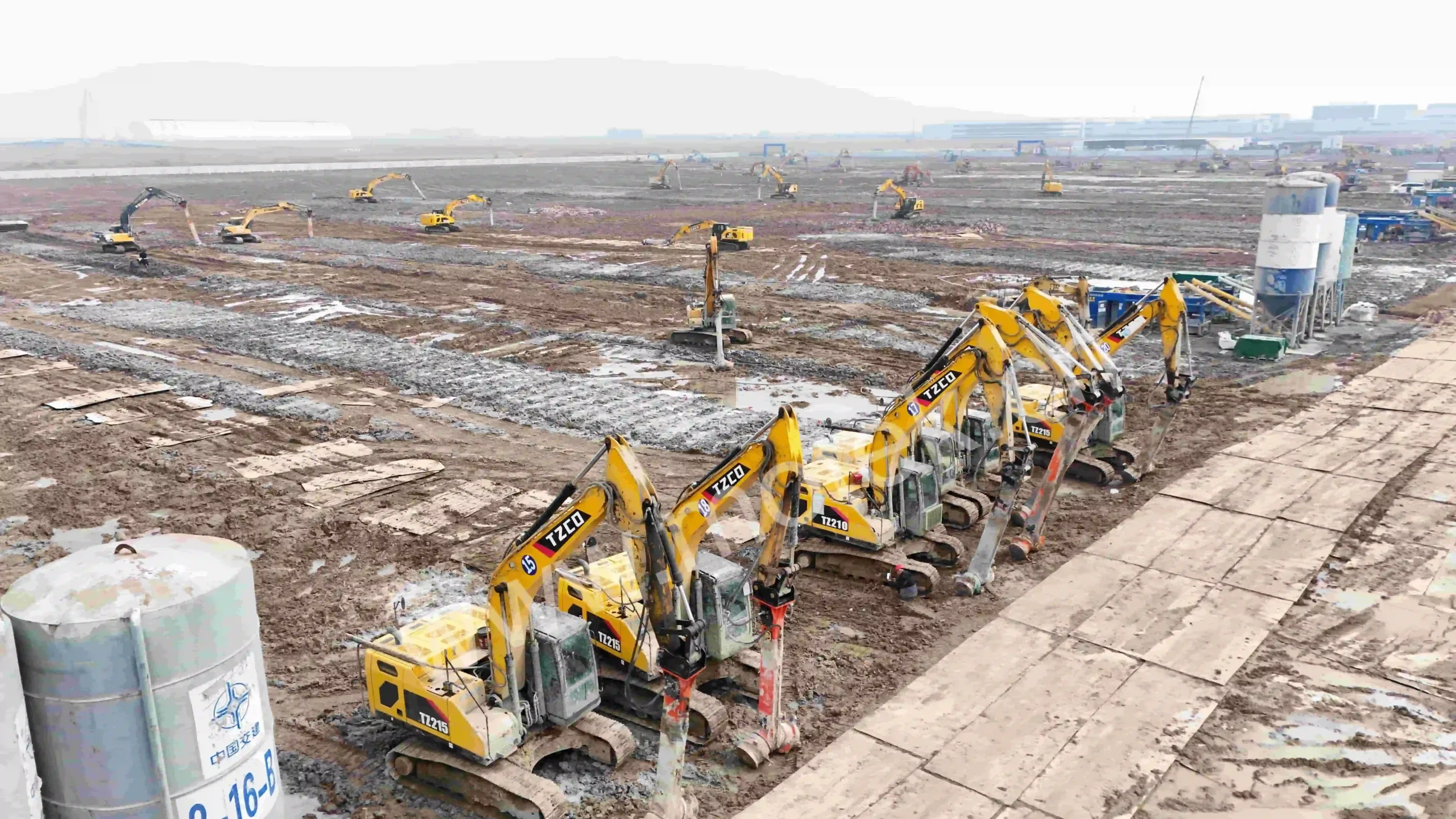
Soil improvement equipment refers to machines designed to enhance the engineering properties of soil. By compacting, mixing, reinforcing, or draining the ground, these machines increase load-bearing capacity, reduce settlement, and create stable foundations for construction projects.
From highways and airports to ports, industrial plants, and renewable energy facilities, soil improvement equipment has become an essential part of modern geotechnical engineering.
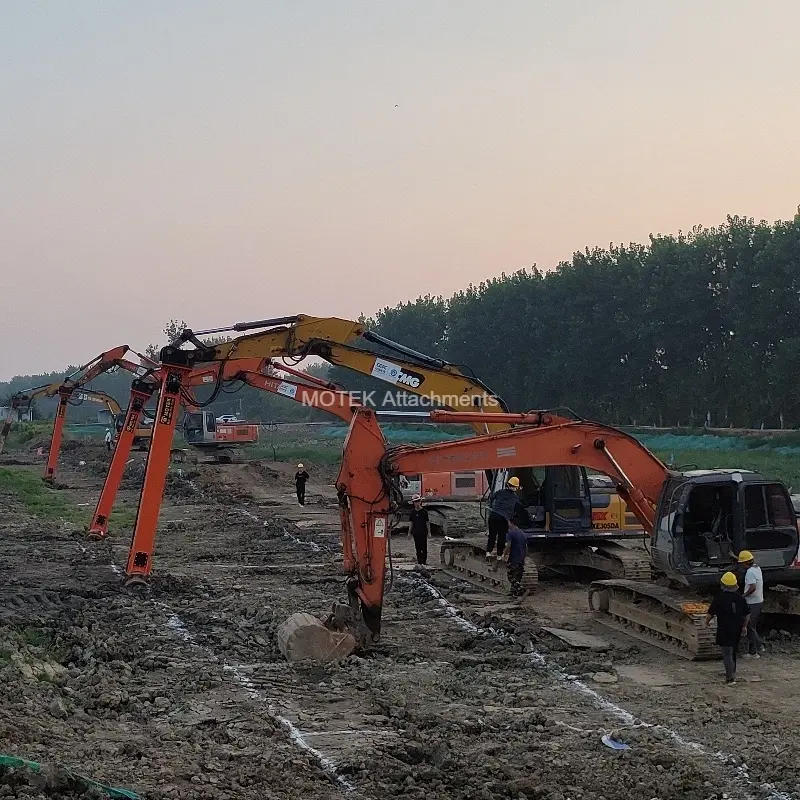
What Is Soil Improvement Equipment?
Soil improvement equipment includes a wide range of machinery used to strengthen weak or unstable ground before construction begins. The equipment modifies the physical or chemical characteristics of the soil to improve its performance under load.
Depending on site conditions, the equipment may:
- Increase soil density
- Improve shear strength
- Reduce compressibility
- Accelerate soil consolidation
- Lower permeability
- Improve resistance to liquefaction
- Enhance long-term foundation stability
Instead of treating every construction site the same way, engineers select different soil improvement methods according to soil type, groundwater conditions, structural loads, and project specifications.
Why Is Soil Improvement Necessary?
Natural ground conditions vary significantly from one location to another. Some sites contain dense gravel capable of supporting heavy structures, while others consist of soft clay, loose sand, peat, or reclaimed land that cannot safely carry construction loads.
Common problems associated with weak soil include:
- Excessive foundation settlement
- Uneven pavement surfaces
- Reduced bearing capacity
- Slope instability
- Groundwater-related deformation
- Increased maintenance costs
Improving the existing soil allows contractors to construct safely without extensive excavation or expensive foundation systems.
Working Principle of Soil Improvement Equipment
Different machines use different technologies, but most soil improvement equipment operates through one or more of the following principles.
1. Mechanical Compaction
Mechanical compaction equipment increases soil density by reducing the air spaces between soil particles.
Common equipment includes:
- Vibratory rollers
- Plate compactors
- Dynamic compaction systems
- Vibratory probes
Repeated vibration or impact forces rearrange soil particles into a denser structure, improving strength and reducing future settlement.
Mechanical compaction works particularly well in granular soils such as sand and gravel.
2. Soil Mixing
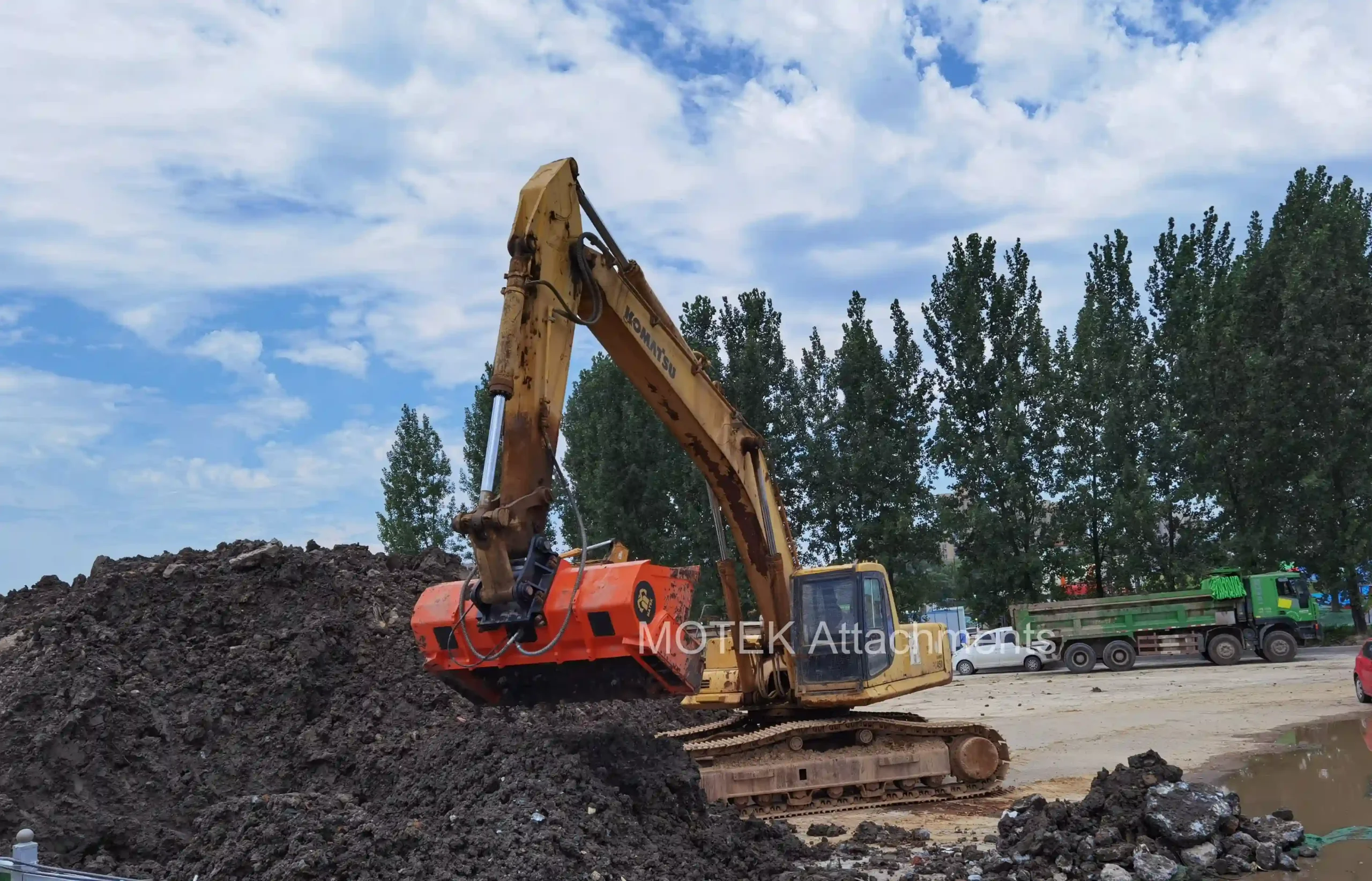
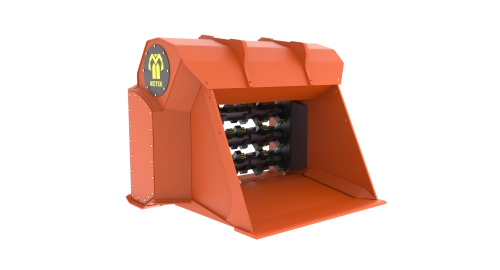
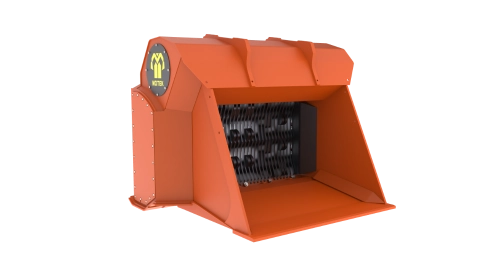
Soil mixing equipment blends the existing soil with stabilizing materials such as cement, lime, fly ash, or other binders.
Rotating mixing shafts penetrate the ground while simultaneously injecting and blending the stabilizer throughout the soil profile.
After curing, the treated soil develops significantly higher strength and stiffness.
Deep soil mixing is widely used for:
- Soft clay
- Organic soil
- Water-saturated ground
- Marine deposits
3. Grouting
Grouting equipment injects cement-based or chemical grout into underground voids and weak soil layers.
The injected material:
- Bonds loose particles
- Fills underground cavities
- Reduces water permeability
- Increases soil strength
Grouting is commonly selected for foundation repair, tunnel construction, and underground infrastructure projects.
4. Drainage and Consolidation
Some soil improvement systems focus on removing excess water rather than changing the soil itself.
Equipment installs vertical drains or prefabricated wick drains that allow pore water to escape under surcharge loading.
As water leaves the soil, consolidation occurs naturally, resulting in greater strength and lower compressibility.
This method is especially effective in soft clay deposits.
Common Types of Soil Improvement Equipment
Modern construction projects rely on several categories of specialized machinery.
Deep Soil Mixing Machines
Deep soil mixing machines create soil-cement columns by blending in-situ soil with cement slurry.
Key advantages include:
- High bearing capacity
- Minimal vibration
- Reduced excavation
- Excellent performance in soft ground
Typical applications include building foundations, retaining walls, embankments, and marine construction.
Soil Stabilization Machines
These machines pulverize existing soil while mixing stabilizing agents into the ground.
They are widely used in:
- Highway construction
- Airport pavements
- Industrial yards
- Rural road rehabilitation
Recycling existing materials also lowers transportation and disposal costs.
Vibro Compaction Equipment
Vibro compaction systems densify loose granular soils using high-frequency vibration.
They are commonly used for:
- Reclaimed land
- Port developments
- Storage tank foundations
- Large industrial facilities
Dynamic Compaction Equipment
Dynamic compaction improves deep soil layers by repeatedly dropping heavy weights from significant heights.
This method is suitable for:
- Large construction sites
- Industrial developments
- Landfill redevelopment
- Warehouse projects
Grouting Systems
A complete grouting system typically includes:
- Mixing units
- High-pressure pumps
- Injection pipes
- Monitoring equipment
These systems provide precise control over grout volume and injection pressure.
Vertical Drain Installation Rigs
Vertical drain installation equipment inserts prefabricated drains into soft ground to accelerate consolidation.
Typical projects include:
- Highway embankments
- Coastal reclamation
- Airport expansion
- Port terminals
Main Applications of Soil Improvement Equipment
Building Foundations
Commercial buildings, residential towers, and industrial facilities require stable foundations capable of supporting long-term structural loads.
Ground improvement minimizes settlement while reducing the need for deep foundation systems.
Road Construction
Weak subgrades often shorten pavement life.
Soil stabilization equipment improves the base layer by increasing strength and reducing deformation caused by heavy traffic.
The result is smoother roads with lower maintenance requirements.
Railway Infrastructure
Railway tracks demand consistent support along their entire length.
Ground improvement equipment helps prevent track settlement, improving passenger comfort and reducing maintenance interruptions.
Airport Construction
Runways and taxiways experience repeated heavy aircraft loads.
Improved ground conditions provide uniform support, reducing the risk of pavement cracking and uneven settlement.
Port and Marine Engineering
Many ports are constructed on reclaimed coastal land with soft marine clay.
Deep soil mixing, vibro compaction, and vertical drainage systems improve ground stability before construction begins.
Applications include:
- Container terminals
- Bulk cargo ports
- Shipyards
- Offshore facilities
Mining Operations
Mining projects require stable ground for processing plants, haul roads, and heavy equipment.
Soil improvement equipment strengthens weak areas while reducing operational risks.
Renewable Energy Projects
Wind farms and solar power stations are frequently located in remote areas where soil quality varies considerably.
Ground improvement provides reliable support for turbine foundations, substations, and equipment platforms.
Water Infrastructure
Dams, reservoirs, levees, and flood protection systems often require soil strengthening to improve long-term stability and control seepage.
Grouting and soil mixing technologies are widely used in these applications.
Advantages of Soil Improvement Equipment
Investing in soil improvement offers both technical and economic benefits.
Major advantages include:
- Higher bearing capacity
- Reduced foundation settlement
- Lower construction costs
- Faster project completion
- Improved structural safety
- Reduced excavation requirements
- Better use of existing site materials
- Longer infrastructure service life
- Lower maintenance expenses
- Reduced environmental impact
These benefits make soil improvement an attractive alternative to large-scale soil replacement.
How to Select the Right Soil Improvement Equipment
Choosing the appropriate equipment depends on several project-specific factors.
Consider the following:
- Soil classification
- Groundwater level
- Required treatment depth
- Structural load requirements
- Construction schedule
- Site accessibility
- Environmental restrictions
- Equipment productivity
- Available budget
A detailed geotechnical investigation provides the information needed to determine the most effective ground improvement method.
Conclusion
Soil improvement equipment plays a critical role in preparing construction sites for safe and reliable development. By increasing soil strength, reducing settlement, improving drainage, and enhancing foundation performance, these machines enable engineers to build on challenging ground conditions that would otherwise require costly soil replacement.
As infrastructure projects become larger and more technically demanding, advanced soil improvement equipment will remain an essential investment for contractors seeking efficient, durable, and cost-effective ground stabilization solutions.
Frequently Asked Questions (FAQ)
What is soil improvement equipment?
Soil improvement equipment consists of specialized machinery used to enhance the strength, stability, and load-bearing capacity of weak or unstable ground before construction.
How does soil improvement equipment work?
Depending on the application, the equipment improves soil through mechanical compaction, deep mixing with stabilizing agents, grouting, or drainage techniques that increase strength and reduce settlement.
What industries use soil improvement equipment?
Construction, transportation, mining, marine engineering, renewable energy, municipal infrastructure, and industrial manufacturing all rely on soil improvement equipment.
What are the benefits of soil improvement instead of soil replacement?
Ground improvement typically reduces excavation, lowers material and transportation costs, shortens construction time, minimizes environmental impact, and provides long-term foundation stability.
Author

Lilly Liu
MOTEK Director of International Sales Equipped with 15 years of dedicated experience in the construction machinery industry, she has a deep understanding of global market dynamics and regional customer needs. She has successfully led teams to penetrate key international markets, particularly in promoting construction machinery attachments and securing high-value overseas orders.