

What are the application scenarios for crusher bucket attachments in construction demolition waste processing?
Release time: 2026-07-07
During construction demolition and waste recycling, contractors consistently prioritize improving on-site processing efficiency, reducing transportation costs, and achieving resource reuse. Motek crusher bucket attachments offer an efficient solution for handling demolition waste; they mount directly onto excavators to crush and reduce the volume of materials—such as concrete, brick, and stone—on-site, thereby boosting operational efficiency and lowering overall costs.
Table of Contents
How do crusher bucket attachments work?
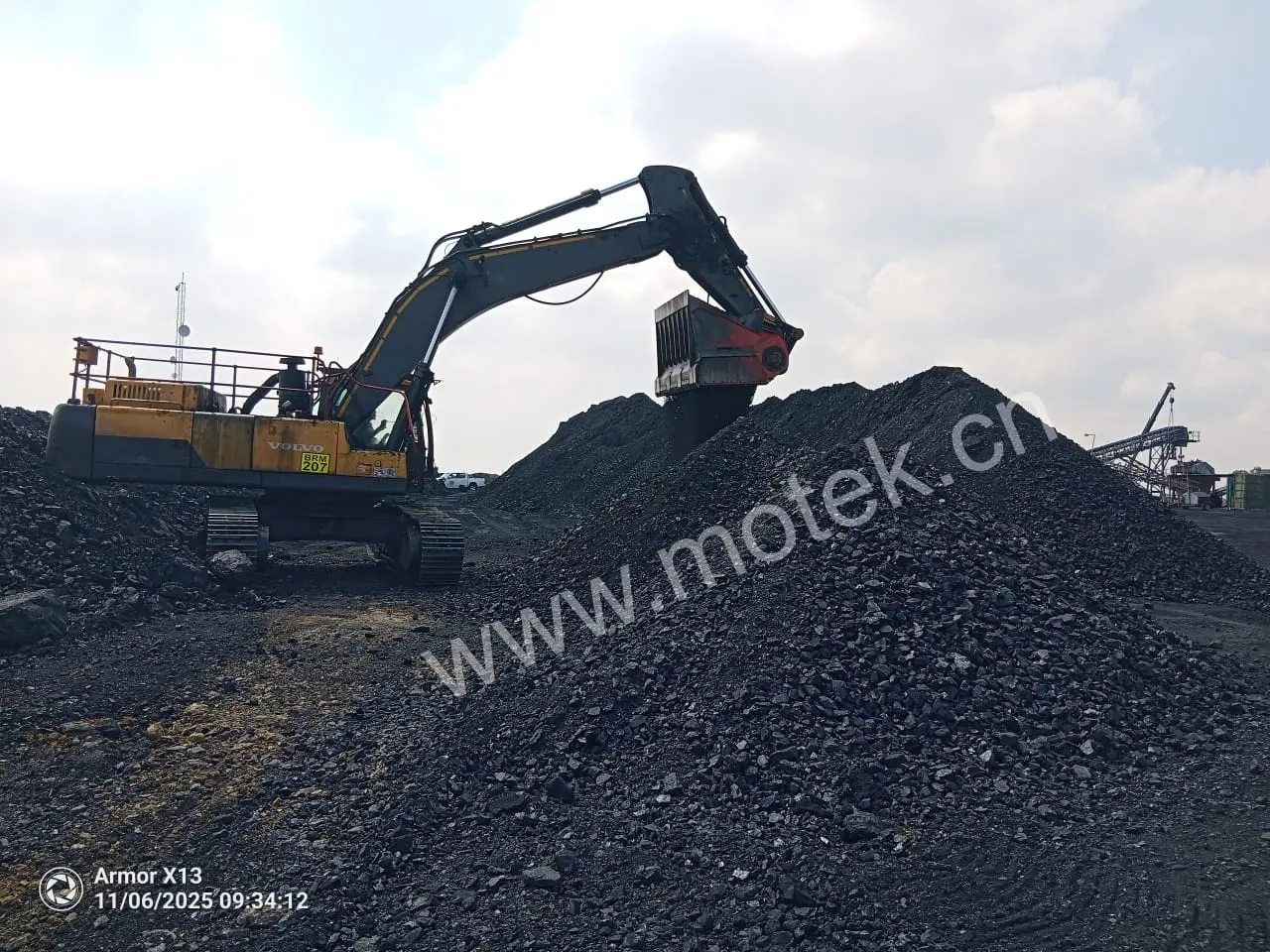
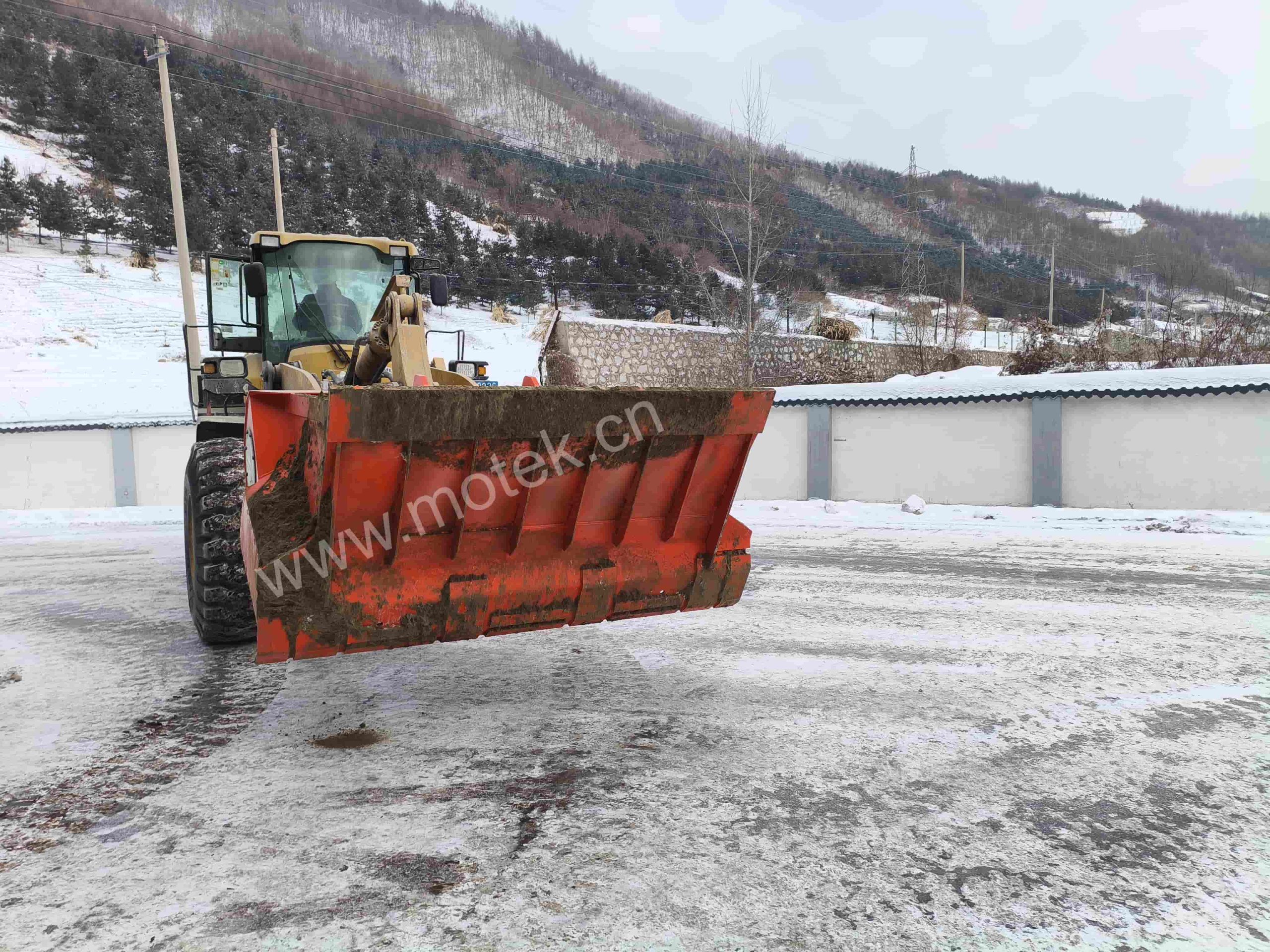
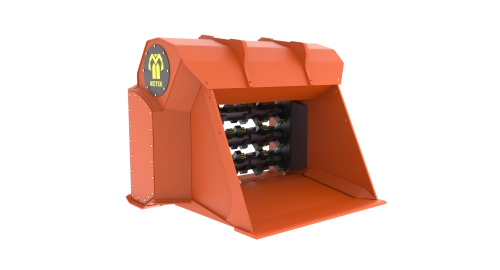
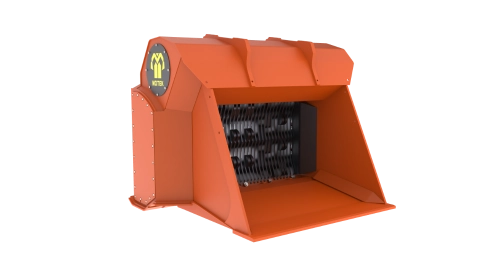
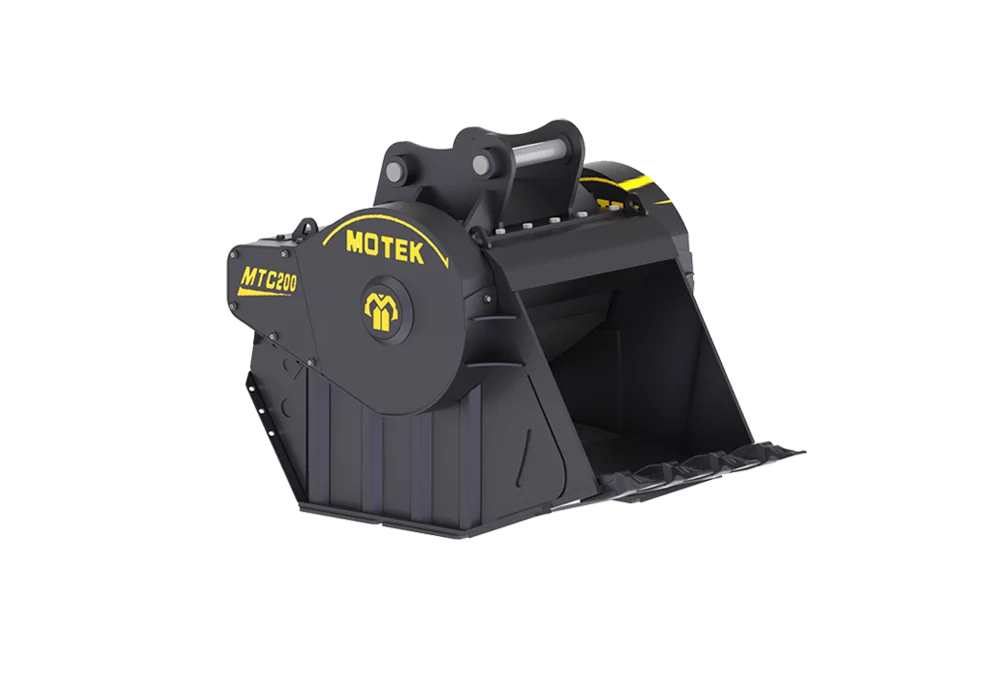
A crusher bucket is a crushing attachment powered by the excavator’s hydraulic system. During operation, hydraulic power drives a crushing mechanism that squeezes, bites, and crushes large pieces of material entering the bucket, transforming bulky demolition waste into granular material that is easier to handle and process further. Unlike standard excavator buckets, crusher buckets combine loading capabilities with primary crushing functions, enabling a “crush-while-digging” workflow.
The key advantage of this method is that primary processing takes place on-site. Instead of transporting large waste chunks off-site for centralized crushing, crews can reduce material volume directly at the demolition site, eliminating intermediate steps. For large-scale projects requiring continuous operation, this approach significantly enhances overall efficiency.
What are the typical characteristics of construction demolition waste?
Construction demolition waste is rarely a single material; rather, it is a mixture of concrete, brick, mortar, stone, residual rebar, and other impurities. Such materials exhibit several typical characteristics. First, they generally possess high hardness—particularly reinforced concrete blocks—making them difficult to crush. Second, the waste often consists of large, irregularly shaped pieces that are inconvenient to stack and transport. Third, the waste frequently contains impurities—such as wood, metal fragments, and dust—which can affect the effectiveness of subsequent screening and recycling processes.
Furthermore, the composition of waste varies significantly from one demolition project to another. Demolition projects generate specific types of waste depending on the structure: old residential buildings yield significant amounts of brick-concrete debris; industrial plants produce concrete foundations and equipment platform waste; and urban road and bridge demolition often leaves behind high-strength concrete and rebar. These material characteristics dictate that processing equipment must be highly adaptable and wear-resistant.
In which demolition scenarios are crusher bucket attachments most commonly used?
Demolition of old residential buildings;
Renovation of commercial buildings;
Demolition of industrial plants;
Demolition of bridges and auxiliary road structures;
Processing concrete waste during urban renewal projects.
Excavator crusher attachment have a wide range of applications in the demolition sector, proving particularly suitable for handling large volumes of waste that require on-site volume reduction. In residential demolition, they are frequently used to process concrete and masonry elements—such as walls, floor slabs, beams, and columns—helping contractors clear the site quickly. During commercial building renovations, crusher buckets can be used to demolish specific structural components and crush the resulting waste on-site, thereby alleviating the burden of off-site transport.
Crusher buckets also play a vital role in the demolition of industrial plants. Structures such as foundations, platforms, and equipment bases are often massive and made of high-strength materials; using a crusher bucket accelerates the post-demolition cleanup process. They are highly practical for road renovations, bridge demolitions, and urban renewal projects, where tight schedules and limited on-site space necessitate efficient, on-site processing methods.
Why are crusher buckets better suited for on-site processing rather than centralized processing?
The advantages of on-site processing over centralized processing are significant. Centralized processing typically requires loading waste onto vehicles, transporting it to a designated site, and then performing secondary crushing and sorting. This multi-step handling process not only increases logistics costs but also risks time delays. In contrast, a crusher bucket attachment performs primary crushing directly at the demolition site, immediately reducing the waste’s volume and minimizing the need for multiple transport trips and loading/unloading operations.
On-site processing also helps contractors manage site space more effectively. Demolition sites often have limited room; if waste is not processed promptly, it can easily accumulate and hinder subsequent construction work. By using a crusher bucket, large pieces of debris are quickly converted into smaller particles, making them easier to store temporarily, transport, or reuse. At the same time, on-site processing helps minimize the risks of dust generation and material spillage, aligning with current requirements for green construction and environmentally friendly operations.
What technical parameters should be considered when selecting a crusher bucket attachment?
When selecting a crusher bucket attachment, compatibility with the excavator is the primary consideration. Excavators of different tonnages require specific bucket sizes; an improper match can compromise crushing efficiency or even place excessive strain on the hydraulic system. Secondly, bucket capacity and processing throughput must be evaluated to ensure the equipment can handle the project’s volume of waste material.
Another critical parameter is the hardness of the material to be processed. Demolition waste varies significantly in hardness across projects, so the equipment requires sufficient crushing power and a wear-resistant design. Hydraulic system compatibility is also crucial, as it directly determines operational stability. For long-term users, factors such as the ease of replacing wear parts, simplicity of maintenance, and the quality of after-sales support are also key considerations.
Crusher bucket attachments offer significant value in the processing of construction demolition waste. They enable on-site crushing and rapid volume reduction, thereby lowering transportation costs, boosting operational efficiency, and facilitating the recycling of construction waste. For enterprises seeking to balance construction efficiency, cost control, and environmental compliance, this represents a highly practical solution. As a professional brand of engineering attachments, Motek consistently provides global customers with high-performance crusher buckets and reliable technical support, helping to make the processing of construction demolition waste more efficient, cost-effective, and sustainable.
Author

Jack Liu
MOTEK General Manager 20 years of experience in construction machinery. Former agent for several high-end European attachment brands. A visionary leader driving MOTEK's growth.