

How to Choose Screening Equipment for Compost and Organic Materials?
Release time: 2026-10-28
Table of Contents
Compost production and organic material processing involve different types of materials, including organic fertilizer, topsoil, and other materials that require screening or further treatment. Their particle sizes, moisture levels, and physical conditions can vary, making equipment selection an important part of the processing workflow.
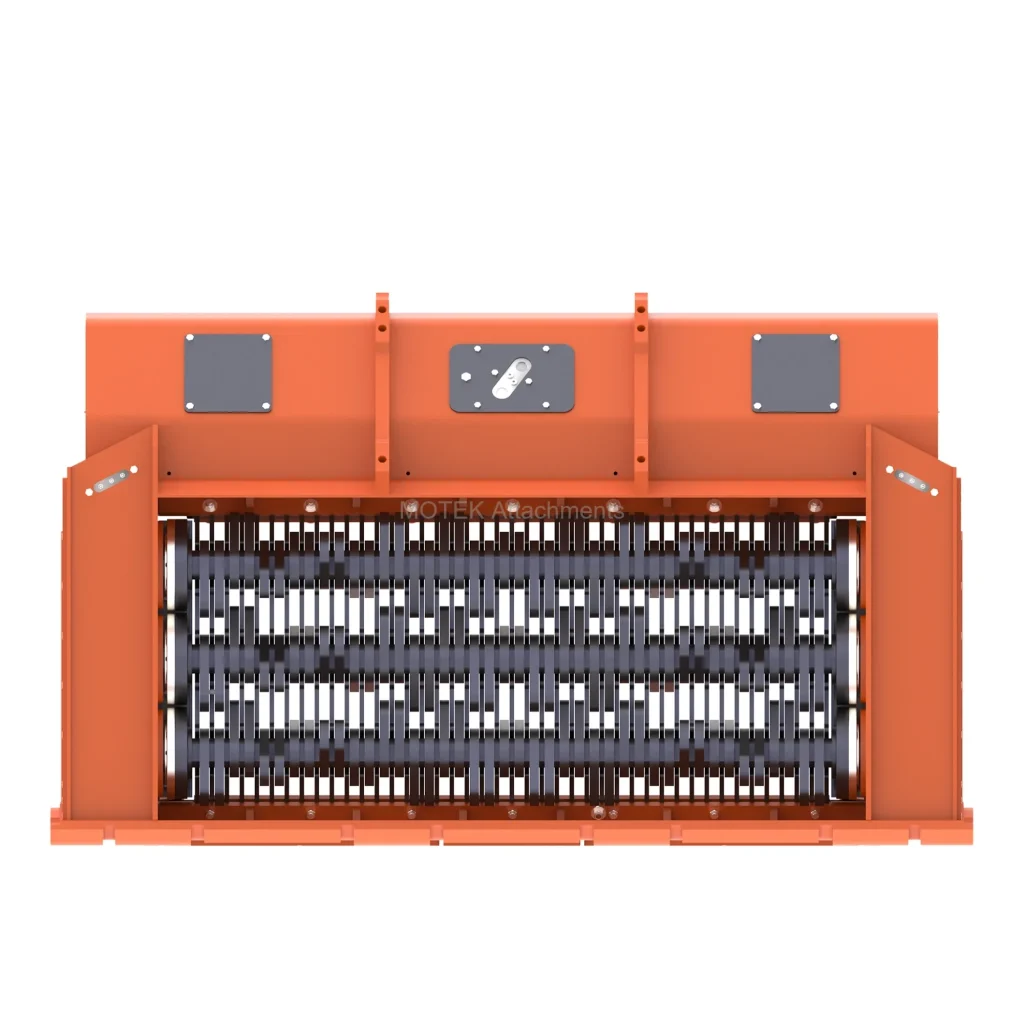
Choosing suitable screening bucket for compost equipment requires more than comparing machine capacity. Buyers should consider the material characteristics, required processing functions, screening specifications, and compatibility with the carrier machine.
With over 10 years of patented technology development and iterative R&D experience, MOTEK specializes in the research, production, sales, construction, and technical services of high-end construction machinery attachments. Its experience in environmental remediation, solidification, and solid waste disposal provides a foundation for developing equipment for different material-processing applications.
1. Identify the Materials to Be Processed
Before selecting screening bucket, it is important to identify the type and condition of the incoming materials. Different materials require different processing approaches, and their physical characteristics can affect screening performance.
Particle Size and Material Composition
Compost and organic material processing may involve fine soil, organic fertilizer, plant residues, and mixed materials. Some feedstocks contain relatively uniform particles, while others include larger pieces or unwanted materials.
The required screening result should guide equipment selection. For example, projects that need to separate smaller particles from larger materials should pay attention to the screening structure and outlet specifications.
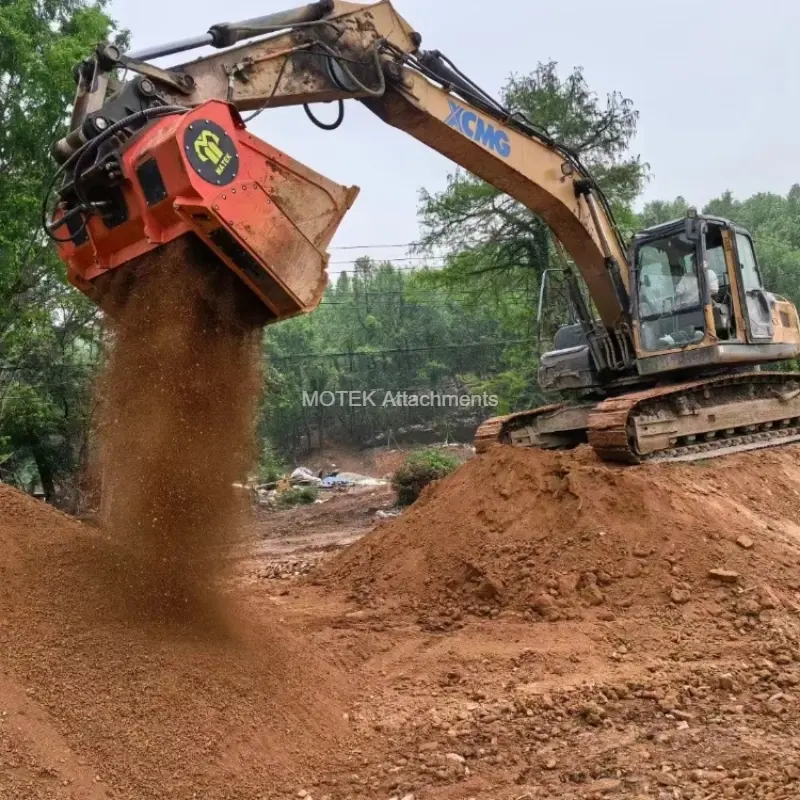
The DB Series is designed for fine screening and can handle materials with smaller particle sizes and finer textures. Its listed screening outlet particle size is no more than 2 cm, making it suitable for applications that require relatively fine material separation.
Moisture Content and Material Viscosity
Moisture content is another factor to consider. Wet soil and sticky materials may adhere to equipment components, making material handling and screening more difficult.
The DB Series features a self-cleaning structure designed to handle soil with high water content. Its grid structure is also designed to prevent blockage when processing highly viscous petroleum sludge.
For projects involving wet or adhesive materials, buyers should check whether the equipment structure is suitable for the actual material conditions rather than relying on particle size alone.
Unwanted Materials and Impurities
Materials collected from different sites may contain stones, wood, and other unwanted objects. These materials can affect the quality of the screened output and may need to be separated during processing.
The DB Series can screen out stones, wood, and other waste contained in petroleum sludge. It is also listed for applications involving the separation of garbage from soil and the treatment of contaminated soil.
The type and amount of impurities should therefore be considered when determining the required equipment configuration.
2. Determine the Required Processing Functions
Not every composting project requires the same equipment functions. Some applications mainly need fine screening, while others may also require crushing, mixing, or material turning.
Fine Screening for Compost and Topsoil
Fine screening helps separate materials according to particle size. It is useful when compost or topsoil needs further classification before reuse or subsequent processing.
The DB Series is specifically designed for fine screening. According to the MTS317 product information, its applications include compost and topsoil screening, sand screening, and separating unwanted materials from soil.
For projects where particle separation is the main requirement, the screening specifications should be one of the first factors considered.
Crushing and Mixing
Some materials contain larger pieces or compacted sections that require additional treatment. In these cases, screening alone may not meet the processing requirements.
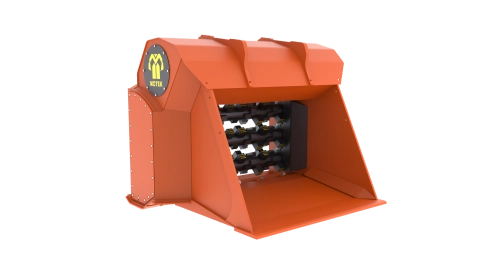
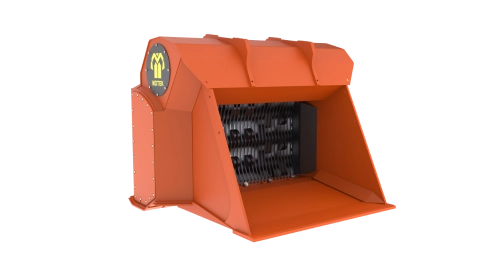
The MTS317 can perform screening, crushing, and mixing by replacing its shafts and blades. This allows the attachment to support different processing tasks through changes to its working components.
Buyers should confirm the appropriate shaft and blade configuration according to the materials and intended operation. The actual processing functions depend on the selected configuration.
Aeration and Material Handling
Aeration is an important operation in organic fertilizer composting. Turning and loosening materials can form part of the composting process, depending on the processing method.
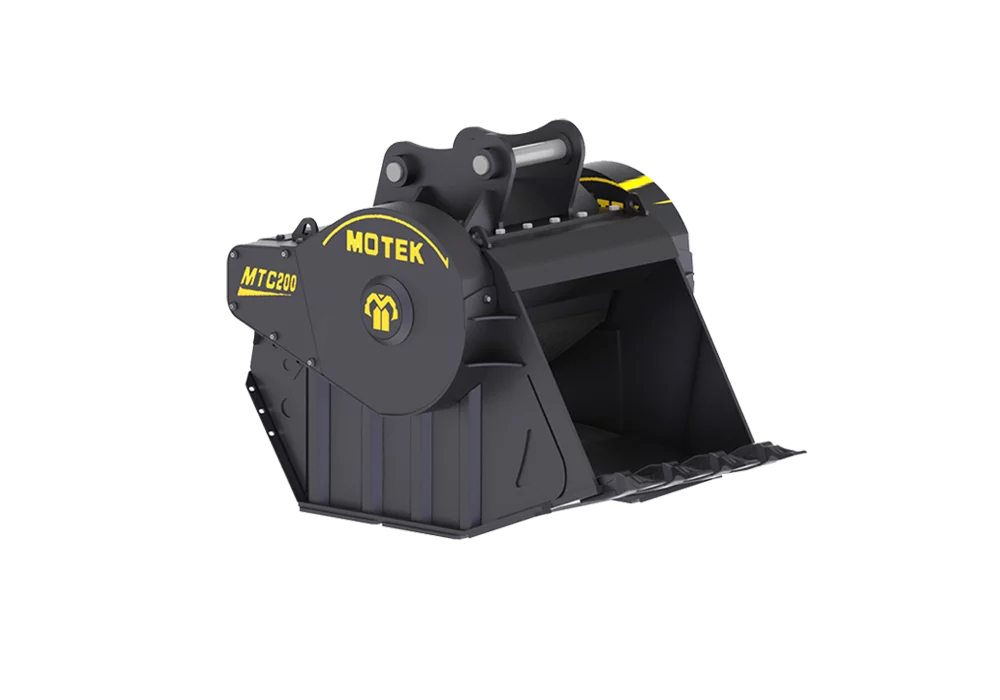
MOTEK’s screening bucket product information also lists aeration and loading among the available processing operations. Its application range includes organic fertilizer composting and aeration.
For projects that combine screening with other material-handling tasks, buyers should consider whether a multifunctional attachment can meet the requirements of the overall workflow.
3. Check the Screening Structure and Maintenance Requirements
The screening structure affects how an attachment handles different materials. Maintenance requirements should also be considered before purchasing equipment, especially for projects involving wet or sticky materials.
Self-Cleaning and Grid Structure
Material buildup can interrupt continuous operation and increase the need for cleaning. A suitable screening structure can help reduce this problem.
The DB Series uses a self-cleaning structure and an innovative grid design. The product information specifically describes its ability to handle soil with high water content and process highly viscous petroleum sludge without grid blockage.
These structural features are relevant when evaluating equipment for challenging material conditions. However, the actual results will depend on the material being processed and the working environment.
Working Components and Blade Options
The working components should match the required processing tasks. Different blade sizes and configurations may be considered according to the material and the intended operation.
For the DB Series MTS317, the listed blade sizes are 8 mm, 16 mm, 25 mm, and 50 mm. Customized blades are also available.
When selecting a configuration, buyers should confirm the required blade arrangement with the supplier rather than assuming that every blade option produces the same screening result.
Cleaning and Lubrication
Regular maintenance helps keep screening equipment in good working condition. The DB Series features accessible lubrication points, allowing lubricating oil to be added during routine maintenance.
The product information also emphasizes the importance of regular cleaning and maintenance in reducing failures associated with insufficient maintenance and supporting equipment reliability during long-term use.
Before purchasing, operators should understand the recommended maintenance intervals and inspection procedures for the selected model.
4. Match the Screening Bucket to the Carrier Machine
A suitable attachment must match the excavator or loader used on site. Machine compatibility affects installation, hydraulic operation, and the overall working arrangement.
When selecting an excavator screening bucket, buyers should check the following factors:
- Machine operating weight: Confirm that the excavator or loader falls within the recommended range for the selected model.
- Hydraulic flow: Compare the carrier machine’s available hydraulic flow with the attachment’s rated requirements.
- Mounting interface: Check the connection dimensions and mounting arrangement before installation.
- Attachment weight: Make sure the carrier machine can safely handle the attachment.
- Working conditions: Consider site access, material volume, and the expected workload.
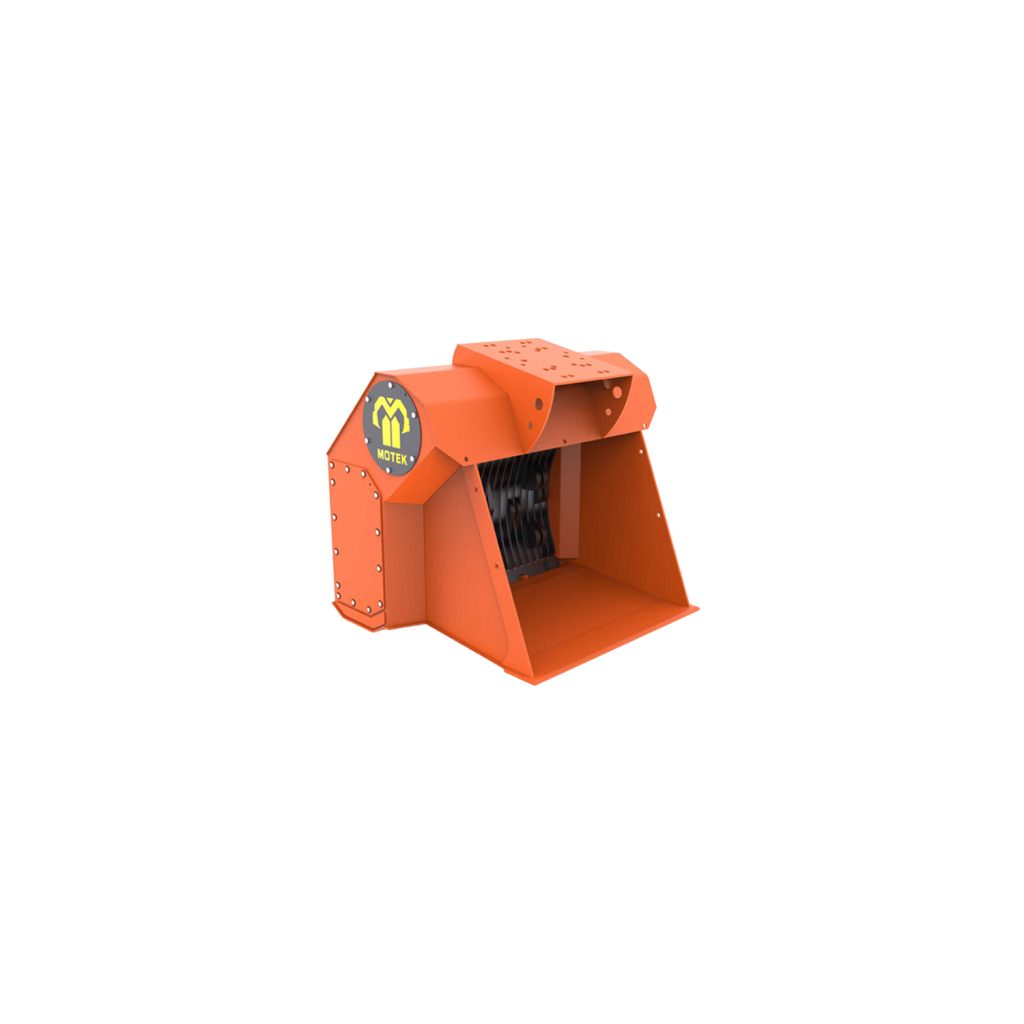
For example, the DB Series MTS317 is designed for excavators weighing 25–30 tons or loaders weighing 12–22 tons. Its main specifications include:
| Parameter | MTS317 Specification |
| Dimensions | 2276 × 1502 × 1438 mm |
| Weight | 2,660 kg |
| Maximum hydraulic flow | 220 L/min |
| Rated hydraulic flow | 150–220 L/min |
| Capacity | 1.7 m³ |
| Blade sizes | 8 / 16 / 25 / 50 mm |
| Number of shafts | 3 |
| Applicable excavator | 25–30 tons |
| Applicable loader | 12–22 tons |
These specifications provide a reference for evaluating compatibility. The final selection should also take the carrier machine’s hydraulic system and mounting arrangement into account.
5. Compare DB Series Models for Different Machine Sizes
The DB Series includes several models for different excavator and loader sizes. Comparing their recommended machine ranges can help buyers narrow down suitable options.
| Model | Applicable Excavator | Applicable Loader |
| MTS204 | 5–10 tons | 2–8 tons |
| MTS207 | 10–18 tons | 5–9 tons |
| MTS312-DB | 18–25 tons | 9–14 tons |
| MTS317-DB | 25–30 tons | 12–22 tons |
| MTS320-DB | 30–45 tons | 14–30 tons |
The models cover a range of machine sizes, allowing buyers to consider the attachment according to their existing equipment.
Machine weight should not be the only selection criterion. Hydraulic flow, attachment weight, mounting compatibility, and the required processing functions should also be checked before confirming a model.
6. Evaluate the Equipment According to the Processing Application
Different material-processing projects may require different combinations of screening and other operations. A clear understanding of the workflow can help determine whether a fine-screening attachment is suitable.
The DB Series is designed for fine screening. Its listed applications include compost and topsoil screening, sand screening, separating waste from soil, contaminated soil treatment, and other material-processing tasks.
For organic fertilizer composting, MOTEK also identifies screening and crushing buckets as equipment used in fermentation and aeration processes. The appropriate product and configuration should be determined according to the actual processing requirements.
If the main objective is fine material separation, the DB Series is a relevant option to evaluate. If the project also requires crushing or mixing, buyers can consider the MTS317’s configurable shafts and blades and confirm the required arrangement before purchase.
7. Select Equipment Based on Actual Project Requirements
Choosing screening equipment requires a practical assessment of the materials, working environment, and carrier machine. Before making a decision, buyers should identify the feedstock type, moisture level, particle size, impurity content, and required processing functions.
It is equally important to check the attachment’s technical specifications and maintenance requirements. A suitable configuration can help reduce unnecessary material handling and make better use of existing construction machinery.
MOTEK integrates R&D, production, sales, construction, and technical services for high-end construction machinery attachments. With over 10 years of patented technology development and experience in environmental remediation, solidification, and solid waste disposal, the company provides OEM/ODM services according to customer requirements and actual working conditions.
By evaluating material characteristics, equipment specifications, and processing objectives together, customers can identify a suitable screening solution for compost and other organic material applications.
Frequently Asked Questions
1. What type of screening equipment is suitable for compost?
A screening bucket designed for fine material processing can be considered for compost applications. The choice depends on the material characteristics, required particle size, moisture content, and processing objectives. The DB Series is listed for compost and topsoil screening.
2. Can the DB Series handle materials with high water content?
Yes. The DB Series features a self-cleaning structure designed to handle soil with high water content. Its grid structure is also designed to prevent blockage when processing highly viscous petroleum sludge.
3. What materials can the DB Series process?
The listed applications include compost and topsoil screening, sand screening, separating waste from soil, contaminated soil treatment, and processing petroleum sludge.
4. How do I choose the right excavator screening bucket model?
Check the excavator or loader’s operating weight, hydraulic flow, mounting interface, and ability to handle the attachment weight. Then compare these details with the specifications and recommended machine range of the available models.
5. Can one screening bucket perform multiple processing tasks?
The MTS317 can perform screening, crushing, and mixing by replacing its shafts and blades. MOTEK also lists aeration and loading among the processing operations supported by its screening bucket equipment. The required configuration should be confirmed according to the application.
Conclusion
Choosing screening equipment for compost and organic materials requires attention to more than screening capacity. Material characteristics, moisture content, screening specifications, working components, maintenance, and carrier machine compatibility all influence equipment selection.
The DB Series provides a fine-screening solution with multiple model options and configurable working components. Its listed applications include compost and topsoil screening, while the MTS317 also supports crushing and mixing through changes to its shafts and blades.
With its R&D capabilities, manufacturing experience, and OEM/ODM services, MOTEK works with customers to identify suitable attachment configurations for different material-processing conditions. The aim is to provide practical equipment solutions that meet the requirements of each project.
Author

Jack Liu
MOTEK General Manager 20 years of experience in construction machinery. Former agent for several high-end European attachment brands. A visionary leader driving MOTEK's growth.