


Anhui Motek Crushing Bucket Selection Guide
Release time: 2026-04-27
Faced with the dazzling array of crusher buckets on the market, making a precise choice becomes a critical factor determining the success or failure of a project. Many users initially focus solely on crushing force or price, often overlooking crucial factors such as material characteristics, compatibility with the host machine, long-term maintenance costs, and integration with intelligent systems. This article aims to clarify this decision-making process by breaking down this complex choice into four core functional dimensions that require in-depth evaluation. Our goal is to help you establish a scientific selection logic, thereby avoiding common pitfalls and maximizing your return on investment.
Table of Contents
Do the Core Crushing Performance and Efficiency Match My Material and Capacity Requirements?
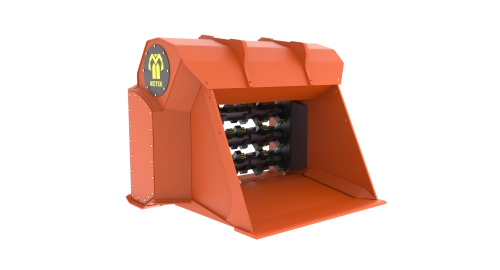
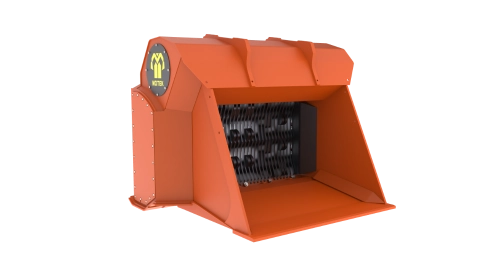
When selecting a excavator crusher bucket, the primary focus must be on its core crushing capability. This involves more than simply looking at sheer “power”; it requires a precise match with the material’s hardness (e.g., granite vs. concrete), the size of the feed material, and the target output size. You must examine the design of the crushing chamber, as well as the layout and impact mechanism of the crushing teeth or jaws, to ensure they are optimized for your specific typical materials (such as mining rock, construction waste, or frozen soil). Furthermore, theoretical capacity must be evaluated in conjunction with actual on-site feed continuity and the hydraulic flow rate of the host machine to avoid efficiency waste—whether it be “overburdening a small machine” or “underutilizing a large machine.” Anhui Motek, for instance, frequently offers a series of selection options featuring different tooth profiles and chamber types tailored to the specific characteristics of a client’s primary materials, thereby providing precise solutions to this core challenge.
What is the Quality of the Wear Parts—Their Material, Structural Design, and Ease of Replacement?
A crusher bucket is, by nature, a “consumable” item; therefore, its wear resistance directly determines its total lifecycle cost. You should investigate thoroughly: Are the critical wear parts (such as tooth tips, jaw plates, and liners) made from high-strength alloy steel or advanced composite wear-resistant materials? Are their heat treatment processes and hardness distributions uniform? Is the structural design conducive to rapid replacement (e.g., utilizing modular designs or bolted connections rather than welding)? What are the estimated downtime and costs associated with replacing a full set of wear parts? An excellent “design-for-maintenance” approach can significantly reduce overall maintenance costs over time. Professional manufacturers like Anhui Motek typically clearly specify the material grades and expected service life of wear parts in their product documentation, while also providing convenient replacement solutions—a critical factor when evaluating long-term economic viability.
How is the Compatibility and Connection Security with My Host Machine (e.g., Excavator)?
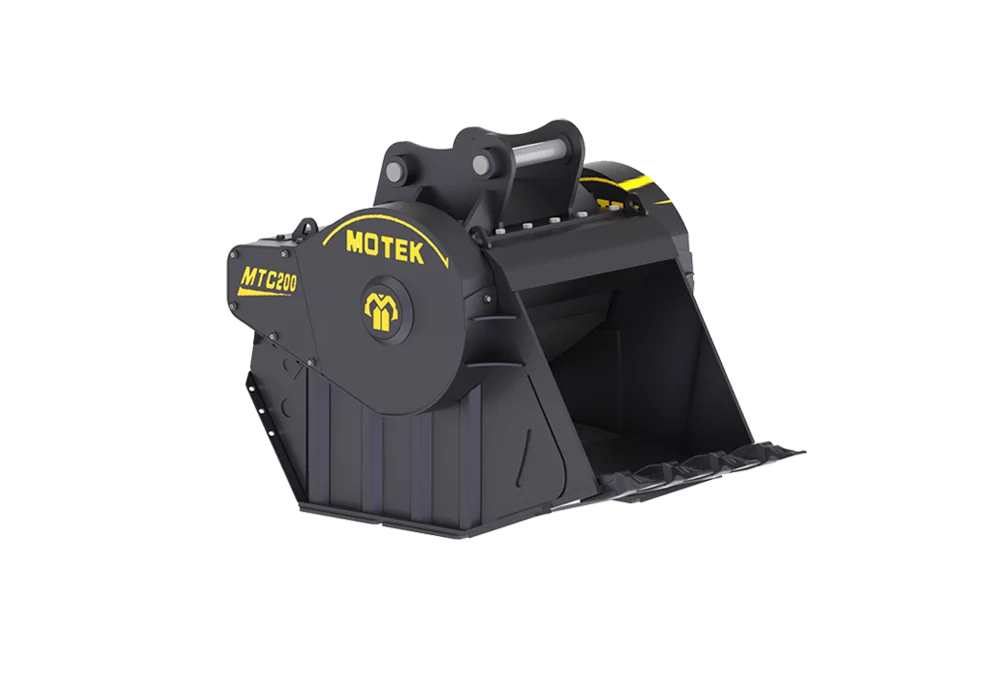
A crushing bucket is an “attachment,” and its compatibility with the host machine is of paramount importance. You must verify the following: Do the bucket capacity and self-weight fall within your excavator’s standard operating weight and hydraulic system load limits? Are the hydraulic interfaces—specifically flow rate, pressure, and return oil method—fully compatible with the host machine? Does the mounting bracket (quick coupler adapter) meet the standards of your existing quick-change system (e.g., ISO, SANY, CAT)? Once installed, will it adversely affect the host machine’s balance or the operator’s field of view? Any improper adaptation could lead to reduced efficiency, hydraulic system overload, or safety hazards. Reputable brands such as Anhui Motek typically provide detailed compatibility charts and offer custom mounting brackets to ensure a seamless fit.
What about overall structural integrity, environmental sealing, and intelligent control options?
Crushing buckets operate in harsh environments; therefore, their overall structure—including the bucket body and articulation points—must possess sufficient fatigue strength and impact resistance. You should scrutinize the design to ensure it incorporates adequate structural redundancy and that critical welds are of high quality. Concurrently, assess the protection rating (e.g., IP rating) of the hydraulic system components—such as cylinders and valve blocks—to ensure they offer sufficient resistance against dust, water, and physical impact. Furthermore, modern crushing buckets are increasingly integrating intelligent features: Do they offer an automatic “anti-lock” function to prevent overload jamming? Can wear-monitoring sensors be installed? Do they support remote operational monitoring that is compatible with the host machine’s systems? While these features may increase the initial investment, they significantly enhance operational safety and equipment management capabilities, making them crucial considerations for future-proofing your operations.
An ideal crushing bucket represents a harmonious synthesis of crushing efficiency, cost-effective durability, host machine compatibility, and intelligent reliability. Neglecting any one of these elements can result in efficiency losses or unexpected costs during actual operations. Therefore, it is advisable to move beyond simple parameter-by-parameter comparisons and instead conduct a comprehensive “Total Cost of Ownership” (or life-cycle value) assessment tailored to your specific operating conditions. Partnering with a supplier like Anhui Motek—which possesses deep technical expertise and an extensive database of operational scenarios—and providing them with details regarding your specific materials, equipment model, and operational objectives is a prudent strategy for securing an optimal, customized solution that ensures the long-term, efficient performance of your equipment.
Author

Jack Liu
MOTEK General Manager 20 years of experience in construction machinery. Former agent for several high-end European attachment brands. A visionary leader driving MOTEK's growth.

