


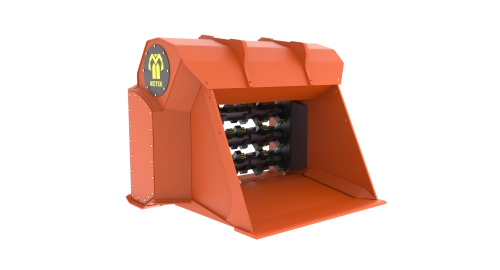
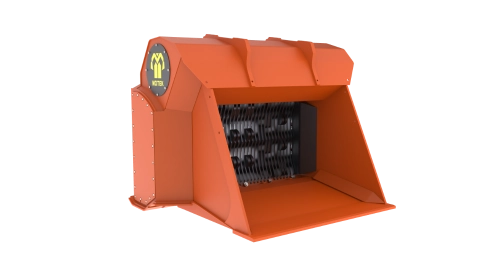
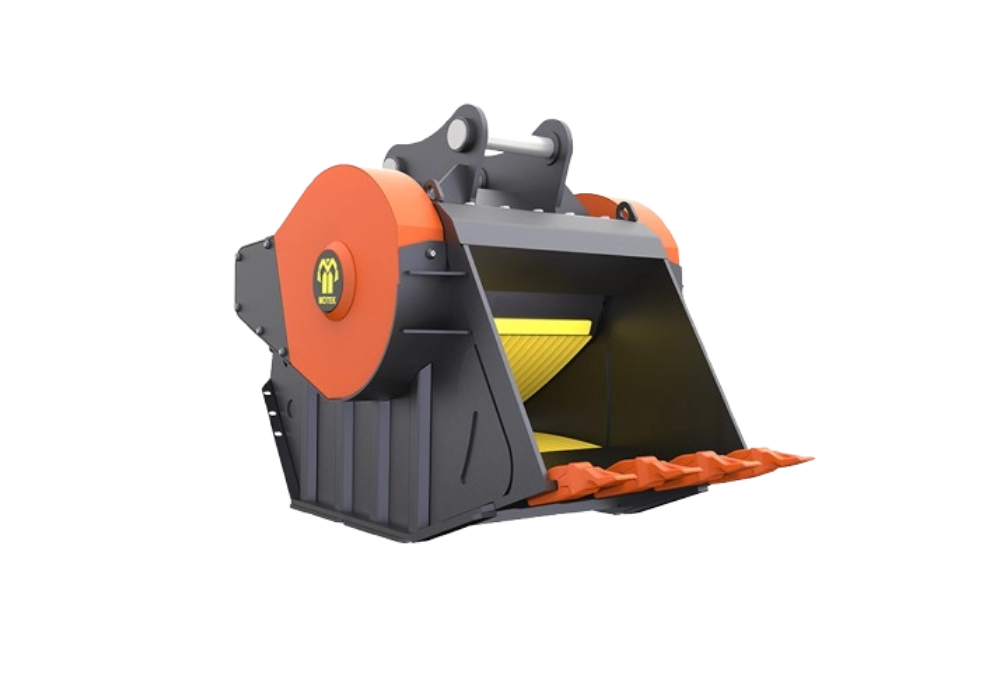
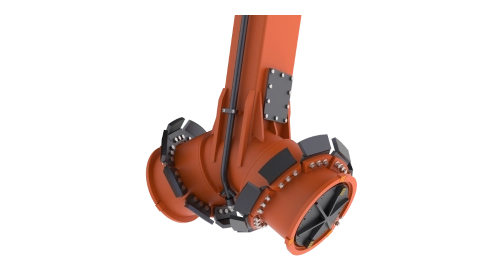
MOTEK Digger Screening Bucket Widely Used In The Industrial Field
Release time: 2024-12-16
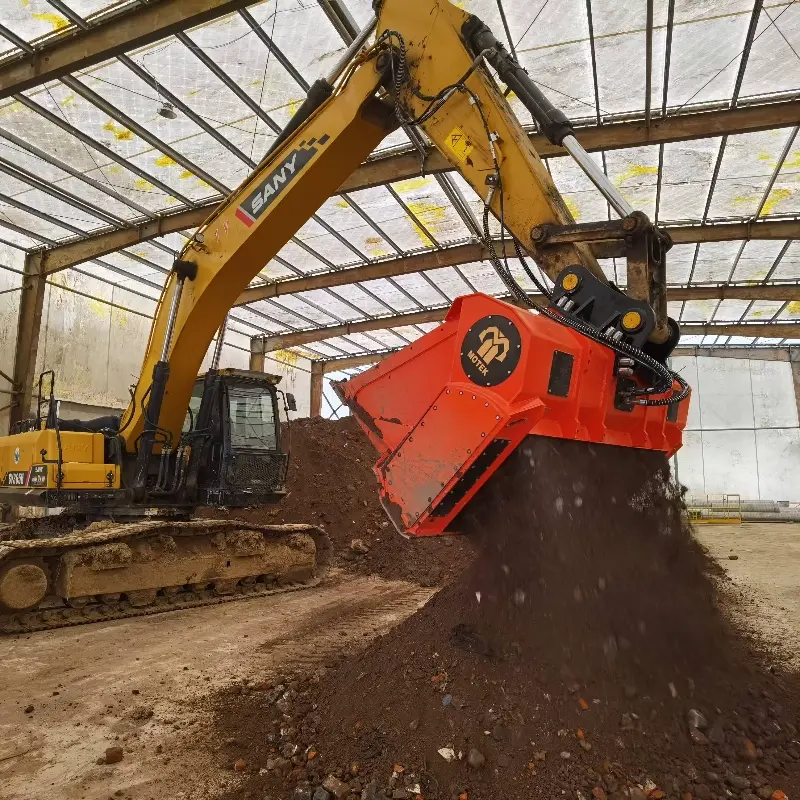
MOTEK digger screening buckets are multi-functional material handling equipment widely used in the construction and mining industries. In the construction industry, this equipment can be used to screen soil, sand, gravel, and construction waste at construction sites, enabling resource reuse and reducing transportation costs. In the mining sector, it is mainly used for the preliminary screening of ores and bulk materials, improving overall production efficiency and optimizing subsequent processes.
1. Construction Field:
– Construction waste treatment: It can crush and screen various construction wastes generated during the demolition of buildings, such as concrete blocks, bricks, etc.
– Road construction: The stones used for road foundation layer filling are crushed and screened to meet the particle size requirements of road construction and ensure the stability and bearing capacity of the road foundation; it can also be used for the production of road ancillary facilities such as curbs.
– Pipeline backfilling: In the pipeline laying project, the backfill soil can be screened to remove impurities and oversized particles in the soil, ensure the high quality of the backfilling soil and reduce costs.
2. Mining Field:
– Crushing of frozen ore powder: It can crush frozen iron ore powder, phosphate powder, etc.
– Mine restoration: In the process of ecological restoration after mining, the screening and crushing bucket can process mine waste soil, waste slag, etc., convert them into soil matrix suitable for vegetation growth, and promote the restoration of the mine ecological environment.
– Coal crushing: It can realize the integrated construction of loading and crushing, reduce equipment investment and improve construction efficiency.
– Crushing of industrial gypsum and gypsum board
3. Environmental governance field:
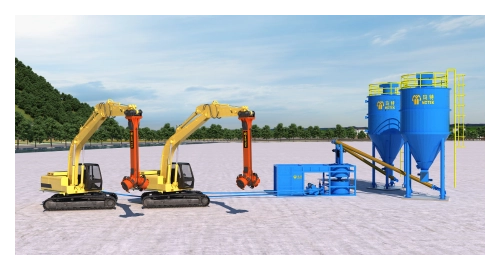
– Contaminated soil governance: For contaminated soil, MOTEK screening bucket for digger can screen and crush it, which is convenient for subsequent solution and remediation. For example, in soil remediation projects, contaminated soil with curing agents can be mixed and stirred to improve the remediating effect.
– Construction waste soil treatment: It is used to mix and stir the waste soil with the curing agent, and the waste soil is solidified and used as the roadbed.
– Garbage screening and treatment: It can be used for screening and crushing of domestic waste, separating recyclables, organic matter and inorganic matter in the waste, which is convenient for waste classification and resource recycling.
FAQ About Digger Screening Bucket Used In The Industrial Field:
1. What is the main function of crushing buckets in the industrial field?
Crushing buckets are used to efficiently crush various solid materials, such as construction waste, ore, and industrial waste, to a processable or recyclable particle size, improving production efficiency and resource utilization.
2. What are the advantages of using crushing buckets in the construction industry?
Crushing buckets can quickly process concrete, bricks, and waste building materials, reducing manual sorting work, obtaining reusable crushed materials, and lowering transportation and landfill costs.
3. What are the applications of crushing buckets in the mining industry?
In mining, crushing buckets can be used for primary crushing of ore, rock, and tailings, facilitating subsequent screening, transportation, and smelting, improving ore recovery rates and operational efficiency.
4. What is the role of crushing buckets in environmental remediation?
Crushing buckets can process industrial waste, construction waste, and other solid waste, reducing waste volume through crushing and screening, while facilitating resource recovery or safe disposal, reducing environmental pollution.
5. What precautions should be taken when using crushing buckets in the industrial field?
Pay attention to the hardness and moisture content of the material to avoid clogging or damaging the equipment due to excessive moisture or hardness; regularly inspect the crushing blades and screens to ensure efficient and stable operation of the equipment.