

Як гідравлічний потік впливає на продуктивність ковша дробарки?
Release time: 2026-11-23
Зміст
Hydraulic flow is an important factor in the operation of an excavator crusher bucket. It determines how much hydraulic oil is supplied to the attachment over a given period and directly affects the operation of its hydraulic motor and crushing mechanism. When the hydraulic supply does not match the attachment’s requirements, the crusher bucket may not operate as intended.
Understanding гідравлічний ківш дробарки helps equipment buyers and operators evaluate attachment compatibility and operating conditions before starting a crushing project.


With over 10 years of patented technology development and iterative R&D experience, МОТЕК specializes in the research, production, sales, construction, and technical services of high-end construction machinery attachments. Its experience in construction, environmental remediation, and solid waste disposal supports the development of crusher buckets for demanding material-processing applications.
1. Understand the Role of Hydraulic Flow in Crusher Bucket Operation
A crusher bucket uses the excavator’s hydraulic system to power its crushing mechanism. Hydraulic oil is delivered through the hydraulic circuit to drive the motor, which operates the jaw plates and enables the attachment to crush materials.
Hydraulic flow is generally measured in liters per minute (L/min). It indicates the volume of hydraulic oil supplied to the attachment over time.
For a crusher bucket, the flow rate affects the operating speed of the hydraulic motor and the movement of the crushing mechanism. The attachment must receive a suitable oil supply to operate within its intended working range.
Hydraulic Flow and Motor Speed
Hydraulic flow plays an important role in determining hydraulic motor speed. When the oil supply is within the specified range, the motor can operate according to the attachment’s design requirements.
If the available flow is insufficient, the motor may not reach its intended operating speed. This can affect the movement of the crushing mechanism and make the crushing process less consistent.
However, increasing hydraulic flow does not automatically improve crushing performance. The attachment is designed to work within a specified range, and supplying more oil than required does not necessarily produce better results.
Hydraulic Flow and Crushing Movement
The crusher bucket uses a hydraulic motor and mechanical transmission structure to drive the jaw plates. The movement of these components determines how materials are compressed and broken inside the crushing chamber.
A suitable hydraulic supply helps maintain the intended operating movement. If the excavator cannot provide the required flow, the attachment may not work as expected under its designed conditions.
For this reason, hydraulic compatibility should be evaluated before the crusher bucket is installed.
2. What Happens When Hydraulic Flow Is Too Low?
An insufficient hydraulic supply can affect the operation of the crusher bucket in several ways. The actual symptoms depend on the excavator’s hydraulic system, the attachment configuration, and the material being processed.
Reduced Motor Operating Speed
When hydraulic flow falls below the recommended range, the motor may operate at a lower speed than intended. This can affect the movement frequency of the crushing mechanism and reduce the consistency of crushing operations.
Operators may notice that the attachment does not respond as expected during continuous work. In this situation, checking the excavator’s actual hydraulic output is an important step.
Less Consistent Crushing Operations
A crusher bucket needs a suitable operating cycle to process materials continuously. If the hydraulic supply is insufficient, the movement of the crushing components may not remain consistent with the intended operating conditions.
This can affect the handling of different materials, particularly when the project involves regular feeding and continuous crushing.
Lower Utilization of the Attachment
A crusher bucket is designed to work with a compatible carrier machine. If the excavator cannot provide the required hydraulic flow, the attachment may not be able to operate within its intended range.
Therefore, buyers should check the hydraulic specifications before selecting a model rather than relying only on the excavator’s operating weight.
3. Can Excessive Hydraulic Flow Affect Crusher Bucket Performance?
Hydraulic flow that exceeds the attachment’s recommended range should also be treated carefully.
A higher flow rate does not necessarily mean higher crushing capacity. The hydraulic motor, control components, and other parts of the system are designed around specific operating requirements.
If the supplied flow exceeds the permitted range, it may cause the hydraulic motor to operate outside its intended conditions. Depending on the hydraulic system design, excessive flow can also contribute to heat generation and unnecessary stress on components.
The correct approach is to match the excavator’s hydraulic output with the crusher bucket’s specified range. If the available flow is higher than required, the hydraulic system should be configured according to the manufacturer’s recommendations.
Operators should not increase hydraulic flow simply to pursue faster crushing movement.
4. Hydraulic Flow and Hydraulic Pressure: What Is the Difference?
Hydraulic flow and hydraulic pressure are closely related in an operating system, but they describe different aspects of hydraulic power. Both should be considered when evaluating продуктивність ковша гідравлічної дробарки.
| Параметр | Основна функція | Influence on Crusher Bucket |
| Гідравлічний потік | Measures oil volume supplied per minute | Affects hydraulic motor speed and operating movement |
| Гідравлічний тиск | Indicates the force available within the hydraulic system | Affects the system’s ability to overcome operating resistance |
| Hydraulic power | Represents the combination of flow and pressure | Relates to the power available for hydraulic operation |
In practical terms, hydraulic flow determines how quickly hydraulic oil is supplied, while pressure relates to the force the system can deliver under load.
A ківш дробарки needs both parameters to meet its specifications. Adequate flow alone does not guarantee proper operation if the hydraulic pressure is insufficient. Similarly, sufficient pressure does not compensate for an inadequate oil supply.
Buyers should therefore compare both values with the manufacturer’s requirements instead of checking only one hydraulic parameter.
5. Use MTC200 Specifications as a Hydraulic Flow Reference
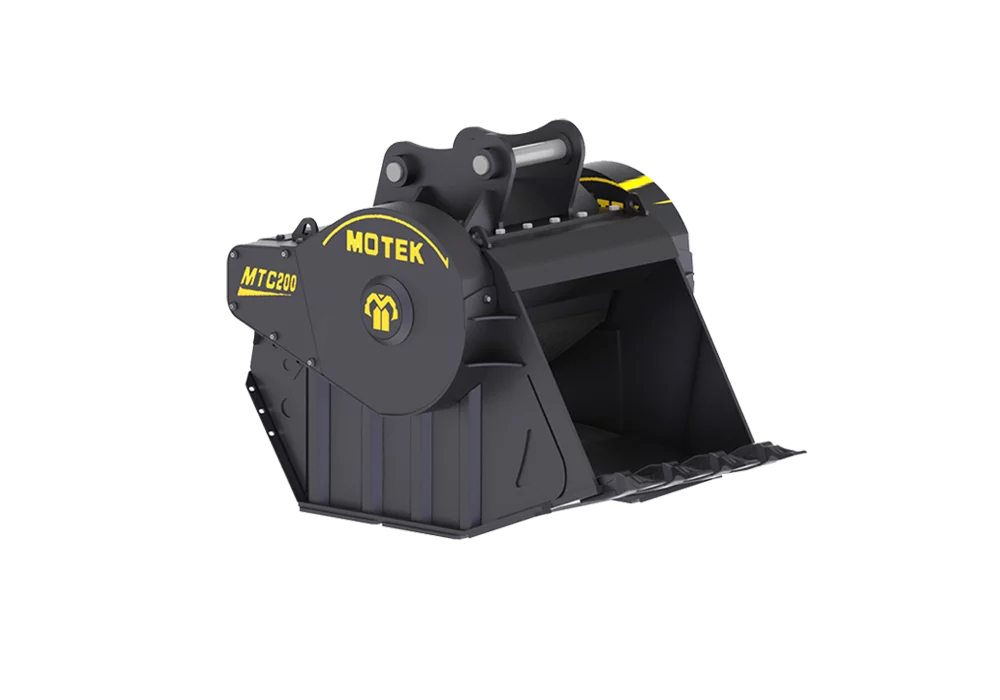
The MOTEK MTC200 crusher bucket provides a practical example of how hydraulic requirements are specified for an excavator attachment.
Its main specifications include:
| Параметр | MTC200 Specification |
| Applicable excavator | 18,5–29 тонн |
| Вага | 3,200 kg |
| Місткість | 0,85 м³ |
| Розміри отвору | 930 × 460 mm |
| Recommended excavator hydraulic flow | 150–220 л/хв |
| Гідравлічний тиск | Greater than 220 bar |
The recommended hydraulic flow range of 150–220 L/min is an important reference when evaluating excavator compatibility.
For example, an excavator with a hydraulic output below the specified range may not provide the required oil supply for the attachment’s intended operation. An excavator with a higher available flow should also be checked to ensure that its hydraulic system can be configured within the permitted operating range.
The MTC200 also uses a hydraulic system equipped with European and American hydraulic motors and control valve blocks. Its hydraulic configuration is designed to support the operation of the crushing mechanism.
These specifications should be considered together when selecting a carrier machine. The excavator’s operating weight alone is not enough to determine whether it is suitable for the attachment.
6. Other Factors That Influence Crusher Bucket Performance
Although hydraulic flow is important, it is not the only factor affecting crushing operations. Material characteristics, attachment structure, and equipment configuration also influence the working result.
Material Type and Size
Concrete, rock, and construction waste have different physical properties. Their hardness, dimensions, and shape affect how they enter the crushing chamber and how the jaw plates process them.
The MOTEK crusher bucket is designed for on-site crushing of construction waste, concrete blocks, and various types of rock. Selecting an appropriate attachment and controlling the feed material are both important for maintaining suitable operating conditions.
Jaw Plate Condition
Jaw plates are the main working components that contact and crush the material. Their condition affects the crushing process.
The MTC200 uses Mn18Cr2Mo wear-resistant jaw plates. The product information states that their wear resistance is 40% higher than the industry average.
Operators should consider jaw plate condition alongside hydraulic performance when evaluating changes in crushing results.
Hydraulic System Configuration
The excavator’s hydraulic circuit must be compatible with the attachment. Hydraulic connections, return lines, and motor drain arrangements should be checked before operation.
For the MTC200, a single excavator hydraulic pump is sufficient for normal operation. It requires a one-way hydraulic line, and the motor drain line must be connected directly to the hydraulic tank.
These requirements are model-specific and should not automatically be applied to every crusher bucket. Buyers should confirm the connection requirements of the selected model before installation.
7. Check Hydraulic Compatibility Before Starting a Project
Before using a crusher bucket, operators should review the excavator’s hydraulic specifications and compare them with the attachment requirements.
The following points are particularly important:
- Confirm the excavator’s available hydraulic flow.
- Check whether the working pressure meets the specified requirements.
- Verify that the hydraulic hoses and connection points are suitable.
- Confirm the required return line and motor drain line arrangement.
- Check the excavator’s operating weight and attachment mounting compatibility.
- Follow the manufacturer’s recommendations when adjusting hydraulic settings.
For projects involving different excavators, hydraulic specifications should be checked separately. Two excavators with similar operating weights may have different hydraulic outputs and circuit configurations.
A proper compatibility assessment helps avoid unsuitable equipment combinations and provides a clearer basis for planning crushing operations.
Часті запитання
1. What is the recommended hydraulic flow for a crusher bucket?
The required flow depends on the crusher bucket model. For example, the MOTEK MTC200 has a recommended excavator hydraulic flow range of 150–220 L/min. Buyers should refer to the specifications of their selected model.
2. What happens if the excavator’s hydraulic flow is too low?
Insufficient hydraulic flow may prevent the motor from reaching its intended operating speed. This can affect the movement of the crushing mechanism and make crushing operations less consistent.
3. Does higher hydraulic flow always improve crusher bucket performance?
No. A crusher bucket is designed to operate within a specified hydraulic range. Supplying more flow than required does not automatically increase crushing capacity and may cause the hydraulic system to operate outside its intended conditions.
4. Is hydraulic flow more important than hydraulic pressure?
Neither parameter should be considered separately. Hydraulic flow affects motor speed, while pressure relates to the force available under load. Both must meet the attachment’s specifications for proper operation.
5. How can I confirm whether my excavator is compatible with a crusher bucket?
Compare the excavator’s hydraulic flow, working pressure, hydraulic circuit arrangement, operating weight, and mounting interface with the selected attachment’s specifications. If any requirement is unclear, confirm it with the manufacturer before installation.
Висновок
Hydraulic flow has a direct influence on how a crusher bucket’s hydraulic motor and crushing mechanism operate. Insufficient flow may affect operating speed and crushing consistency, while excessive flow can place the hydraulic system outside its intended operating range.
However, hydraulic flow should not be evaluated in isolation. Working pressure, hydraulic circuit configuration, material characteristics, and jaw plate condition also contribute to the overall crushing process.
With its experience in attachment R&D, manufacturing, and practical construction applications, МОТЕК provides crusher bucket models for different excavator sizes and working requirements. Its OEM/ODM services also support attachment solutions based on customer requirements and actual operating conditions.
By checking hydraulic specifications and equipment compatibility before installation, customers can make a more informed choice and establish suitable operating conditions for their crushing projects.
Автор

Джек Лю
Генеральний директор MOTEK. 20 років досвіду роботи в будівельній техніці. Колишній агент кількох висококласних європейських брендів навісного обладнання. Лідер з далекоглядним баченням, який є рушійною силою зростання MOTEK.