

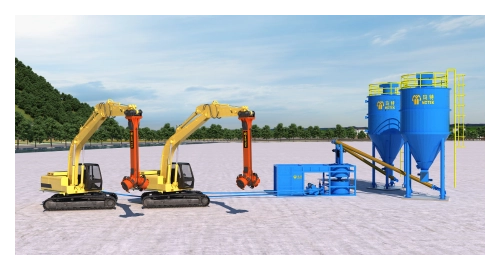
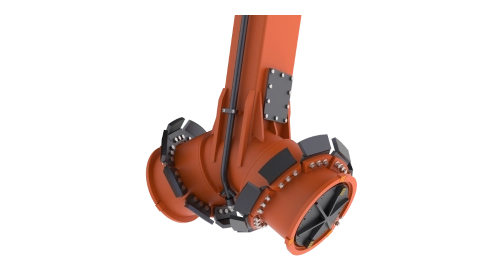
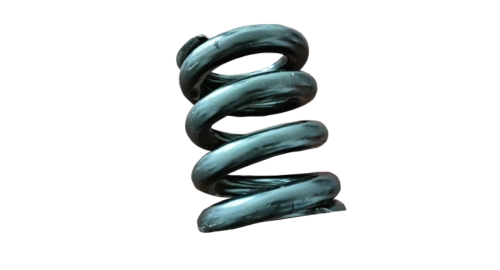
MOTEK screening and crushing bucket: Doubles efficiency, revitalizing earthwork resources
Release time: 2026-06-16
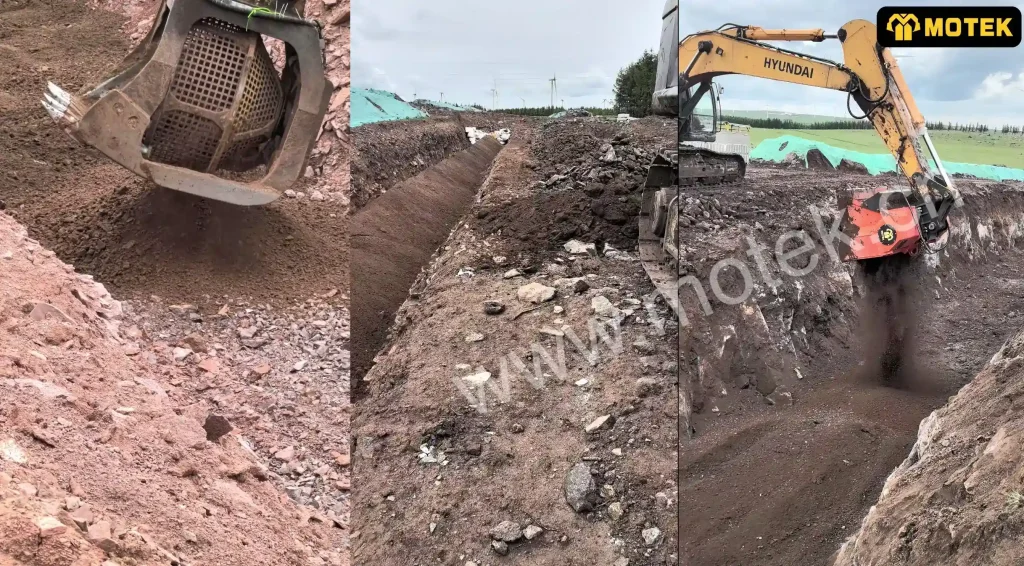
Table of Contents
In municipal pipeline networks, gas pipelines, water supply and drainage pipelines, and power line laying projects, pipeline backfilling is a core process that determines project quality, construction progress, and cost control. The compaction, particle uniformity, and purity of the backfill soil directly affect the pipeline protection effect, roadbed stability, and project acceptance rate. For a long time, domestic pipeline backfilling construction has relied heavily on traditional methods such as drum screen screening, manual soil crushing, and purchasing backfill soil. This approach is cumbersome, inefficient, and wasteful of resources, and is prone to quality problems such as backfill soil clumping, excessive impurities, and inadequate compaction, becoming the biggest bottleneck to improving the quality and efficiency of pipeline projects.
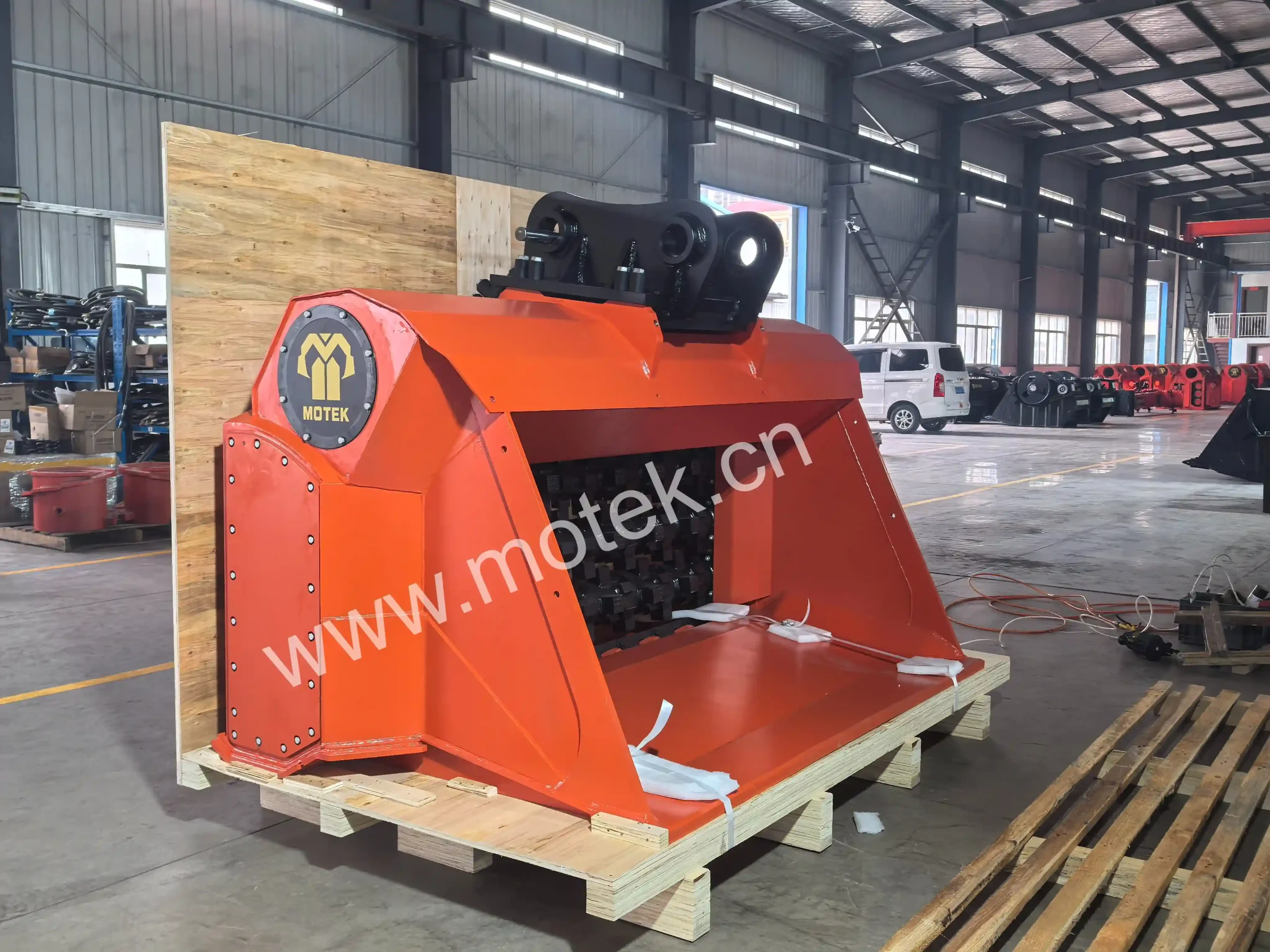
With the transformation of infrastructure construction towards lightweight, efficient, and green methods, the shortcomings of traditional screening equipment are becoming increasingly apparent. MOTEK screening and crushing buckets, with their core advantages of integrated crushing and screening, ultra-high operating efficiency, local material utilization, and strong adaptability, completely revolutionize traditional pipeline backfilling construction processes. Compared to mainstream drum screen equipment in the industry, MOTEK screening buckets offer more than three times the operating efficiency, enabling one-stop completion of earthwork crushing, debris screening, and precise material preparation. Perfectly adapted to various pipeline backfilling construction scenarios, they have become the preferred equipment for municipal pipeline projects, rural pipeline network renovation, and old pipeline refurbishment, helping construction companies reduce costs, increase efficiency, and achieve green construction.
Traditional construction pain points: Shortcomings in drum screen operation restrict the improvement of project quality and speed.
For a long time, drum screens have been commonly used for earthwork screening. Due to their simple structure and stable operation, they have been widely applied in basic earthwork treatment. However, in the context of refined pipeline backfilling construction, their inherent defects are magnified, making them difficult to adapt to the construction standards and efficiency requirements of modern infrastructure.
Firstly, their operating efficiency is extremely low, and the procedures are redundant and complex. Traditional drum screens only have a single screening function and lack crushing capabilities. The original soil after pipeline excavation often contains hardened lumps, large clods, and aggregated stones. When using drum screens, pre-processing steps such as excavator crushing, manual breaking, and stockpiling for drying are necessary to loosen the soil before it can be fed into the drum screen for screening. The entire operation requires five steps: “excavation → stockpiling and drying → crushing clods → drum screen screening → transportation and backfilling.” This process is cumbersome, requires a large site area, and each step involves material transportation losses and time wastage. Under normal operating conditions, a standard drum screen can effectively screen only 200-300 cubic meters of backfill soil per day. When faced with large-area, long-distance pipeline backfilling projects, it is very easy to encounter problems such as project delays and uncontrollable construction progress.
Secondly, the utilization rate of earthwork is low, resulting in serious resource waste. Drum screens cannot handle compacted, hard soil and large lumps of material. During construction, a large amount of lumpy earth and hard soil blocks cannot pass through the screen and must be discarded, requiring the construction party to purchase additional high-quality backfill soil. This not only causes a significant waste of native earthwork resources, but the purchase, transportation, and storage of earthwork also greatly increases material and transportation costs. Furthermore, drum screens have poor adaptability to wet and clayey soils, and are prone to screen clogging in humid weather, requiring frequent shutdowns to clean the screens, further reducing construction efficiency and delaying the project schedule.
Furthermore, the inconsistent construction quality and high acceptance risks are significant issues. Pipeline backfilling requires stringent soil conditions, strictly prohibiting the mixing of large clods of soil, hard gravel, and debris. Otherwise, voids and uneven settlement can easily occur after compaction, leading to pipeline deformation under pressure and roadbed cracking. Drum screens can only perform simple material grading and cannot finely break up homogeneous soil blocks. The screened soil still exhibits uneven size and localized clumping, resulting in insufficient compaction after backfilling and compaction. This leads to a very high rate of rework and rectification, increasing construction costs and maintenance pressure.
Finally, the equipment lacks flexibility, resulting in high construction costs. Traditional drum screens are fixed, bulky, and difficult to move. Pipeline projects are often linear and long-span construction scenarios, requiring repeated equipment transfers and the construction of work platforms. Equipment entry, commissioning, and removal are time-consuming and labor-intensive. Additionally, drum screens require numerous supporting devices, necessitating dedicated operation and regular maintenance, resulting in high labor and maintenance costs. This makes them extremely inefficient for small-scale projects.
MOTEK Screening and Crushing Bucket: A One-Stop Solution to All Construction Problems in Pipeline Backfilling
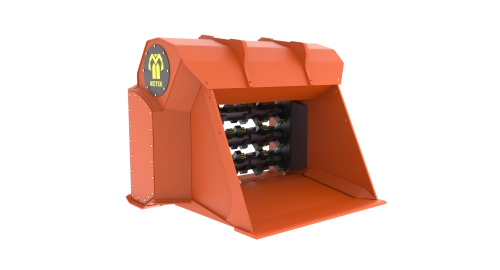
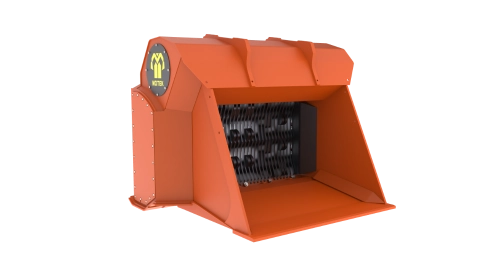
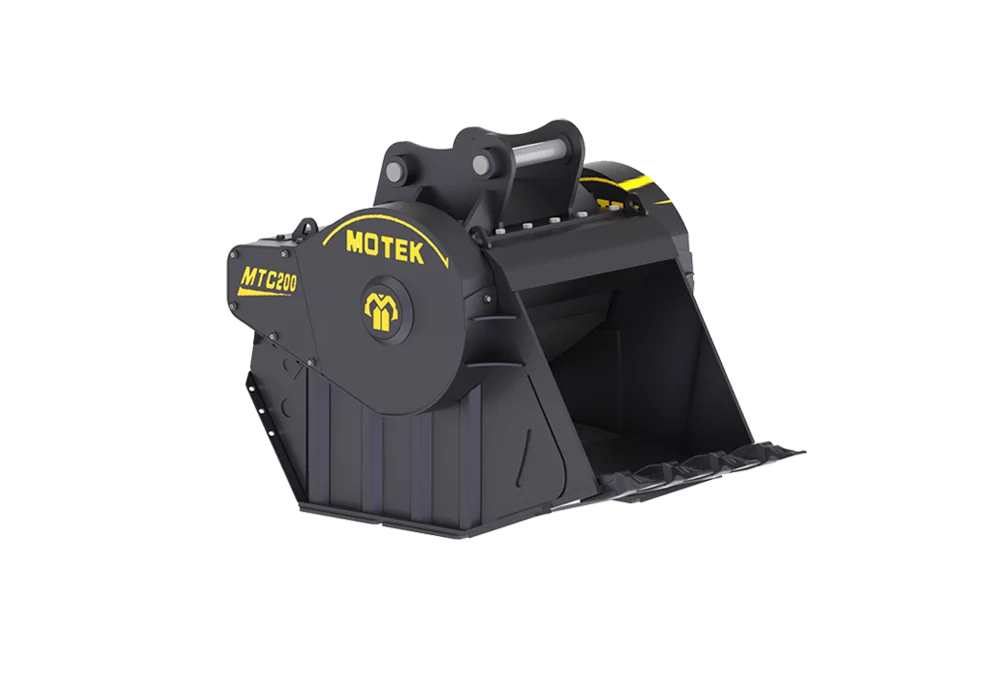
Addressing the numerous pain points of drum screens and traditional backfilling processes, MOTEK, deeply rooted in the field of engineering machinery supporting equipment, has specifically developed a dedicated pipeline backfilling screening and crushing bucket. This bucket integrates crushing, screening, homogenization, impurity removal, and backfilling preparation, eliminating the need for additional supporting equipment and complex pre-processing. It can be directly installed on excavators and perfectly adapted to various pipeline backfilling construction scenarios, achieving a triple breakthrough in construction efficiency, construction quality, and resource utilization. Its overall operating efficiency is more than three times that of traditional drum screens.
Efficient Compressing: 3 times faster, extremely simplified process saves time and effort.
Efficiency is the core competitive advantage of the MOTEK screening and crushing bucket. Unlike the limitations of a single-screen drum screen, the MOTEK screening and crushing bucket achieves simultaneous crushing and screening, eliminating the need for pre-treatment of soil clods, drying of excavated soil, or multiple pieces of equipment. During construction, it can directly grab the original excavated soil, hardened soil, and lumpy wet soil after pipeline excavation, completing powerful crushing, fine screening, and impurity separation in a single operation within the equipment. The output is high-quality backfill soil with uniform particles and meeting purity standards, directly usable for pipeline backfilling.
The entire process is simplified to three minimally invasive steps: “excavation → crushing and screening → immediate backfilling,” completely eliminating redundant steps such as soil stockpiling, crushing, transportation, and secondary processing in traditional construction. Actual test data shows that under the same working conditions and duration, the MOTEK screening and crushing bucket can process 800-1000 cubic meters of backfill soil per day, compared to the 200-300 cubic meters per day of a drum screen, representing a stable efficiency increase of more than three times. For municipal pipeline projects with tight deadlines and large-scale industrial park pipeline renovation projects, this equipment can significantly shorten the construction period, eliminate delays, and give construction companies a competitive edge in terms of schedule.
Meanwhile, the equipment is equipped with an adaptive anti-clogging screening structure, which prevents screen clogging problems for complex materials such as damp clay in the south, compacted soil after rain, and mixed wet and dry soil. It eliminates the need for frequent shutdowns for cleaning, allowing for continuous operation and effectively avoiding efficiency losses caused by frequent downtime for drum screen maintenance, thus significantly increasing effective operating time.
Turning waste into treasure, maximizing the utilization rate of earthwork resources
In traditional pipeline backfilling construction, large amounts of hardened soil and large clods are directly discarded because they cannot be screened and utilized, resulting in a soil utilization rate of less than 60%. This not only wastes native soil resources but also requires additional purchases of backfill soil, increasing project material costs. The MOTEK screening and crushing bucket, equipped with high-strength alloy crushing teeth and a multi-stage homogeneous crushing structure, can powerfully crush various types of hardened, compacted, and lumpy soil. Even wet soil and cohesive soil with high moisture content can be thoroughly broken down and loosened. Combined with a precision screening system, it completely separates gravel, weeds, construction waste, and other debris from the soil.
The soil processed by this equipment has uniform particles and is pure, fully meeting the standards for municipal pipeline backfilling construction. The utilization rate of native soil can reach over 98%, truly achieving on-site sourcing, on-site processing, and on-site backfilling. No waste soil is required, and no new soil needs to be purchased. This significantly reduces soil procurement costs, waste soil transportation costs, and soil storage site costs, thereby reducing construction costs from the source. At the same time, it reduces dust pollution and traffic pressure caused by the transportation of waste soil, which is in line with the concept of green infrastructure construction.
Precise material preparation ensures the quality of pipeline backfilling construction from the source.
The core quality standard for pipeline backfilling is that the backfill soil has uniform particle size, no large hard objects, and meets the required compaction density to avoid subsequent roadbed settlement and pipeline damage. Traditional drum screens can only perform simple grading and cannot break down and refine soil clods, resulting in inconsistent particle sizes in the output soil, which is difficult to meet the standards for refined backfilling. The MOTEK screening and crushing hopper, however, supports adjustable output particle size, allowing precise control of soil particle size according to different pipeline backfilling specifications. The crushed and screened soil has uniform particle size and moderate looseness.
This finely processed backfill soil can be evenly stressed during compaction, resulting in higher filling density, no voids, and no interlayers. This completely solves the quality problems caused by insufficient compaction, subsequent settlement, and pipeline deformation due to excessively large soil clods and uneven soil quality in traditional backfilling. It significantly reduces rework rates and subsequent maintenance costs, helping projects pass acceptance on the first attempt. Whether it’s deep-buried pipelines, shallow pipelines, or roadbed-supporting pipeline backfilling, it perfectly adapts to construction standards.
Flexible adaptation, cost reduction and efficiency improvement, adaptable to all construction scenarios
MOTEK screening and crushing bucket features a lightweight, integrated design, directly compatible with excavators of various tonnages. Installation is convenient and operation is simple, requiring no equipment modification or the construction of a fixed working platform. Compared to the bulkiness, difficult transport, and cumbersome access issues of fixed drum screens, the MOTEK screening and crushing bucket can move flexibly with the excavator, adapting to the linear, long construction characteristics of pipeline projects. It can operate along the pipeline without blind spots, making it particularly suitable for complex construction environments such as narrow municipal roads, rural paths, and confined construction sites.Furthermore, the equipment boasts a robust and wear-resistant structure. Core components are made of high-strength, wear-resistant alloy materials, offering impact resistance, wear resistance, and an extremely low failure rate. Daily maintenance is simple, requiring no dedicated personnel for operation and maintenance, significantly reducing labor and equipment maintenance costs. A single unit can replace the entire work team of “excavator + drum screen + soil crushing equipment + manual assistance,” greatly reducing equipment and labor investment. It offers extremely high cost-effectiveness for small to medium-sized pipeline projects and scattered modification projects.
With its comprehensive application scenarios, the MOTEK screening and crushing bucket has become an essential piece of equipment for pipeline backfilling construction.
Leveraging its multiple advantages of high efficiency, energy saving, quality improvement, cost reduction, and environmental friendliness, the MOTEK screening and crushing bucket has been widely used in various pipeline backfilling construction scenarios, including municipal water supply and drainage pipelines, gas pipelines, heating pipelines, power and communication lines, rural drinking water network renovation, factory pipeline laying, and renovation of old residential area pipeline networks.
Whether it’s dry, hard soil, moist, sticky soil, or complex soil mixed with a small amount of gravel, the equipment can reliably complete the crushing and screening operations, adapting to various regions and climatic construction environments. Compared to traditional drum screen construction methods, the MOTEK screening and crushing bucket not only achieves a 3-fold increase in efficiency and nearly 100% soil utilization, but also simplifies the construction process, reduces personnel and equipment investment, and avoids quality risks, creating tangible economic benefits for construction companies. It has become a core tool for refined processing of infrastructure earthwork and improving the quality and efficiency of pipeline backfilling.
By eliminating cumbersome procedures, avoiding resource waste, eliminating quality risks, and reducing construction costs, the MOTEK screening and crushing bucket replaces an entire traditional operating system with a single device. With higher efficiency, better quality, and lower cost, it helps major pipeline projects to be implemented efficiently, becoming the preferred construction equipment for municipal infrastructure and pipeline renovation projects in the new era, and empowering the infrastructure industry to upgrade to high quality, green, and intelligent standards!
Author

Lilly Liu
MOTEK Director of International Sales Equipped with 15 years of dedicated experience in the construction machinery industry, she has a deep understanding of global market dynamics and regional customer needs. She has successfully led teams to penetrate key international markets, particularly in promoting construction machinery attachments and securing high-value overseas orders.