

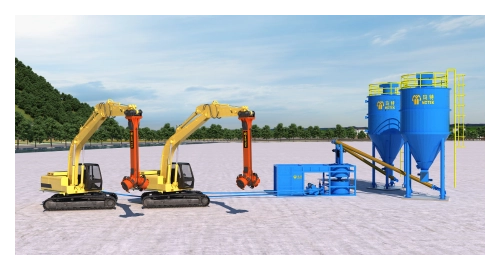
Why is the screening efficiency of the MOTEK high-frequency vibrating screening bucket at least three times higher than that of traditional drum screens?
Release time: 2026-07-22
目次
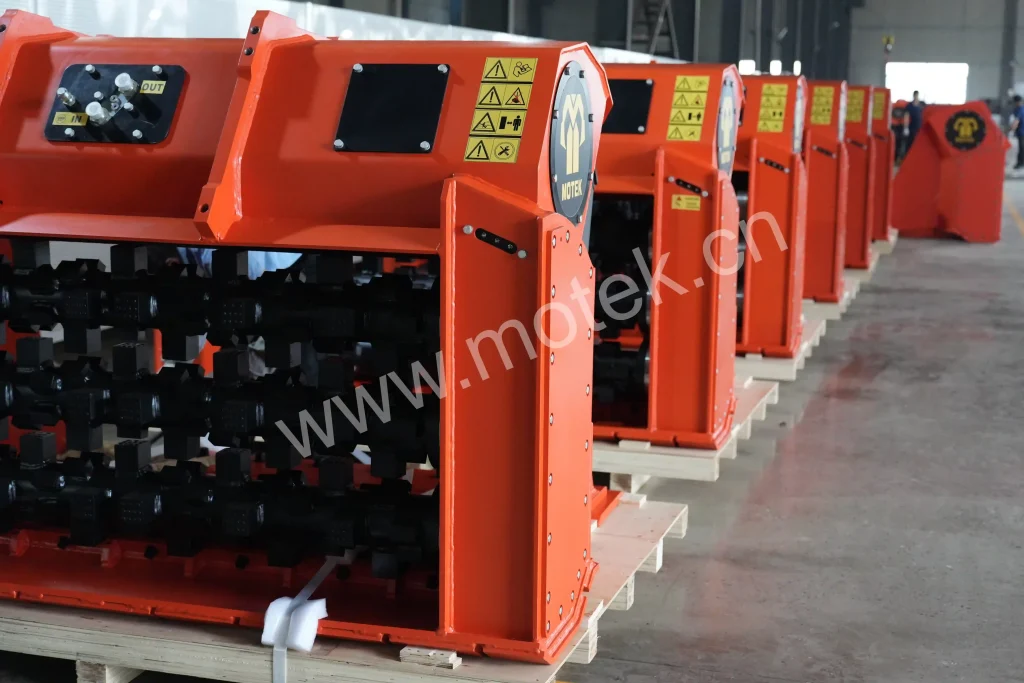
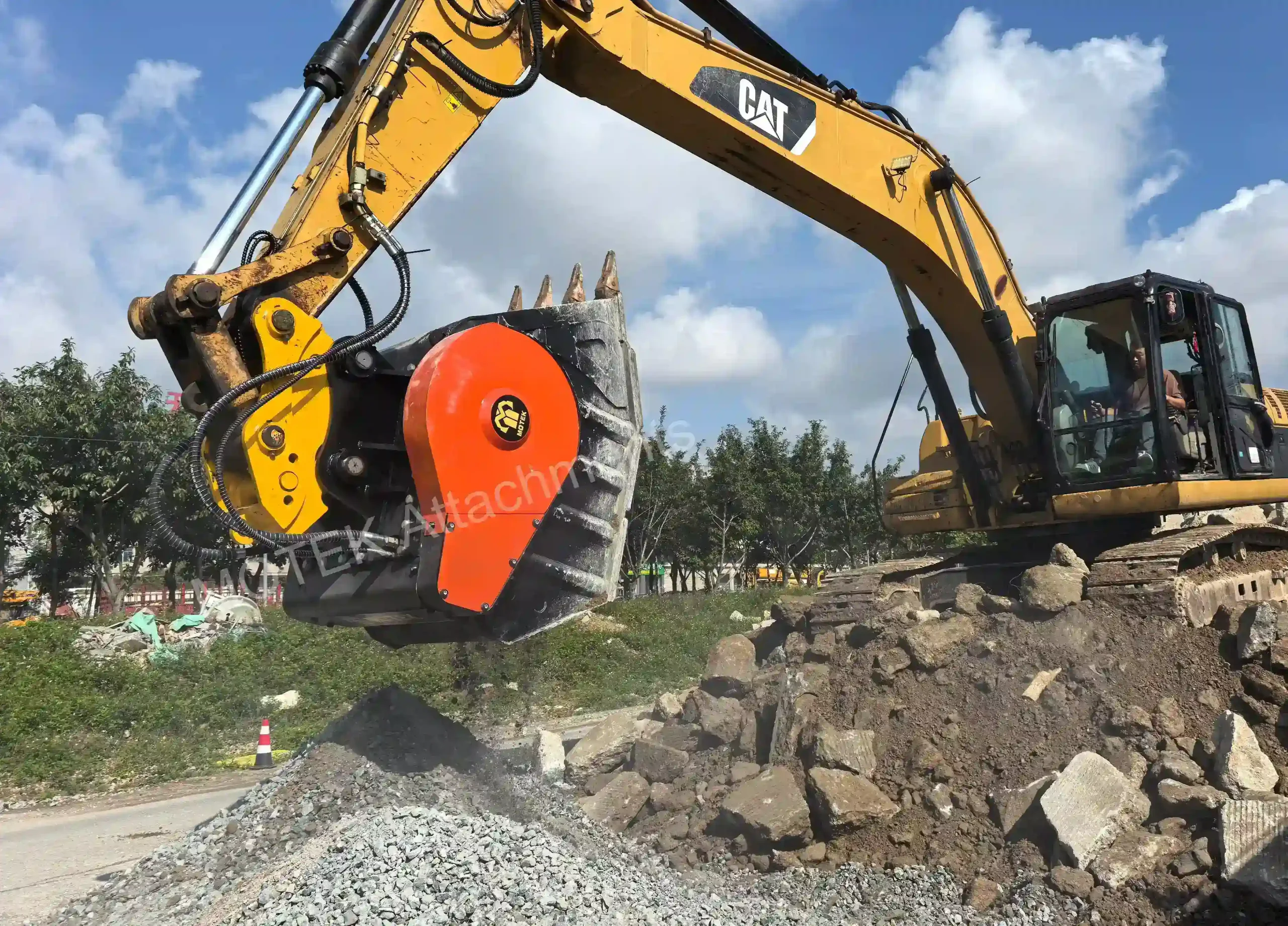
At project sites involving earth and stone screening, construction waste recycling, soil remediation, pipeline backfill material sorting, and river dredging, contractors frequently face a persistent challenge: screening equipment with insufficient capacity, incomplete sorting, and frequent clogging or downtime. These issues directly delay project schedules and drive up costs associated with material transport and labor. Many clients compare two mainstream types of screening equipment: traditional rotary screens and MOTEK high-frequency vibrating screening buckets for excavators. Extensive on-site data confirms that, given the same bucket capacity and material conditions, the MOTEK スクリーニングバケット consistently delivers an overall screening efficiency more than three times higher than that of rotary screens. This efficiency gap is not merely a matter of equipment size; it stems from the fundamentally different underlying screening principles of the two systems. Only by understanding this disparity in operating principles can one fully appreciate the performance advantages of the MOTEK screening bucket and identify the optimal solution for mobile job sites and in-situ screening.
I. Fundamental Differences in Core
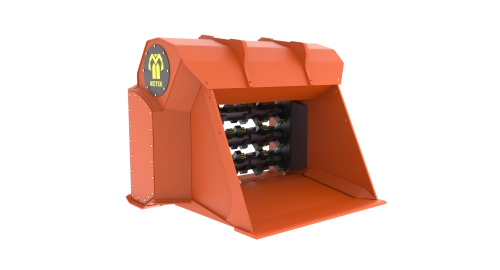
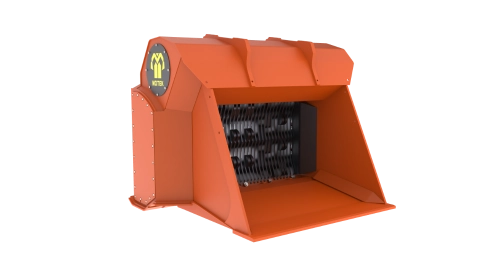
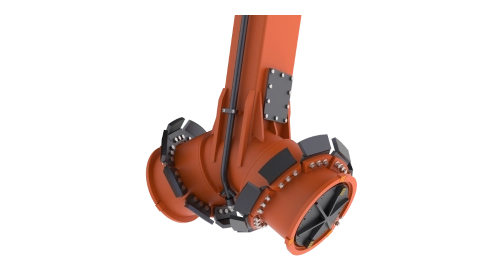
Screening Principles: Traditional Trommel Screens (Passive tumbling screening relying on random contact for material passage). Trommel screens (including excavator-mounted screening buckets and stationary trommels) operate on a constant-speed rotational screening logic. A hydraulic motor drives the slow rotation of a cylindrical screen drum; materials inside are lifted and tumbled by the drum’s rotation, relying on gravity for slow agitation. The screening logic can be summarized as: random collision and passive passage. Materials are jumbled together with large and small particles intermingled; fine particles only pass through the mesh if they happen to move into position against it. Rotational speed is critical: if too high, centrifugal force pins material against the drum wall, completely eliminating screening capability; if too low, agitation is insufficient to break up clods of soil. Physically, trommel screens have an inherent drawback: only the lower half of the drum’s circumference effectively participates in screening, while the upper half represents wasted surface area. Theoretically, only about 40% of the screen surface is active at any given time, leaving a large portion of the mesh idle. Material moves forward slowly along the axis; while the tumbling cycle is long, stratification is poor—coarse particles constantly suppress fine ones, and soil or fine sand trapped within larger rocks never contacts the mesh, ultimately being discharged alongside the large debris, resulting in incomplete screening. MOTEK High-Frequency Vibrating Screening Bucket: Active stratification and probabilistic screening via forced fluidization and separation. The MOTEK screening bucket features a proprietary high-frequency hydraulic excitation system utilizing a **high-frequency, low-amplitude, 3D vibration screening principle, fundamentally distinct from the rotational tumbling mode of trommels. When the excavator scoops mixed material into the screening chamber, the exciter delivers a steady, powerful force, causing the entire screen body to vibrate rapidly in a reciprocating motion. This vibration generates two key physical effects: material fluidization and stratification, combined with continuous opportunities for particles to pass through the screen. Under the influence of vibration, the mixed material exhibits fluid-like motion and follows the principles of particle stratification: denser and larger stones rise to the top, while fine sand, soil, and powder settle downward, rapidly forming an organized layer with coarse material on top and fine material at the bottom. Fine particles remain in constant proximity to the screen surface, continuously gaining opportunities to pass through the apertures. Simply put, a rotary screen “waits” for fine material to happen to fall onto the holes, whereas the MOTEK screening bucket actively pushes fine material toward the screen, continuously creating conditions for passage. This is the fundamental reason for the vast difference in efficiency between the two. By optimizing vibration frequency, amplitude, and excitation angle, MOTEK causes the material to lift and loosen repeatedly every second; this action breaks up soil clumps and eliminates particle agglomeration, significantly increasing the probability of fine particles passing through the screen. Consequently, the time required to effectively screen a given volume of material is drastically reduced.
II. A detailed explanation of the five fundamental dimensions behind the threefold efficiency gap.
1. Effective Screening Utilization: While large sections of a trommel screen remain idle, the MOTEK unit utilizes its entire screening surface continuously. Trommel screens suffer from inherent structural limitations: as the cylinder rotates, material constantly accumulates at the bottom, leaving the upper screen sections unloaded. Even under full-load conditions, the effective screening area is less than half of the total screen surface. To increase output, one must constantly enlarge the drum’s diameter and length, leading to skyrocketing equipment weight, increased fuel consumption, and significantly reduced mobility. In contrast, the MOTEK screening bucket employs a flat screen design that fully supports the material; vibration covers the entire surface, ensuring 100% of the screen is actively engaged in the process with no dead zones. For the same external dimensions, the effective screening area is nearly double that of a trommel screen. A larger effective screening area allows more fines to pass through the mesh within a given timeframe; combined with the stratification effect, this results in a decisive advantage in processing capacity per unit of time. Field tests—conducted using excavators of the same tonnage and buckets of equal capacity—show that a trommel screen requires 25–35 seconds to fully screen one cubic meter of material, whereas the MOTEK screening bucket takes only 8–12 seconds, representing a nearly threefold difference in single-cycle efficiency.
2. Material Stratification Mechanism: Trommel screens lack an active stratification mechanism, whereas MOTEK relies on vibration to achieve forced stratification. Separating coarse and fine particles is a prerequisite for efficient screening. Without stratification, fine particles remain trapped within the material bed by coarse material, never making contact with the screen mesh. Trommel screens rely solely on gravity-driven tumbling, making material stratification a random process. When mixed debris and clumpy clay enter the drum, soil clumps are difficult to break apart; large stones crush the soil, trapping significant amounts of fine material, which is ultimately discharged along with the waste. Many contractors report that stones screened by trommels remain coated in soil, necessitating a massive secondary sorting effort—a problem fundamentally caused by a failure to stratify. MOTEK’s high-frequency vibration solves the stratification challenge at the source. High-frequency vibrations continuously impact material clumps, breaking up wet, clumpy soil and inducing constant relative movement among particles. Coarse particles rise while fine particles sink, achieving stable stratification in just a few seconds. Once stratified, fine material stays in constant contact with the screen plate, ensuring continuous passage through the mesh. This significantly improves screening completeness and drastically reduces the soil content of the oversize material; engineering standards are met in a single pass, eliminating the need for repeated screening cycles and saving time otherwise lost to multiple processing stages.
3. Difference in Screening Probability: Random Collision vs. Continuous Dynamic Screening. Screening is fundamentally a matter of probability: the more frequently fine particles come into contact with the screen apertures, the higher the probability of passing through. Inside a trommel screen, material tumbles slowly, resulting in infrequent contact between particles and the mesh. As material moves through the drum, particles spend most of their time pressing against one another, making contact with the screen only briefly. If a particle’s orientation is unfavorable, it misses the chance to pass through and must wait for the next tumbling cycle—a lengthy delay. In contrast, the MOTEK vibration mode causes material to undergo continuous, small-amplitude bouncing; particles constantly shift their orientation, creating a screening opportunity with every hop and landing. Within a brief 10-second screening cycle, fine particles can make contact with the apertures dozens of times. Even irregularly shaped “near-size” particles—those close to the aperture dimensions—get multiple chances to pass through. In terms of data: under ideal dry material conditions, a trommel screen achieves a single-pass screening completeness of approximately 70%–82%, whereas the MOTEK heavy duty screening bucket achieves over 95%. Trommel screens often require 2–3 cycles to achieve equivalent sorting results, effectively tripling the total time required.
4. Differences in Material Clogging Resistance: Damp, Sticky Conditions Widen the Efficiency Gap. Many job sites involve mixed materials—such as clay, wet backfill soil, and silt—where clogging becomes a critical factor affecting production capacity. When handling sticky materials, wet soil easily adheres to the drum walls and mesh of a rotary screen; as operation continues, the accumulation gradually blinds the screen openings. Operators must frequently halt operations to clean the drum with high-pressure water jets. Once the screen mesh becomes extensively clogged, production capacity is slashed by half. Although rotary screens offer a self-cleaning tumbling action, this only mitigates the issue rather than eliminating the problem of sticky material blinding the mesh. In contrast, MOTEK units utilize continuous high-frequency vibration to create a dynamic self-cleaning effect. This constant vibration shakes the screen mesh, breaking the bond between the soil and the screen plates and reducing the likelihood of clay clumping and adhesion. Coupled with MOTEK’s modular, detachable, and wear-resistant screen plate design, even if minor adhesion occurs, persistent clogging is unlikely to form. In typical backfill soil conditions with moisture content between 12% and 20%, a rotary screen requires cleaning stops at least once or twice an hour, whereas MOTEK durable screening bucket allows for continuous, long-duration operation, resulting in significantly higher effective working time. This disparity in effective operating hours further boosts overall output, ultimately delivering more than three times the comprehensive efficiency.
5. Process Workflow Efficiency: Integrated on-site operation eliminates material transfer losses. Beyond the basic physics of screening, the operational modes of these two equipment types create a significant gap in overall construction efficiency. Stationary trommel screens require a dedicated site layout involving multiple time-consuming transfer steps: excavation, truck transport to the screen, the screening process itself, and secondary transport of the finished product. While excavator-mounted trommel attachments offer mobility, they suffer from long screening cycles; the excavator sits idle while waiting for the material to be processed, resulting in significant productivity loss. In contrast, MOTEK screening buckets enable an integrated, closed-loop workflow of excavation, screening, and discharge. The excavator collects and screens material on-site; compliant fines are immediately used for backfill, while oversized waste is stockpiled locally, eliminating the need for back-and-forth material transport. The seamless integration of scooping, screening, and discharging minimizes equipment idle time. These process advantages are particularly pronounced in applications such as pipeline trench backfilling, on-site soil remediation, and the recycling of excavated spoil. Field measurements across numerous projects demonstrate that this integrated process boosts overall efficiency by more than three times compared to stationary trommel screens, drastically shortening project timelines.
III. On-site measurements validate the advantages of the operating principle, revealing a tangible and quantifiable efficiency gap.
Extensive engineering projects—both domestic and international—have yielded a consistent conclusion: in standard applications such as aggregate screening, construction waste processing, site remediation, and river dredging, and when paired with identical excavators, the drum screen delivers a combined effective output of approximately 20–30 m³/h, whereas the MOTEK high-frequency vibrating screening bucket consistently achieves 60–90 m³/h. This represents a threefold difference in productivity. When dealing with clumpy clay or construction waste with high silt content, drum screens suffer from frequent clogging and downtime, causing effective output to drop further; in such cases, MOTEK’s relative efficiency advantage can even exceed the 3:1 ratio. Many customers wonder: given the drum screen’s simple structure and seemingly lower purchase price, why is the total cost of ownership higher? The answer lies in overlooking the inherent efficiency limitations of its operating principle. To screen the same 1,000 cubic meters of material, a drum screen requires more operating time, consumes more fuel, incurs higher material transport costs, and demands additional labor to clear clogs. In contrast, MOTEK leverages its operational advantages to complete screening rapidly, shortening project timelines and reducing combined expenses for fuel, transport, and labor, thereby significantly accelerating the return on investment.
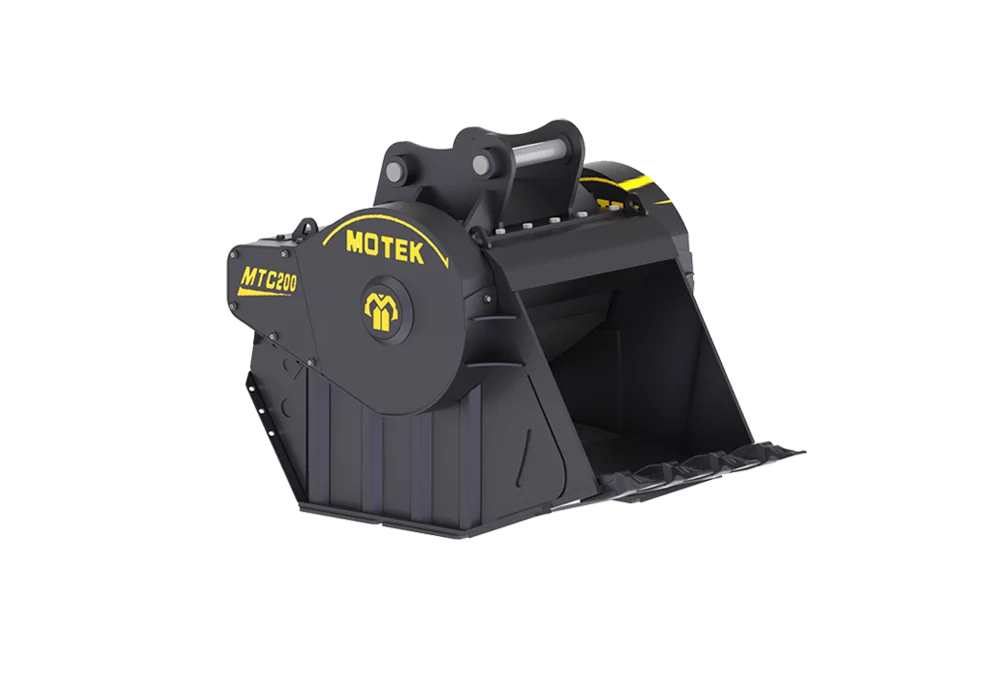
IV. MOTEK Continuously Optimizes Vibratory Screening Technology to Maximize Operational Advantages. Leveraging years of deep expertise in vibratory screening mechanisms, MOTEK has continuously refined its screening buckets to fully capitalize on the principles of stratified screening:
1. Customized hydraulic excitation unit: Delivers stable, optimal vibration parameters while balancing excitation force with structural durability;
2. Streamlined screening chamber design: Optimizes material flow paths to eliminate localized material accumulation;
3. Modular, wear-resistant screen plates: Feature quick-change capabilities and various aperture sizes to meet diverse screening standards for soil, aggregates, and construction waste;
4. Reinforced anti-vibration frame: Resists deformation during prolonged high-frequency operation, ensuring consistent screening performance. Unlike generic imitations that merely replicate external appearances, MOTEK bases its structural optimization on the theory of probability screening. This ensures the equipment maintains stable, high-efficiency screening capabilities under long-term, heavy-load conditions, avoiding issues such as vibration attenuation or efficiency loss over time.
When comparing equipment efficiency, the output figures seen on the surface mask a fundamental disparity in underlying screening principles. Trommel screens rely on random tumbling for separation; due to constraints regarding structure, effective screening area, and stratification capability, they face an efficiency ceiling that is difficult to break through. In contrast, MOTEK’s high-frequency vibrating screening bucket employs advanced principles—specifically active fluidization-based stratification combined with continuous probabilistic screening—to secure an inherent advantage rooted in physical mechanics. Delivering at least three times the screening efficiency under identical operating conditions is not merely a marketing gimmick; it is the inevitable outcome of these two distinct screening methodologies. For contractors focused on meeting tight schedules, strictly controlling costs, and requiring mobile, on-site screening capabilities, choosing MOTEK screening bucket means selecting a solution that offers superior technology, stable productivity, and lower overall costs for soil and rock separation. In an increasingly competitive industry, leveraging the mechanical advantages of the equipment to boost per-unit output is the most direct way to enhance project profitability.
著者

リリー・リュー
MOTEKの国際営業部長は、建設機械業界で15年にわたる豊富な経験を持ち、グローバル市場の動向と地域ごとの顧客ニーズを深く理解しています。彼女はチームを率いて主要な国際市場への進出を成功させ、特に建設機械用アタッチメントの販売促進や高額な海外受注の獲得に尽力してきました。.