

土壌改良システム:種類、用途、選定ガイド
Release time: 2026-10-12
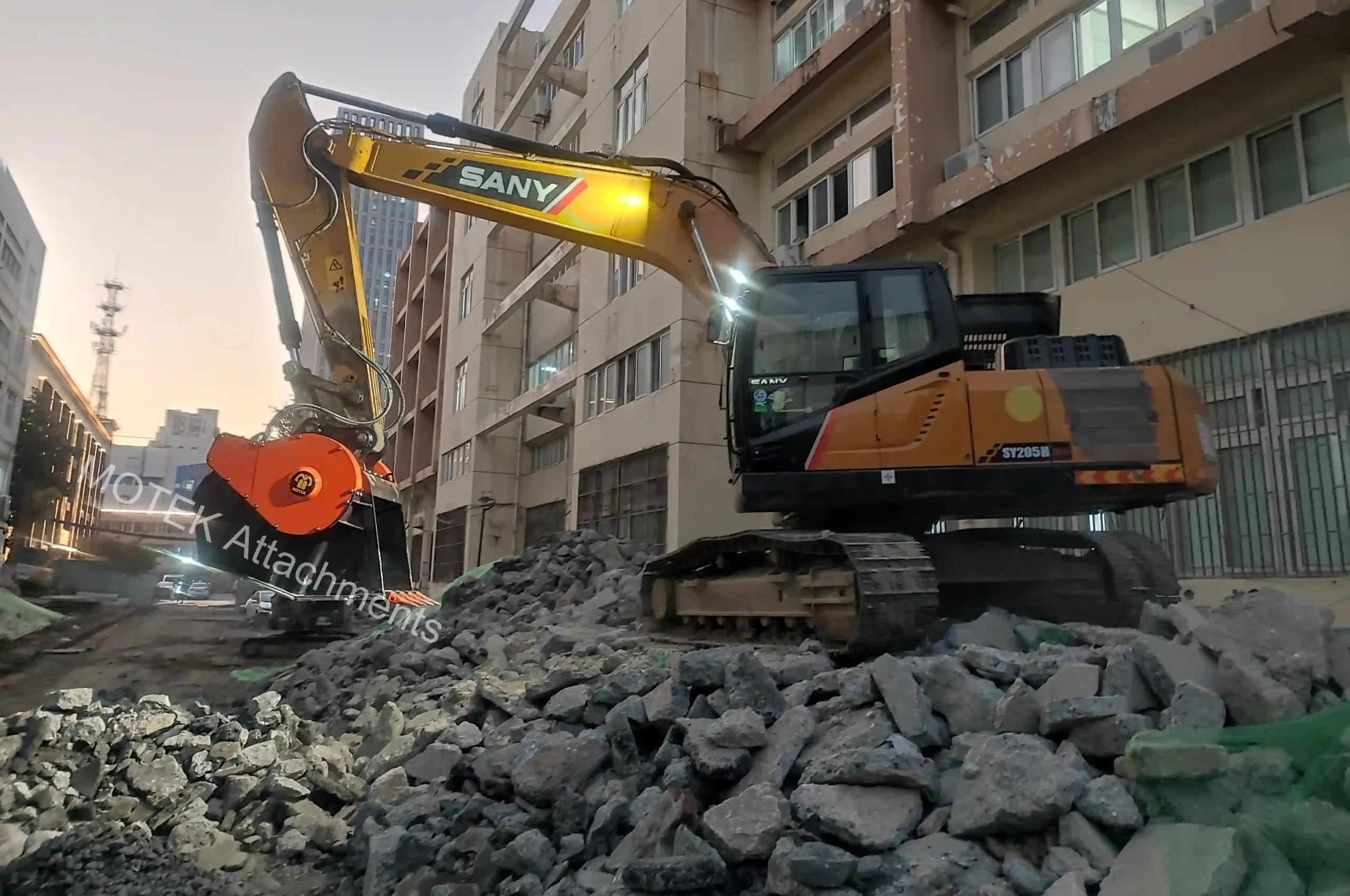
A 土壌改良システム combines screening, mixing, and stabilization equipment to improve soil properties for construction and ground engineering projects. Choosing the right system depends on soil conditions, treatment objectives, processing capacity, and equipment compatibility. モテック provides soil screening buckets, soil power mixers, and soil stabilization solutions to support material processing, soft soil treatment, and on-site ground improvement across different construction applications.
目次
1. What Is a Soil Improvement System?
A 土壌改良システム is a combination of equipment and processes used to modify soil properties for specific engineering or environmental purposes. Depending on project requirements, it may involve screening, mixing, solidifying agents, or other treatment methods.
Soil improvement is commonly used in road construction, foundation engineering, land development, and selected environmental treatment projects. The objective may be to increase soil strength, improve bearing capacity, reduce deformation, or prepare soil for subsequent treatment.
モテック provides construction machinery attachments and soil improvement equipment for applications such as material screening, soft soil mixing, and in-situ stabilization.
2. What Are the Main Types of Soil Improvement Systems?
Different soil conditions require different equipment configurations. The main types include:
| System Type | Main Function | 代表的な用途 |
|---|---|---|
| Soil Screening System | Separates soil from stones, debris, and oversized materials. | Site preparation, material classification, and soil pretreatment. |
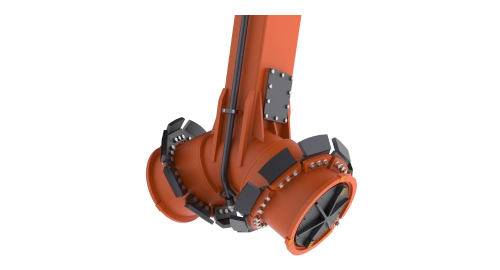
| 土壌混合装置 | Mixes soil with cement, lime, or other suitable treatment agents. | Soft soil treatment and soil stabilization. |
| Integrated Soil Stabilization System | Coordinates mixing equipment, agent supply, and control systems. | Large-scale ground improvement and in-situ sludge stabilization. |
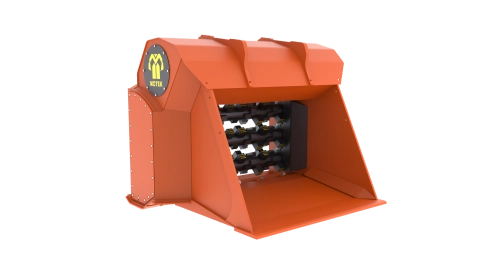
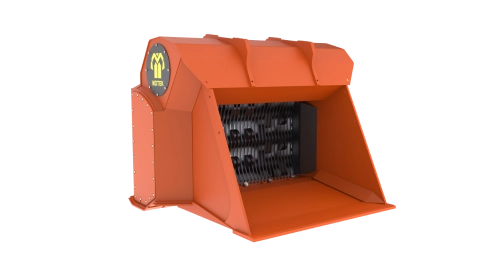
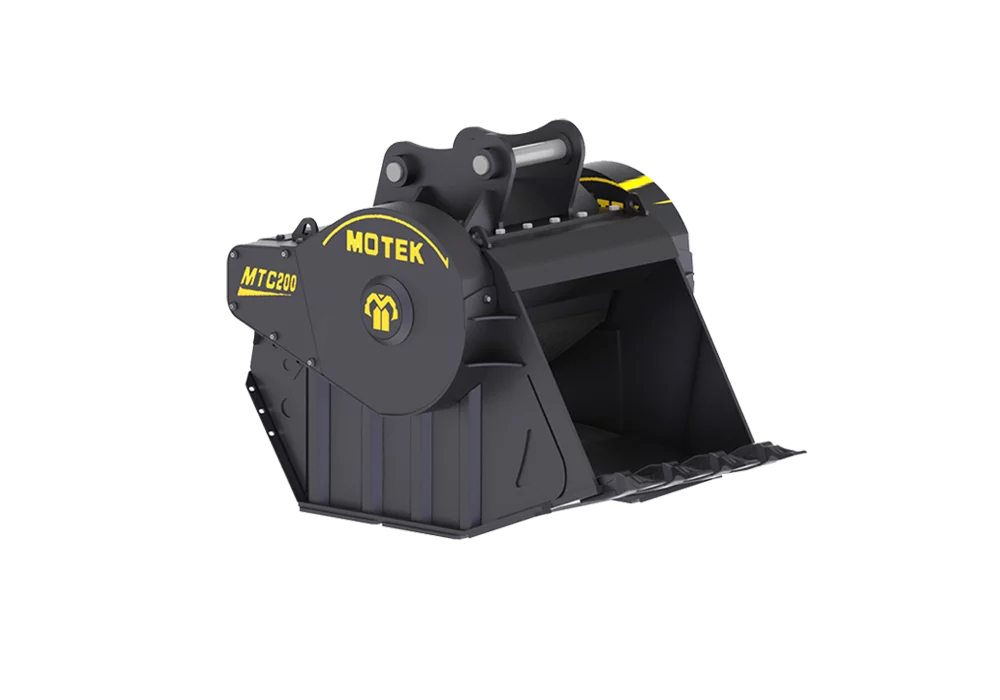
A soil screening bucket can combine screening with additional material-processing functions, depending on its design. Soil mixing equipment, by contrast, focuses on distributing treatment agents throughout the soil. An integrated stabilization system coordinates multiple components to support a more controlled treatment process.
3. Where Are Soil Improvement Systems Used?
Ground improvement systems are used across several construction and environmental applications.
- Road and foundation construction: Mixing and stabilization equipment helps improve weak ground and achieve specified engineering performance.
- Soft soil and sludge treatment: Soil power mixers blend suitable solidifying agents with high-moisture soil or sludge to improve stability.
- Construction site preparation: Screening equipment removes oversized materials and helps prepare soil for reuse or further processing.
- Environmental remediation: Screening and mixing equipment can support pretreatment or in-situ treatment. Contaminant removal or immobilization may require additional technologies and environmental verification.
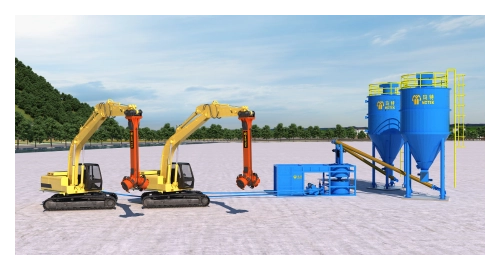
Motek offers screening buckets for soil processing and soil power mixers for mixing and stabilization applications. Its soil stabilization system combines a power mixer, excavator, intelligent control center, and solidifying-agent storage tank to support controlled in-situ treatment.
4. How Do You Choose the Right Soil Improvement System?
Selecting the right system requires evaluating the soil, project objectives, and equipment operating conditions.
土壌特性: Check soil type, moisture content, particle size, and consistency. High-moisture silt, clay, and mixed construction materials may require different equipment configurations.
Treatment objectives: Determine whether the project requires screening, soil mixing, strength improvement, or contaminated soil treatment. These processes have different technical requirements.
処理能力: Estimate the required throughput and project schedule. Equipment capacity should match the volume of soil to be treated and the available working time.
Excavator compatibility: For excavator-mounted attachments, verify the carrier’s operating weight, hydraulic flow, pressure, and connection requirements.
Control and dosing requirements: For stabilization projects, consider whether the system needs automated agent dosing, slurry preparation, mixing control, or process records.
5. Why Is Equipment Compatibility Important?
Even a well-designed soil improvement system may perform poorly if its configuration does not match actual site conditions. Incorrect hydraulic settings, unsuitable mixing tools, or inconsistent agent dosing can affect processing efficiency and treatment uniformity.
Before purchasing equipment, contractors should confirm technical specifications, operating depth, expected output, maintenance requirements, and compatibility with the intended treatment materials. For contaminated soil projects, they should also establish appropriate sampling, testing, and regulatory compliance procedures.
Choosing a suitable soil improvement system starts with understanding the soil conditions and defining the required treatment results. Screening buckets support material separation and pretreatment, while soil power mixers and integrated stabilization systems help distribute treatment agents and improve soil stability.
モテック provides soil screening buckets, soil mixing equipment, and integrated soil stabilization solutions for different construction and ground improvement requirements. By matching equipment specifications and treatment methods to the project, contractors can improve operational efficiency and achieve more consistent results. For contaminated soil, the final treatment method should be selected according to contaminant characteristics and verified against applicable environmental requirements.
著者

ガーション・チョウ
MOTEK社の研究開発ディレクター。建設機械アタッチメント業界で18年の経験を持つ。国家認定上級技術者として、土木機械アタッチメント分野における著名な技術リーダーである。.