

コンクリートや解体廃棄物の処理に最適な破砕バケットはどれですか?
Release time: 2026-10-24
目次
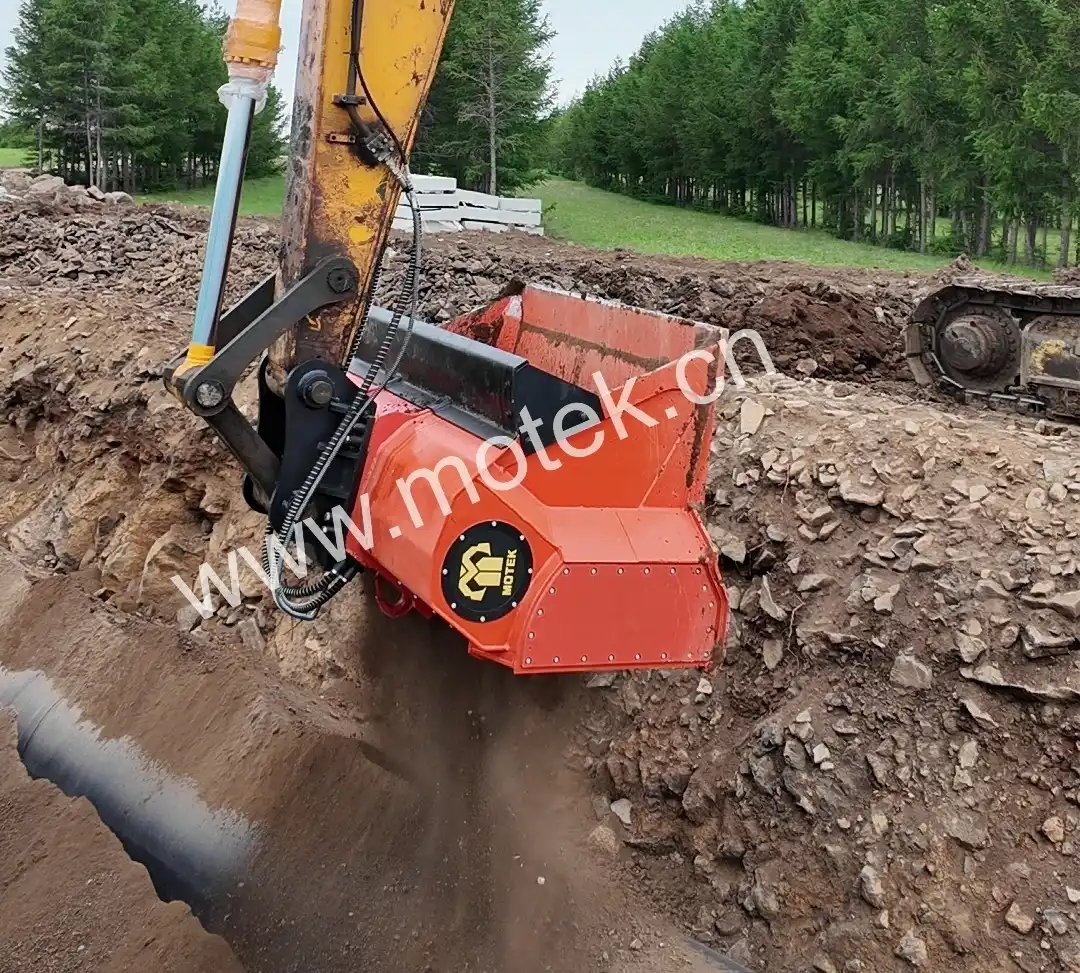
Concrete and demolition waste are common materials generated during building removal, infrastructure renovation, and construction projects. Large concrete blocks, broken bricks, and mixed masonry waste can take up considerable space and require additional handling before transportation or recycling. Processing these materials directly on site can make waste management more practical and create opportunities for material reuse.
適切な選択をする コンクリート用破砕バケット depends on the composition of the incoming waste, the required output size, and the excavator’s operating capabilities. Some projects mainly require size reduction, while others need both crushing and screening to separate materials of different sizes.
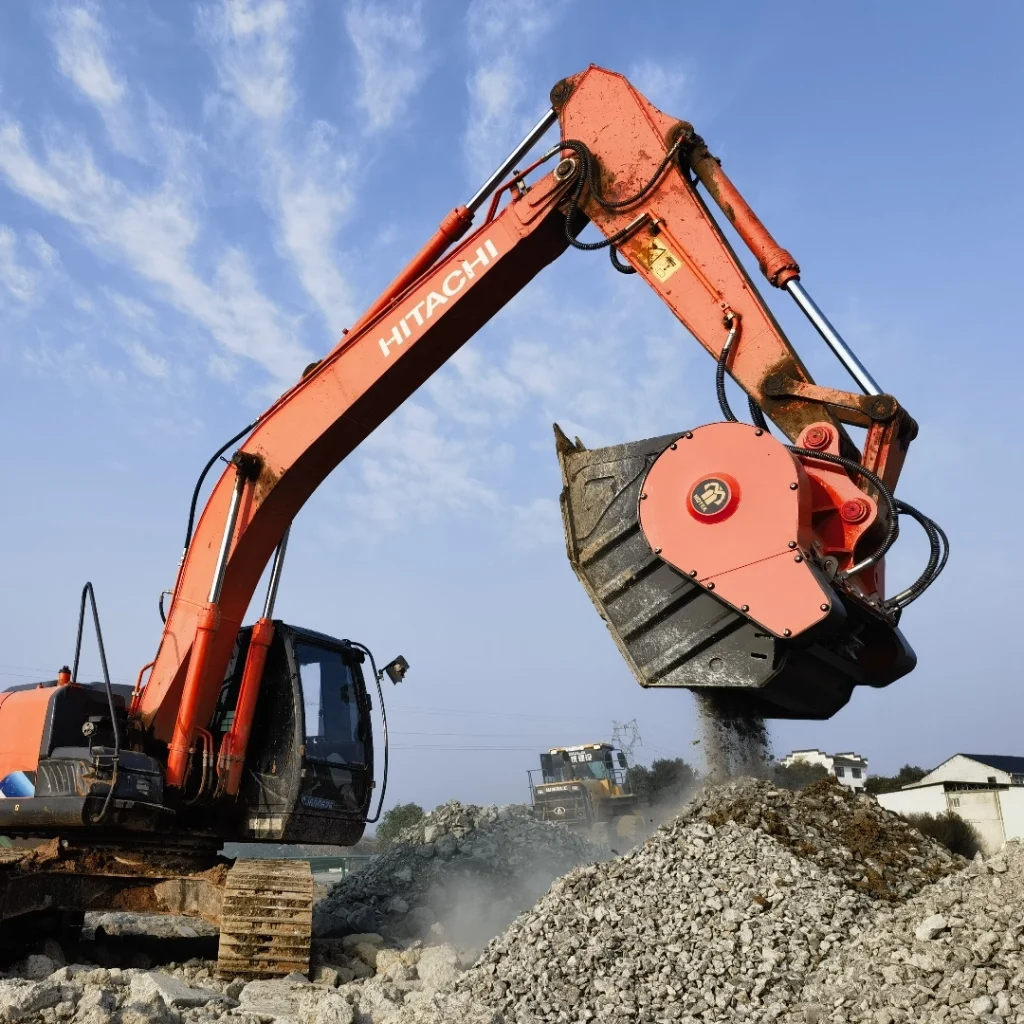
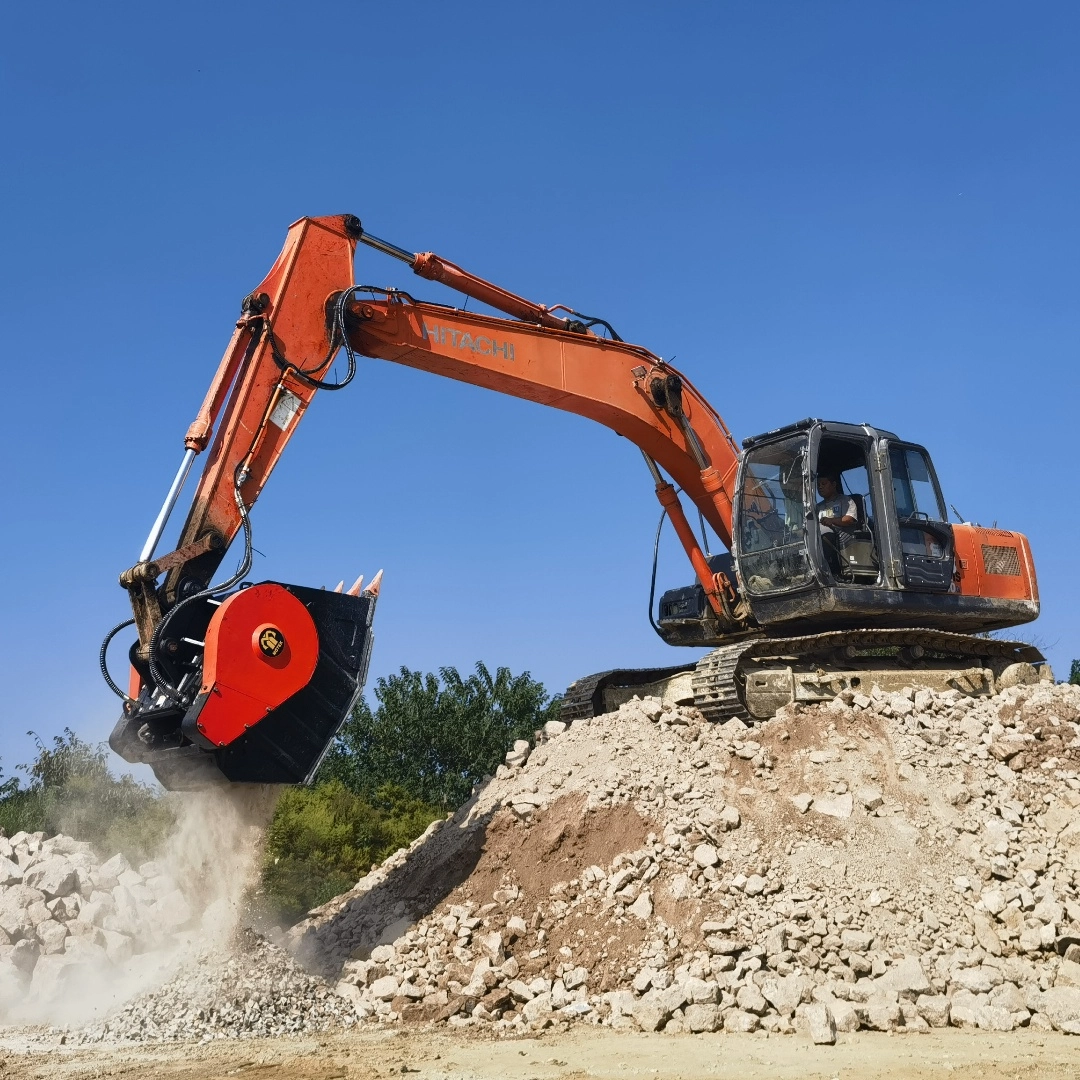
モテック specializes in the research and development, manufacturing, sales, construction, and technical services of high-end construction machinery attachments. With over 10 years of patented technology development and iterative R&D experience, the company has built expertise in environmental remediation, solidification, and solid waste disposal. Its product range includes crusher buckets and screening and crushing attachments designed for different material processing requirements.
1. Understand the Challenges of Concrete and Demolition Waste
Concrete and demolition waste are not always uniform. Their composition and physical condition can vary considerably depending on the original structure and demolition method. Understanding these differences is important when selecting crushing equipment.
Large and Irregular Concrete Blocks
Demolition work often produces large concrete pieces with irregular shapes and different thicknesses. These materials may be difficult to transport or reuse without preliminary size reduction.
A suitable crusher bucket should have an appropriate feeding opening and a robust crushing structure to handle the incoming material. The dimensions of the concrete pieces should also be considered to avoid feeding problems.
Mixed Construction Materials
Demolition waste may contain concrete fragments, bricks, masonry, and other building materials. These materials can differ in hardness, density, and particle size.
When processing mixed waste, contractors should consider whether the materials can be crushed together or need preliminary separation. Removing unsuitable materials before crushing can help maintain more consistent operating conditions.
Reinforcing Steel in Concrete
Reinforced concrete presents an additional challenge because steel bars are embedded within the concrete structure. During demolition and processing, exposed reinforcing steel may need to be separated from the crushed concrete.
Contractors should evaluate the condition of incoming material and establish an appropriate handling process for reinforcing steel. The attachment should be selected according to its intended crushing application rather than assuming that all reinforced concrete can be processed without additional preparation.
2. What Should You Look for in a Crusher Bucket for Concrete?
選ぶとき コンクリート用破砕バケット, several structural and operational factors deserve attention. The right combination helps the attachment handle demanding materials while remaining compatible with the excavator.
Crushing Structure and Strength
Concrete is a dense construction material, and large pieces can place considerable loads on crushing components. A reinforced structure is therefore important for regular demolition waste processing.
The strength of the main frame, crushing components, and connection points should be evaluated according to the expected working conditions. A durable structure helps the attachment withstand repeated crushing operations.
Jaw Plate Material and Wear Resistance
Jaw plates are directly involved in reducing material size. When processing concrete and other abrasive construction waste, their material properties have an important influence on wear and maintenance requirements.
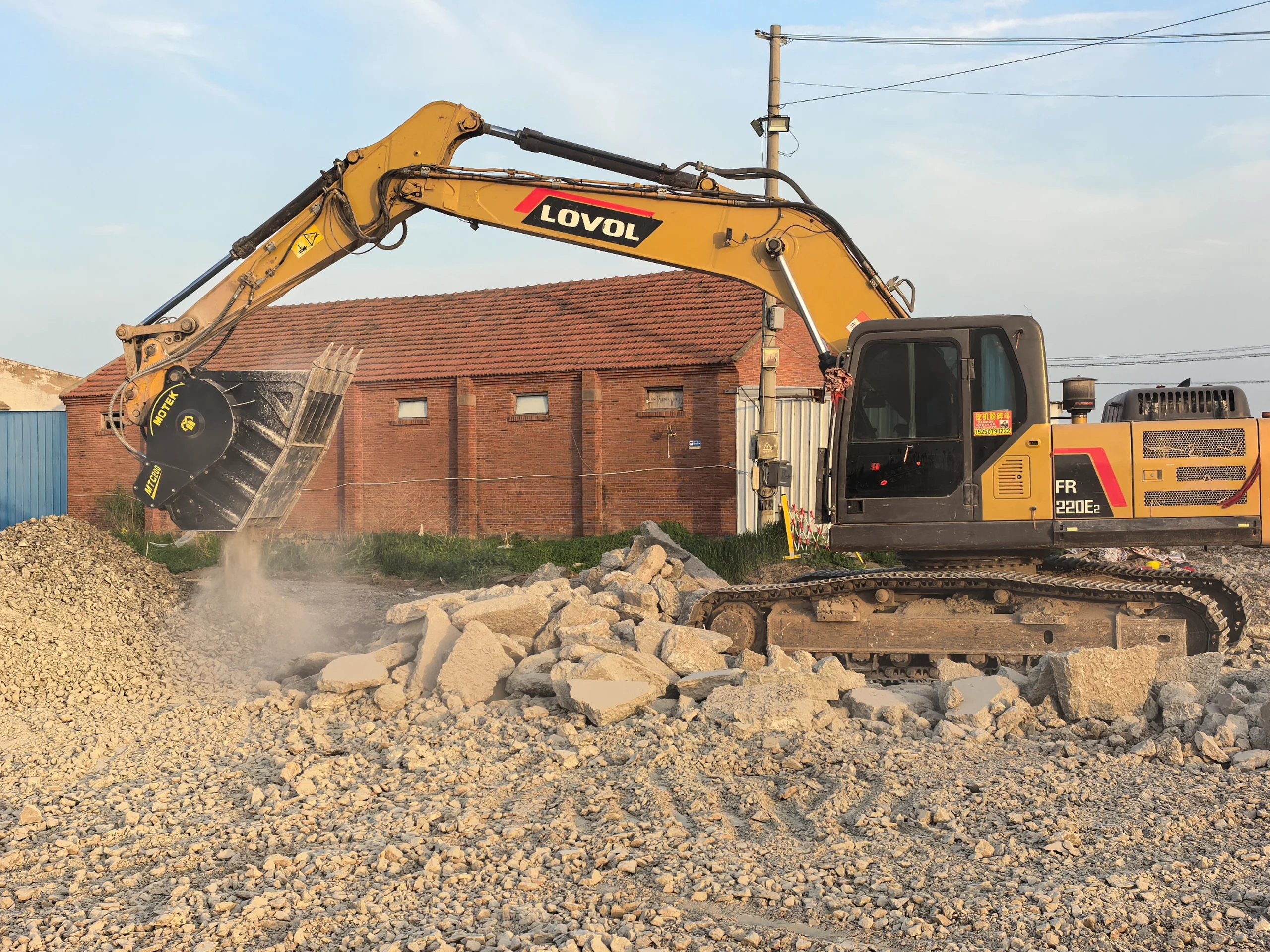
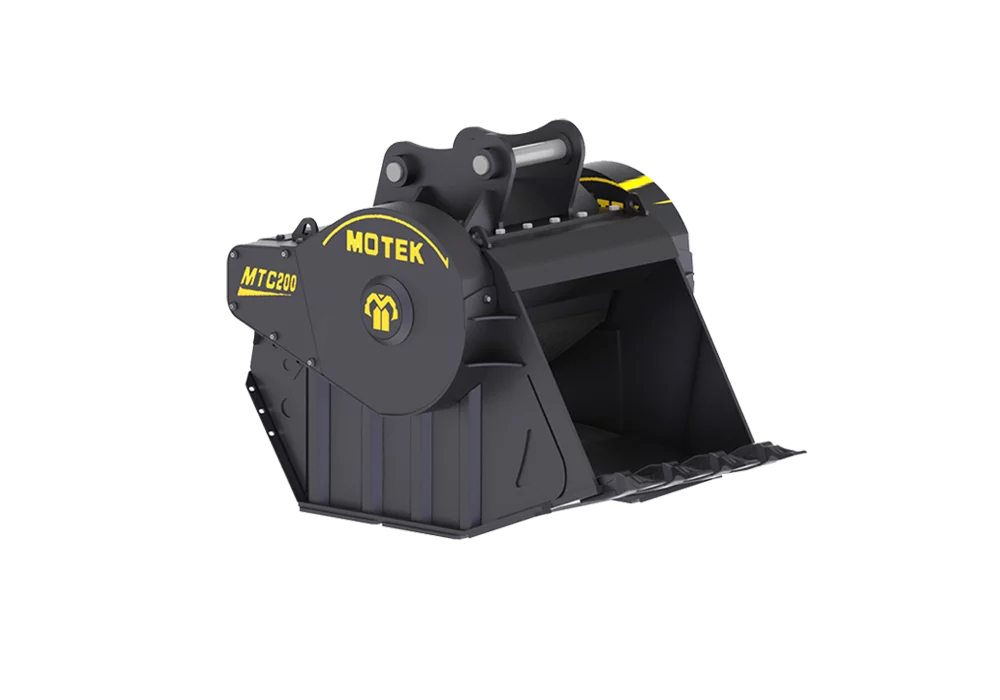
MOTEK’s MTC200 crusher bucket features a reinforced crushing structure made from Baosteel NM400/NM500 materials, equivalent to Hardox 400/500 grades. It is also equipped with Mn18Cr2Mo wear-resistant jaw plates, providing 40% higher wear resistance than the industry average.
These material and structural features are particularly relevant when evaluating equipment for repeated crushing applications.
Feeding Opening and Material Size
The feeding opening determines the dimensions of materials that can enter the crushing chamber. Large demolition fragments may require preliminary breaking if their dimensions exceed the attachment’s opening capacity.
For example, the MTC200 has an opening dimension of 930 × 460 mm. Contractors should compare this specification with the typical dimensions of their incoming concrete waste before selecting the equipment.
Hydraulic Compatibility
A crusher bucket relies on the excavator’s hydraulic system to operate. Insufficient flow or unsuitable pressure can affect equipment performance.
The MTC200 is designed for excavators weighing 18.5–29 tons, with a recommended hydraulic flow of 150–220 L/min and hydraulic pressure above 220 bar. These specifications should be checked against the excavator’s actual hydraulic configuration before installation.
3. When Is a Screening and Crushing Bucket H Series a Better Option?
Not every demolition waste project involves crushing alone. Some sites generate mixed materials that need to be processed according to particle size, making screening an important part of the workflow.
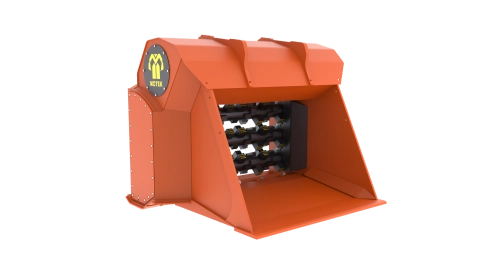
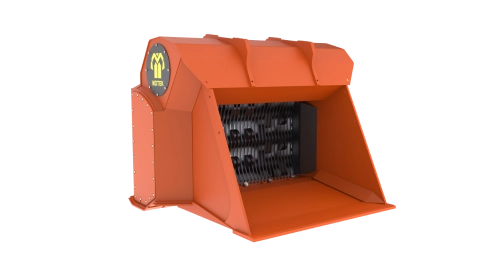
The MOTEK H Series combines screening and crushing functions in one attachment. Its two functions work together during material processing, allowing it to handle coarse screening requirements and reduce the size of larger materials before screening.
This makes the H Series worth considering when a project requires both size reduction and material separation.
Combined Crushing and Screening
The H Series can process construction waste, ores, and sand and gravel mixtures. For larger materials, the equipment can perform crushing before screening, helping adapt the processing sequence to different material conditions.
This combined approach is useful when contractors need to handle materials with different particle sizes rather than simply reduce the dimensions of large concrete pieces.
Adjustable Screening Requirements
Screening requirements can vary between projects. The required separation size depends on the intended use of the processed material and the next stage of construction or recycling.
The H Series offers different models for different excavator and loader configurations. Contractors should evaluate the model specifications and screening requirements together when planning their equipment setup.
H Series Model Options
モテック offers several H Series models:
| Product Model | 適用可能な掘削機 | Applicable Loader |
| MTS312-H | 18–25 tons | 9–14 tons |
| MTS317-H | 25–30 tons | 12–22 tons |
| MTS320-H | 30–45 tons | 14–30 tons |
| MTS425-H | 40–55 tons | 30–45 tons |
The available models cover different machine sizes, allowing contractors to consider the appropriate attachment according to their existing equipment and material processing requirements.
4. Crusher Bucket vs. Screening and Crushing Bucket: Which Should You Choose?
Although both attachments can be used in construction waste processing, their functions are not identical. Understanding the difference helps prevent equipment selection problems.
| 選考基準 | クラッシャーバケット | Screening and Crushing Bucket H Series |
| Main function | Crushing large materials | Combined crushing and screening |
| Primary application | Concrete and hard construction waste | Mixed materials requiring size reduction and screening |
| マテリアルハンドリング | Focuses on reducing material size | Handles crushing and coarse screening |
| Processing objective | Producing smaller material pieces | Reducing size and separating materials |
| Typical consideration | Crushing requirements and wear resistance | Crushing requirements and screening needs |
A standard crusher bucket is generally more suitable when the main task is breaking large concrete blocks and other hard materials into smaller pieces.
The H Series is worth considering when the project requires both crushing and screening. For example, mixed construction waste may need size reduction followed by separation according to particle size.
The final choice should depend on the material composition, processing sequence, output requirements, and available excavator or loader.
5. Match the Attachment to the Excavator and Working Conditions
Even a suitable attachment may not perform as expected if it is paired with an incompatible machine. Excavator specifications should therefore be checked before purchasing a 解体廃棄物破砕バケット.
Important factors include:
- Operating weight: Confirm that the attachment is suitable for the excavator’s weight range.
- Hydraulic flow: Check whether the excavator can provide the required hydraulic oil flow.
- Hydraulic pressure: Ensure that the hydraulic system meets the attachment’s operating requirements.
- Attachment weight: Consider the machine’s lifting capacity and operating stability.
- Working environment: Evaluate site access, material placement, and the space available for crushing operations.
For projects involving frequent material changes, contractors should also consider how easily the equipment can be integrated into the existing workflow.
6. Improve On-Site Demolition Waste Processing
Using an appropriate attachment can help organize material processing directly at the construction or demolition site. However, equipment selection is only one part of an effective workflow.
Prepare Materials Before Crushing
Large concrete structures should be broken down into suitable pieces before entering the attachment. Reinforcing steel, wood, and other unsuitable materials should be identified and separated where necessary.
Proper preparation helps reduce feeding difficulties and keeps the crushing process more consistent.
Plan the Material Processing Sequence
Contractors should establish whether the project requires crushing alone or a combination of crushing and screening.
For example, large concrete fragments may first undergo size reduction using a crusher bucket. Where mixed materials require additional classification, a screening and crushing attachment may be more appropriate.
Consider the Reuse of Processed Materials
Crushed concrete and other demolition materials may be suitable for certain subsequent construction or recycling applications, depending on their composition and the required material specifications.
The target output size and quality requirements should therefore be established before selecting the attachment. Additional screening or separation may be necessary to prepare materials for their intended use.
7. Choose the Right MOTEK Attachment for Your Project
MOTEK provides different attachment solutions for construction and demolition material processing. Its crusher bucket and H Series product ranges serve different operational requirements.
For projects focused on reducing large concrete blocks and hard construction waste, the crusher bucket range offers several models:
- MTC200: Suitable for 18.5–29-ton excavators.
- MTC250: Suitable for 21–32-ton excavators.
- MTC330: Suitable for 30–50-ton excavators.
For projects requiring both crushing and screening, the H Series offers four models covering excavators from 18 to 55 tons and loaders from 9 to 45 tons, depending on the model.
Rather than selecting an attachment based only on its model name or excavator tonnage, contractors should compare material characteristics, hydraulic requirements, feeding dimensions, and processing objectives. This helps identify a product that fits the actual working conditions.
よくある質問
1. Can a crusher bucket process concrete directly on site?
Yes. A crusher bucket can reduce the size of concrete waste directly at the construction or demolition site. This allows contractors to process large concrete pieces closer to where they are generated, making subsequent handling and transportation more manageable.
2. What is the difference between a crusher bucket and a screening and crushing bucket?
A standard crusher bucket focuses on reducing the size of hard materials. A screening and crushing bucket H Series combines crushing and screening functions, making it suitable for projects where materials need both size reduction and coarse screening.
3. Can a demolition waste crusher bucket handle mixed construction materials?
A 解体廃棄物破砕バケット can be used for processing various construction materials, including concrete fragments, bricks, and masonry. However, the suitability of the attachment depends on the composition, size, and condition of the incoming materials. Wood, reinforcing steel, and other unsuitable components may require separate handling.
4. How do I choose the right excavator crusher bucket model?
Start by checking the excavator’s operating weight, hydraulic flow, and working pressure. Then compare these specifications with the attachment’s requirements, including its weight, opening dimensions, and capacity. The type and volume of materials to be processed should also influence the final decision.
5. When should I choose the H Series instead of a standard crusher bucket?
The H Series is worth considering when a project requires both crushing and screening. If the primary objective is simply to reduce large concrete blocks into smaller pieces, a standard crusher bucket may be more suitable. The final selection depends on the required processing sequence and material output.
結論
Choosing the right attachment for concrete and demolition waste requires an understanding of material composition, crushing requirements, screening needs, and excavator compatibility. A standard crusher bucket is suitable for projects focused on reducing large concrete pieces and hard construction waste, while the H Series provides an alternative when crushing and screening are both required.
モテック combines product R&D, manufacturing, construction experience, and technical services to provide attachment solutions for different material processing conditions. With its crusher bucket and H Series product ranges, the company supports contractors in selecting equipment according to their machinery configurations and project requirements.
For more information about the available models, technical specifications, and customization options, visit the モテック product pages or contact the technical team to discuss your concrete and demolition waste processing needs.
著者

ガーション・チョウ
MOTEK社の研究開発ディレクター。建設機械アタッチメント業界で18年の経験を持つ。国家認定上級技術者として、土木機械アタッチメント分野における著名な技術リーダーである。.