

How does soil improvement equipment achieve soil turning, mixing, and loosening?
Release time: 2026-07-17
Table of Contents
Ground conditions have a direct impact on the safety, durability, and cost of construction projects. Compacted, waterlogged, or poorly graded soils can reduce bearing capacity, hinder drainage, and make it difficult to achieve uniform stabilization. Before foundations, roads, embankments, or industrial facilities are built, the soil often needs to be turned, mixed, and loosened to create a stable working platform.
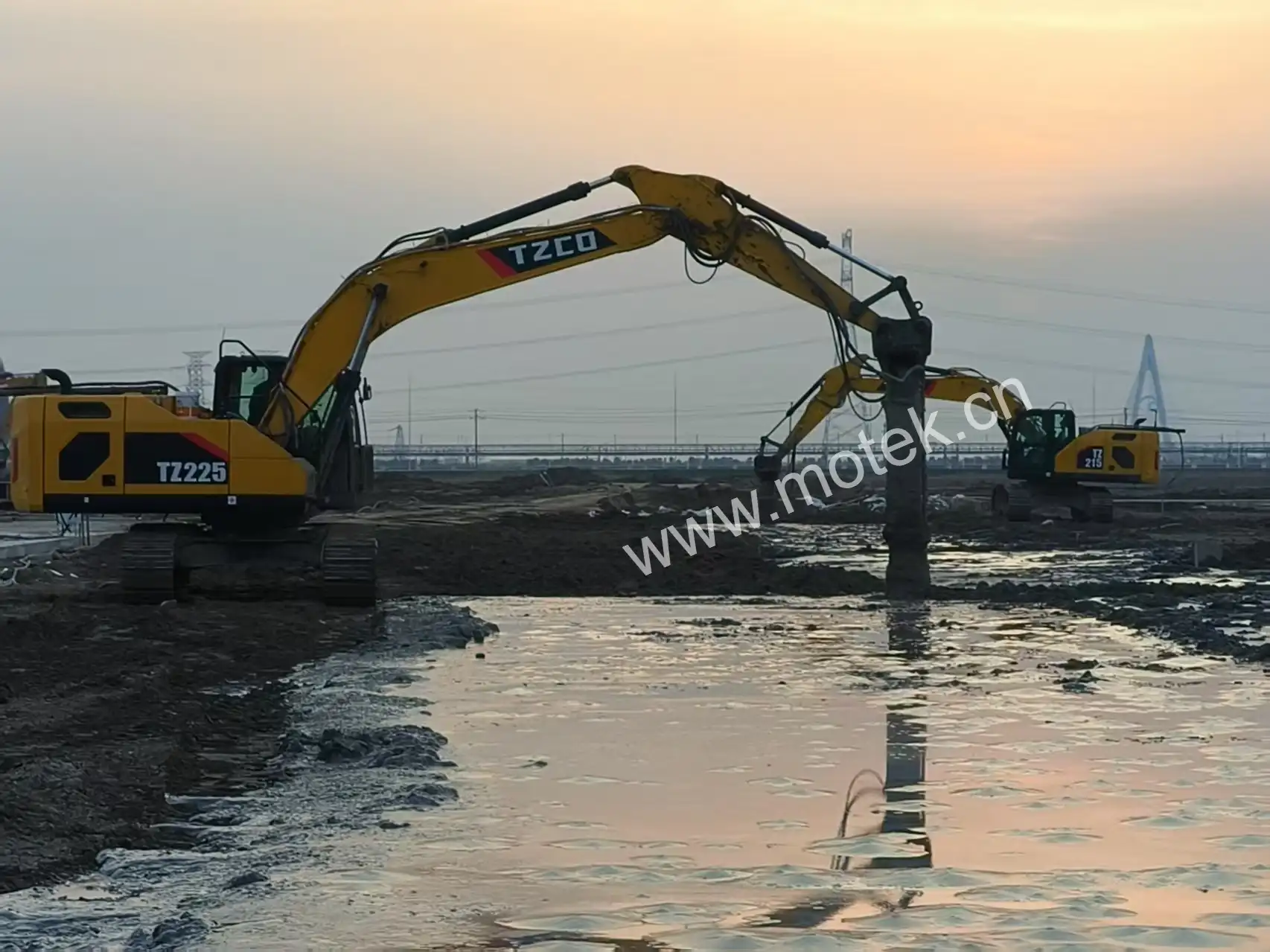
Soil improvement equipment performs these tasks through a combination of mechanical force, rotating tools, hydraulic systems, and precisely controlled operating parameters. Whether the goal is to blend cement into soft clay, break up compacted layers, or prepare soil for further stabilization, the equipment is designed to modify the soil structure without removing large volumes of material.
This article explains how soil improvement equipment achieves soil turning, mixing, and loosening, the technologies involved, and the applications where these processes provide the greatest benefits.
Why Are Soil Turning, Mixing, and Loosening Important?
Natural soils are rarely uniform. Over time, weather, groundwater, traffic, and previous construction activities create dense layers, moisture variations, and inconsistent material distribution.
Without proper preparation, these conditions can lead to:
- Uneven settlement
- Reduced bearing capacity
- Poor bonding with stabilizing agents
- Limited drainage
- Cracking in pavements and foundations
- Lower construction efficiency
Turning, mixing, and loosening improve the physical condition of the soil, allowing stabilizers and compaction equipment to work more effectively.
Understanding the Three Core Processes
Although these operations are often performed together, each serves a different engineering purpose.
Soil Turning
Soil turning involves lifting and rotating the soil profile to expose lower layers and distribute materials more evenly.
Turning helps:
- Break up compacted layers
- Redistribute moisture
- Blend different soil layers
- Prepare the ground for stabilization
Machines use rotating drums, augers, or cutting tools to continuously lift and overturn the soil during operation.
Soil Mixing
Soil mixing creates a uniform blend of natural soil and stabilizing materials.
Typical additives include:
- Cement
- Lime
- Fly ash
- Bentonite
- Industrial binders
Proper mixing ensures that these materials are distributed evenly throughout the treatment depth, producing consistent strength after curing.
Soil Loosening
Loosening breaks apart dense or compacted soil without completely removing it.
This process:
- Improves aeration
- Increases permeability
- Makes compaction more uniform
- Allows stabilizers to penetrate more effectively
Loosened soil is easier to reshape and compact according to project specifications.
How Soil Improvement Equipment Performs These Operations
Modern soil improvement equipment combines several mechanical systems to process soil efficiently.
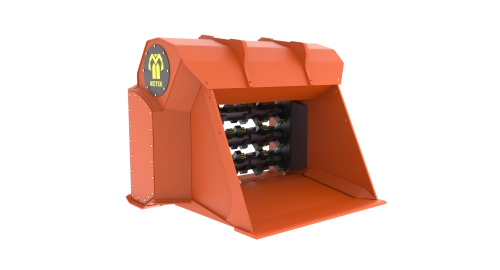
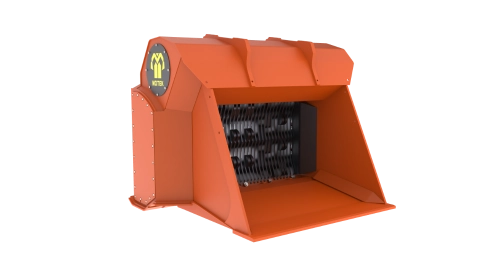
Rotating Mixing Drums
One of the most common working mechanisms is the rotating drum.
The drum contains cutting teeth or mixing blades arranged in a spiral pattern. As the drum rotates, it:
- Cuts into the soil
- Lifts material upward
- Rotates it through the drum
- Returns it to the ground after mixing
This continuous circulation creates thorough blending while preventing untreated zones.
Drum speed is adjusted according to:
- Soil type
- Moisture content
- Treatment depth
- Required mixing intensity
Auger Systems
Deep soil mixing machines often use large augers fitted with mixing blades.
As the auger penetrates the ground, stabilizing slurry is injected through internal pipes.
The rotating auger simultaneously:
- Cuts soil
- Lifts material
- Blends stabilizer
- Compresses the mixture
During withdrawal, additional mixing creates a uniform soil-cement column.
This technique is widely used for improving soft clay beneath buildings, embankments, and marine structures.
Cutting Teeth and Tool Holders
Most soil improvement machines use replaceable cutting teeth manufactured from wear-resistant alloy steel.
These teeth perform several functions:
- Fracturing compacted soil
- Cutting roots
- Breaking clay lumps
- Crushing coarse particles
- Improving material flow
Tool geometry varies depending on soil hardness and the desired treatment depth.
Hydraulic Drive Systems
Hydraulic motors provide the torque required to rotate heavy mixing components under difficult ground conditions.
Hydraulic systems allow operators to control:
- Rotation speed
- Penetration rate
- Mixing depth
- Downward pressure
Maintaining consistent operating parameters helps achieve uniform treatment quality across the project.
Material Injection Systems
Many stabilization projects require the addition of binders.
Modern equipment includes automated injection systems that deliver materials such as:
- Cement slurry
- Lime
- Water
- Chemical stabilizers
Electronic control systems synchronize material flow with machine speed, ensuring the correct dosage throughout the treatment area.
Technologies Used in Soil Mixing
Different projects require different mixing methods.
Deep Soil Mixing
Deep soil mixing creates reinforced columns beneath the surface.
Advantages include:
- High bearing capacity
- Reduced settlement
- Low vibration
- Minimal excavation
Typical treatment depths range from several meters to more than 30 meters, depending on the equipment.
Surface Soil Mixing
Surface mixing equipment works within the upper soil layers.
Applications include:
- Road construction
- Industrial yards
- Airport pavements
- Site preparation
This method prepares subgrades before compaction and paving.
Continuous Mixing
Some machines mix soil continuously while moving forward.
Continuous operation provides:
- High productivity
- Uniform treatment
- Reduced construction time
- Lower operating costs
Large highway projects frequently use continuous soil stabilization equipment.
Factors That Influence Mixing Performance
Several site conditions affect equipment efficiency.
Soil Moisture
Excess water can reduce mixing quality, while very dry soil may require additional water during stabilization.
Maintaining the proper moisture content improves binder distribution and compaction.
Soil Composition
Clay, sand, silt, and gravel each respond differently to mechanical mixing.
For example:
- Clay requires greater mixing energy.
- Sand mixes easily but benefits from compaction.
- Gravel may accelerate tool wear.
Equipment settings should be adjusted to match the material.
Treatment Depth
Shallow improvements often use surface mixers, while deep foundation projects require specialized drilling and mixing rigs.
Binder Type
Different stabilizing agents have unique mixing requirements.
Cement typically requires thorough blending to ensure complete hydration, while lime treatment may involve additional curing time.
Applications of Soil Turning, Mixing, and Loosening
Road Construction
Soil stabilization machines improve road subgrades by blending existing soil with cement or lime.
Benefits include:
- Stronger pavement foundations
- Reduced rutting
- Longer service life
Building Foundations
Deep soil mixing strengthens weak ground beneath commercial and residential buildings.
The treated soil provides greater bearing capacity while reducing settlement.
Airport Infrastructure
Runways require consistent support over large areas.
Surface mixing equipment prepares the subgrade for heavy aircraft loads.
Port and Marine Engineering
Marine clay often requires deep stabilization before construction begins.
Mixing equipment creates reinforced soil columns that improve stability beneath wharves, terminals, and seawalls.
Industrial Facilities
Factories and warehouses require stable concrete slabs capable of supporting heavy machinery.
Ground improvement equipment ensures uniform soil conditions across the entire site.
Land Reclamation
Reclaimed land frequently contains loose fill and saturated soils.
Turning and mixing improve material consistency before compaction and foundation construction.
Benefits of Modern Soil Improvement Equipment
Advanced machinery delivers measurable improvements in construction quality and productivity.
Key advantages include:
- Uniform soil treatment
- Higher bearing capacity
- Reduced settlement
- Faster construction
- Lower excavation costs
- Better stabilizer distribution
- Improved drainage
- Reduced environmental impact
- Greater automation and precision
- Lower long-term maintenance costs
Modern equipment also includes GPS guidance, automated depth control, and real-time monitoring systems that improve construction accuracy.
Choosing the Right Soil Improvement Equipment
Selecting suitable machinery depends on several project factors.
Consider:
- Soil classification
- Moisture content
- Treatment depth
- Required productivity
- Project size
- Binder type
- Environmental restrictions
- Available budget
A geotechnical investigation combined with equipment manufacturer recommendations helps identify the most effective solution.
Conclusion
Soil improvement equipment achieves soil turning, mixing, and loosening through rotating drums, augers, cutting tools, hydraulic drive systems, and controlled material injection. Together, these technologies transform weak or compacted ground into a stable foundation capable of supporting demanding construction projects.
Whether improving soft clay beneath high-rise buildings, preparing road subgrades, or stabilizing reclaimed land, the right equipment ensures consistent treatment, higher bearing capacity, and long-term structural performance. By matching the machine to the site’s soil conditions and engineering requirements, contractors can complete projects more efficiently while reducing construction risks and lifecycle costs.
Frequently Asked Questions (FAQ)
What is the purpose of soil turning in ground improvement?
Soil turning breaks up compacted layers, redistributes moisture, and exposes lower soil layers, creating better conditions for stabilization and compaction.
How does soil improvement equipment mix stabilizing materials?
Most machines use rotating drums or augers to blend cement, lime, or other binders evenly throughout the soil while maintaining a consistent treatment depth.
Which soil types benefit most from soil loosening?
Compacted clay, dense silt, reclaimed land, and heavily trafficked construction sites often benefit from soil loosening before stabilization or compaction.
Can one machine perform turning, mixing, and loosening simultaneously?
Yes. Many modern soil improvement machines are designed to cut, loosen, mix, and stabilize soil in a single pass, improving productivity and ensuring uniform treatment.
Author

Gershon Zhou
MOTEK R&D Director With 18 years of focused experience in the construction machinery attachment industry. As a National Certified Senior Engineer, he is a well-recognized technical leader in the field of earthmoving machine attachments.