


What features should I look for when choosing a crusher bucket?
Release time: 2026-02-10
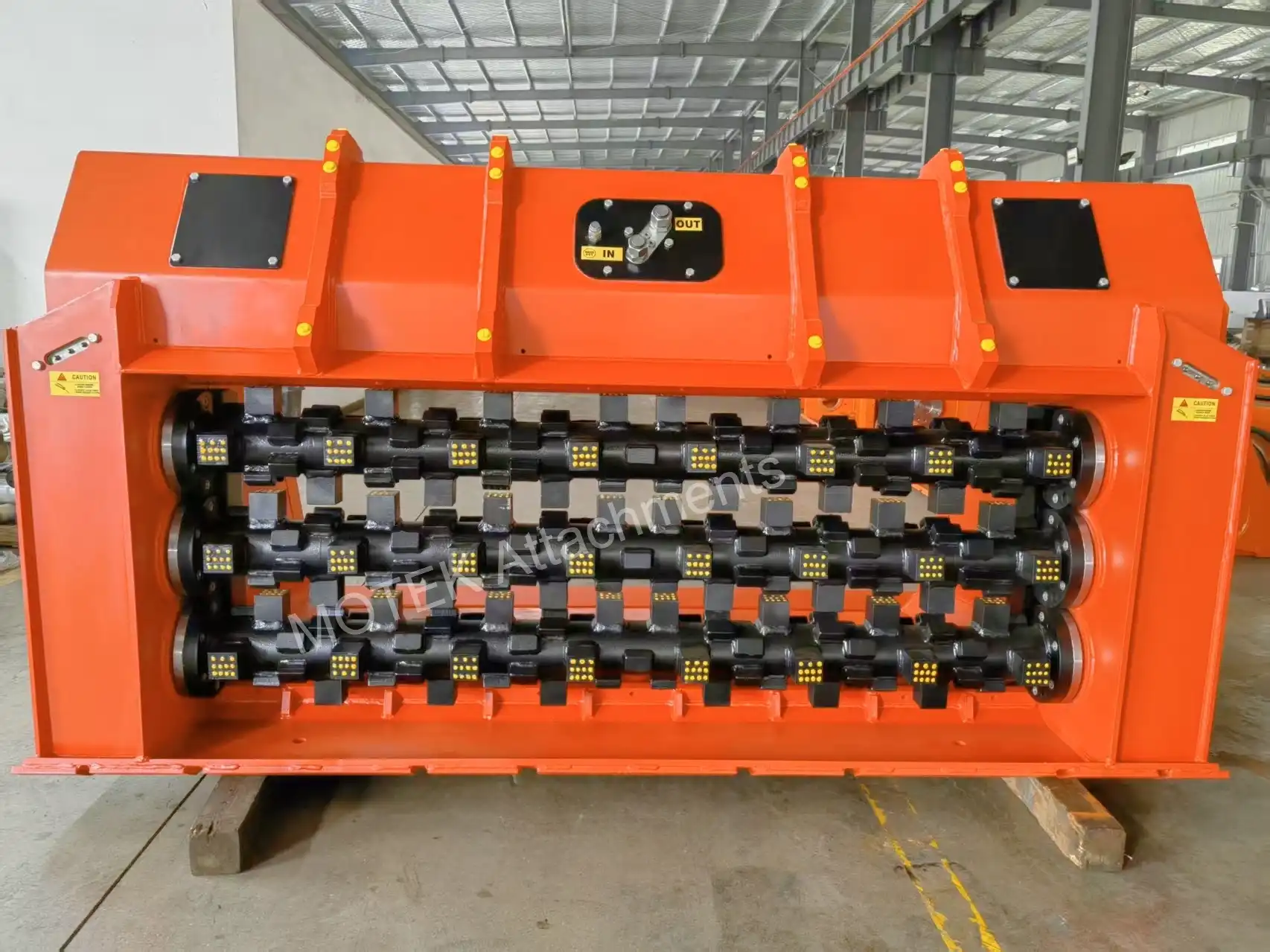
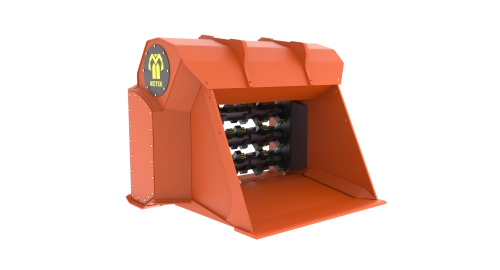
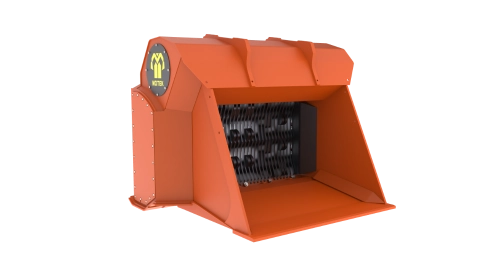
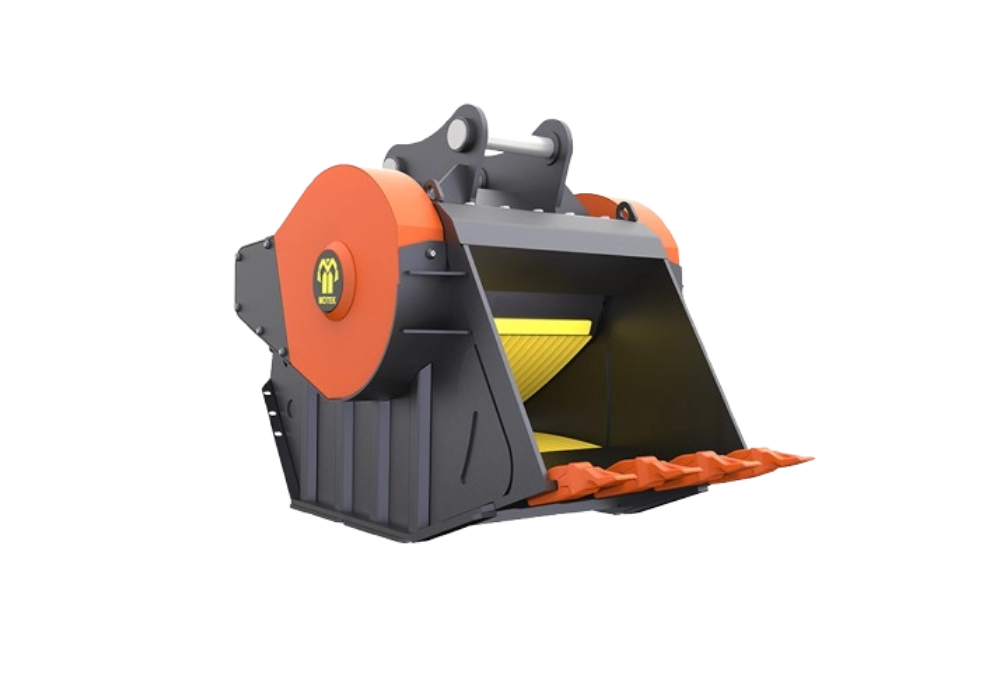
Выбирая ковш дробилки may seem like simply confirming a model and specification, but it actually involves many factors such as working conditions, materials, equipment compatibility, and regional environment. Choosing the wrong bucket not only affects efficiency but can also amplify long-term costs such as fuel and maintenance. To help construction companies make more targeted selections for different projects, this article systematically outlines the key characteristics to consider when choosing a crusher bucket, covering aspects such as working conditions, climate conditions, material type, excavator tonnage, and working space. Practical suggestions are provided for two typical scenarios: narrow urban construction sites and large mining projects.
Оглавление
How to Choose a Crusher Bucket for Different Working Conditions?
The first step in choosing a crusher bucket is to understand your primary working conditions: is it urban demolition, road construction, or heavy-duty conditions such as mining and quarrying? Under light-duty or moderate-intensity conditions, more attention should be paid to bucket efficiency and adaptability, such as whether the bucket capacity, opening width, and discharge particle size meet daily production requirements. For high-intensity, long-term continuous operation, priority should be given to the thickness of the bucket’s wear-resistant plate, whether key stress-bearing parts have reinforcing ribs, and the dustproof sealing and heat dissipation capacity of the drive mechanism. Appropriate selection for different operating conditions can avoid the extremes of “using a heavy-duty bucket for light-duty conditions, wasting costs, and using a light-duty bucket for heavy-duty conditions, leading to frequent damage,” thus achieving a balance between efficiency and lifespan.
What should be considered when selecting a crusher bucket in high-temperature/cold regions?
In high-temperature regions, the hydraulic system and bearings of the crusher bucket will experience more significant temperature rise. Therefore, the focus should be on the equipment’s heat dissipation design and lubrication system, such as whether it is equipped with high-temperature weather-resistant grease, a radiator, and high-temperature grade seals. Simultaneously, materials tend to adhere to the bucket wall and screen in high-temperature environments, requiring the selection of anti-adhesion linings and a reasonable screen hole structure to reduce clogging and downtime for cleaning. In cold regions, the low-temperature impact toughness and anti-brittle fracture properties of the steel should be considered. Priority should be given to wear-resistant steel plates and welding processes suitable for low-temperature conditions, and hydraulic oils and greases with good low-temperature performance should be selected. In extremely cold environments, the preheating time before startup, the no-load running time, and the cold resistance of quick couplings and hoses all directly affect the stability and service life of the bucket.
Requirements for Crusher Buckets for Different Materials such as Wet Soil, Rock, and Reinforced Concrete
Wet clay and mixtures with high moisture content are prone to clogging in the crushing chamber and at the screen. Therefore, for crusher buckets used with these materials, models with a large discharge opening, a reasonable screen design, a reversible working drum, or an automatic unclogging function should be selected to ensure continuous working capacity. For high-hardness rocks, higher crushing force and wear resistance are required. The bucket teeth, liners, and key stress-bearing parts should be made of high-strength wear-resistant materials and have sufficient reinforcement to prevent premature wear, deformation, and cracking. When handling reinforced concrete, in addition to crushing capacity, special attention should be paid to the bucket’s ability to separate reinforcing bars. A crushing structure with strong torque, a reasonable cutter shaft arrangement, and an anti-winding design should be preferred to reduce clogging and the frequency of shutdowns for cleaning. Different materials require different bucket tooth shapes and materials; proper matching can significantly improve crushing efficiency and reduce overall operating costs.
Selecting the Right Crusher Bucket Based on Excavator Tonnage and Site Space
A crusher bucket is not necessarily better the larger it is. It must match the excavator’s tonnage, hydraulic flow, and working radius. Otherwise, it will result in low efficiency at best, and overloading of the entire machine at worst, even damaging critical components such as the boom and connecting rods. When selecting a model, you should generally refer to the manufacturer’s recommended range for the maximum working device weight and hydraulic accessory flow to ensure the bucket remains within a safe range even under full load and extreme working conditions. Bucket capacity and weight should also be coordinated with the working environment, allowing for smooth operation in terms of loading height, turning radius, and loading platform height, avoiding restricted turning and sluggish movement due to an oversized bucket. For construction sites with ample space and frequent loading, a larger bucket capacity can be appropriately increased to reduce the number of cycles; for scenarios with limited space or frequent precision operations, a more flexible specification is preferable.
How to Choose a Small Crusher Bucket for Narrow Urban Construction Sites?
In urban demolition, old building renovation, and municipal engineering projects, working space is often severely limited by buildings, roads, pipelines, and pedestrian walkways. Therefore, the compact design and operational flexibility of small crusher buckets are particularly crucial. Firstly, lightweight buckets matched with small or medium-sized excavators should be selected to reduce the overall turning radius and operating footprint, while ensuring safe lifting, turning, and unloading operations even in confined spaces. Secondly, noise and dust control are essential; products with noise reduction designs, water spray dust suppression capabilities, or enclosed crushing chambers should be prioritized to meet urban environmental protection requirements and construction permit conditions. Furthermore, quick-change couplings and versatility are also important considerations for urban construction sites. Quickly switching between different attachments such as crushing buckets and cleaning buckets allows for more processes to be completed within limited working hours, reducing the frequency of equipment deployment.
How to Match Heavy-Duty Crusher Buckets to Large Mining Projects?
Large-scale mining, quarrying, and infrastructure projects typically require long-term, high-intensity continuous operation, placing extremely high demands on the structural strength and wear resistance of crusher buckets. In such scenarios, heavy-duty crusher buckets with thick, wear-resistant liners, reinforced frames, and high-torque drive systems should be prioritized to ensure high productivity when handling high-hardness rocks and large pieces of material after blasting. The bucket capacity and feed inlet size must match the upstream blasting and loading processes to allow large materials to enter the crushing chamber smoothly, reducing secondary processing and manual intervention. For mining projects, ease of maintenance and spare parts availability must also be fully considered, such as the design of quickly replaceable screens, bucket teeth, and liners, as well as the manufacturer’s service network and response speed around the mining area. These factors directly impact downtime losses for the entire production line.
As the analysis from the preceding dimensions shows, a truly suitable crusher bucket must be “matched” to the working conditions, materials, climate, and the excavator’s own capabilities, rather than simply pursuing a larger bucket capacity or lower price. High-quality crusher buckets, such as the MOTEK Crusher Bucket, are optimized for different working conditions and regional environments from the initial design stage, better balancing efficiency and durability in actual construction.
Whether in a cramped demolition site in the city center or a large, continuously operating mine, prioritizing our Motek screening bucket during the selection phase, and choosing the appropriate model and configuration based on specific working conditions, can significantly improve crushing efficiency and reduce the overall lifecycle cost of the machine while ensuring safety and environmental protection requirements. Finally, we recommend using the MOTEK Crusher Bucket as the first choice in specific projects. By combining the equipment manufacturer’s recommendations with on-site trial feedback, a set of crusher bucket selection standards based on MOTEK products can be gradually developed, providing a reliable reference for subsequent project replication and cost control.
Author

Gershon Zhou
MOTEK R&D Director With 18 years of focused experience in the construction machinery attachment industry. As a National Certified Senior Engineer, he is a well-recognized technical leader in the field of earthmoving machine attachments.