

What Size Crusher Bucket Fits My Excavator Model?
Release time: 2026-01-15
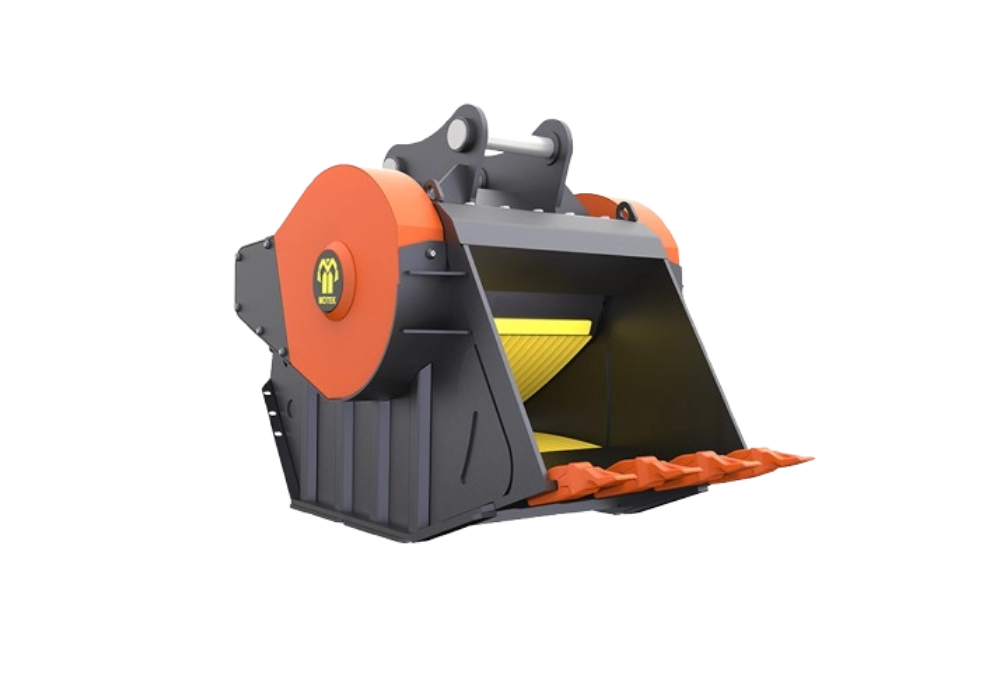
Choosing the right crusher bucket for your excavator is one of the most critical decisions a contractor can make. A perfect match ensures high productivity and a quick return on investment, while a mismatch can lead to mechanical strain, increased fuel consumption, or even dangerous instability on the job site.
To find the perfect fit, you must categorize ковши дробилки through several lenses: tonnage, hydraulics, material application, and structural durability. This guide breaks down these classifications to help you identify the ideal tool for your machine.

1. Classification by Excavator Tonnage (Operating Weight)
The primary way to classify a crusher bucket is by the operating weight of the host excavator. Every bucket is engineered to work within a specific tonnage range to ensure the machine remains balanced, especially when the bucket is fully loaded and extended.
- Compact/Mini Class (5–12 Tons): These are designed for utility work and urban demolition. They are lightweight and agile, allowing for work in tight spaces where large mobile crushers cannot reach.
- Medium/Standard Class (13–25 Tons): This is the most popular category for general construction and road recycling. These buckets offer a balance of high output and maneuverability.
- Heavy-Duty Class (26–50+ Tons): Built for massive industrial demolition and quarrying. These units have massive intake openings and require significant hydraulic power to process large volumes of hard rock or reinforced concrete.
Key Consideration: Always check your excavator’s “lifting capacity” chart. The combined weight of the bucket plus the maximum weight of the material it can hold must never exceed the safe operating limit of the machine at full reach.
2. Classification by Hydraulic Requirements (Pressure and Flow)
A crusher bucket is essentially a hydraulic motor-driven tool. Therefore, classifying them by their “thirst” for oil is vital.
- Low-Flow Buckets: Designed for smaller machines, these require fewer liters per minute (L/min) but often operate at higher pressures to maintain crushing force.
- High-Flow/Dual-Pump Buckets: Larger units often require the confluence of two hydraulic pumps to maintain the speed of the crushing jaws.
It is crucial to match the bucket’s required Working Pressure (MPa) and Oil Flow Rate to your excavator’s auxiliary hydraulic circuit. If the flow is too low, the bucket will be sluggish; if the pressure is too high, you risk damaging the bucket’s hydraulic motor.
3. The “User-Developer” Perspective
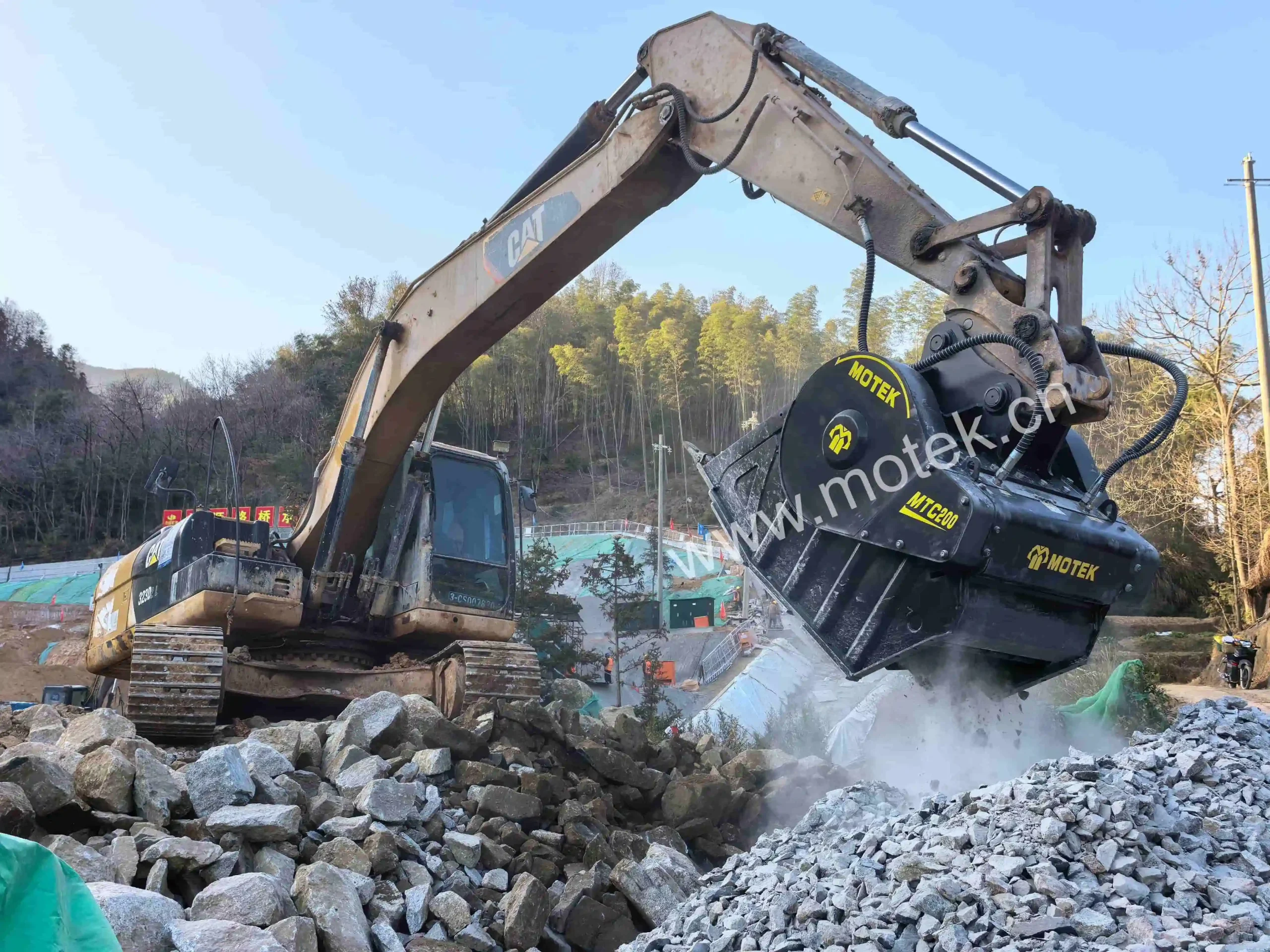
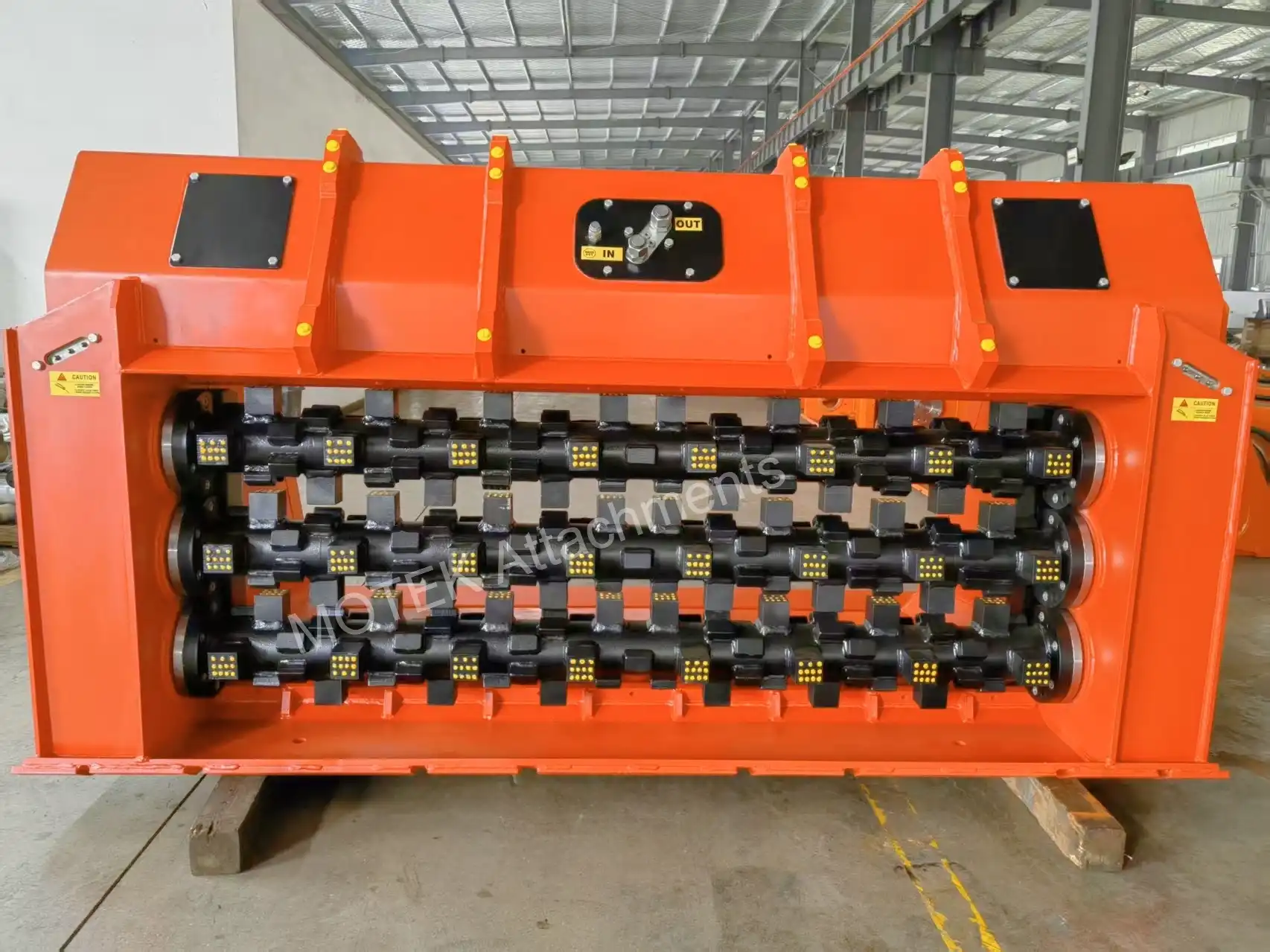
When classifying buckets by structural integrity and reliability, we look at the materials and components that define the high-end segment of the market. This is where Дробильный ковш MOTEK has established itself as a premier choice for professionals.
Unlike brands that only focus on the engineering side, MOTEK has a unique advantage: they are both manufacturers and active users of their own equipment. This dual perspective means that every bucket is refined through real-world feedback on actual job sites before it reaches a customer.
Why MOTEK is classified as a high-reliability leader:
- Material Selection: MOTEK utilizes Baosteel NM400 and NM500 high-strength, wear-resistant steel for the bucket structure. This ensures that even under the extreme stress of crushing granite or basalt, the bucket remains durable and resistant to deformation.
- Top-Tier Hydraulics: By integrating international first-tier hydraulic components, MOTEK ensures that the “heart” of the bucket is as reliable as the excavator itself, offering a long service life and stable performance in harsh environments.
- Practical Innovation: Because MOTEK understands the user’s needs, their products are designed for high yield even at a relatively low working pressure of 23MPa. This protects the host machine from unnecessary wear.
- The Value Advantage: MOTEK is classified as a “High-Value” brand, offering international quality standards at competitive domestic pricing, providing contractors with a faster path to profitability.
4. Classification by Intake Opening and Material Type
Not all materials crush the same way. Buckets are often categorized by the size of their “mouth” and the type of material they are optimized to process.
- Wide-Intake Buckets: Ideal for demolition debris and bulky concrete blocks. A wider opening reduces the need for “pre-crushing” with a hydraulic breaker, saving time and fuel.
- Deep-Intake Buckets: Often used in quarrying applications where large, irregular rocks need to be processed.
- Reinforced Concrete Specialist: These buckets feature specific jaw geometries designed to “bite” through rebar without jamming, which is essential for recycling centers.
5. Classification by Output Size Adjustment
Finally, crusher buckets can be classified by how they allow the operator to change the size of the finished aggregate.
- Fixed Output: Less common today, these are set to a single size.
- Shim-Adjustable: Common in many European designs, where metal plates are added or removed manually.
- Hydraulic/Quick-Adjust: Modern high-end buckets allow for faster adjustment of the discharge gap, allowing the operator to switch from producing 20mm road base to 80mm fill material in a matter of minutes.
Making the Final Decision
To find the ковш дробилки that fits your excavator, you must look beyond just the bolt-on plate. You are looking for a tool that balances weight, hydraulic efficiency, and material durability.
If you prioritize a tool that is built by people who actually understand the daily grind of an operator, МОТЕК offers a compelling choice. By combining the best-in-class materials like Baosteel NM500 with a “manufacturer-as-user” philosophy, they provide a product that is as reliable as it is cost-effective.
FAQ
Does a larger bucket always mean more production?
Not necessarily. If the bucket is too large for the excavator’s hydraulic flow, the cycle time will be slow. It is better to have a perfectly matched medium bucket than an undersized excavator struggling with a large one.
Why is Baosteel NM500 important for a crusher bucket?
Crushing creates extreme abrasion. NM500 is a premium wear-resistant steel that ensures the bucket frame doesn’t deform and the wear parts last longer, reducing maintenance costs.
Can I run a MOTEK crusher bucket on a single-pump hydraulic system?
Yes. MOTEK buckets are engineered for high-yield efficiency at lower pressures (23MPa) and are optimized for single-pump operation, protecting your engine from excessive load.