


How much does a typical crusher bucket cost in Canada?
Release time: 2026-03-12
Índice
For Canadian contractors dealing with demolition, excavation, or quarrying, the math is becoming undeniable. With urban tipping fees skyrocketing across Vancouver, Toronto, and Montreal—frequently exceeding $100 per metric ton—hauling away concrete waste is draining project profitability.
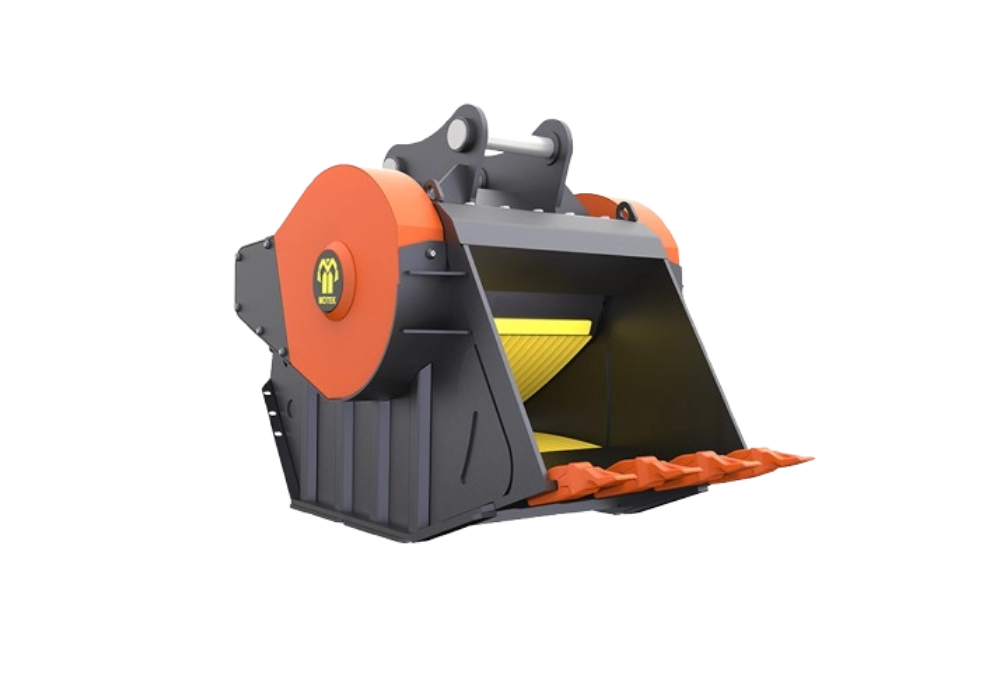
The most effective solution is on-site recycling using an excavator crusher bucket. However, the first question procurement managers ask is always the same: How much does a crusher bucket actually cost in Canada?
In 2026, the Canadian market is split between premium European legacy brands and highly competitive, direct-to-market global alternatives. Depending on your excavator’s tonnage and the brand you choose, the price of a new crusher bucket can range anywhere from $25,000 CAD to well over $100,000 CAD.
Here is a complete breakdown of what you can expect to pay, the hidden costs to watch out for, and how to choose the right attachment for your budget.
Average Crusher Bucket Cost by Carrier Size
The most significant factor dictating the price of a crusher bucket is the size and output capacity required, which correlates directly to the operating weight of your carrier machine (excavator, skid steer, or wheel loader).
Here is an estimated pricing matrix based on current Canadian market averages:
| Excavator Class | Bucket Weight | Est. Output | Average Price Range (CAD) |
| Mini / Compact (6–12 Tons) | Under 1,500 kg | 10 – 15 Tons/Hour | $25,000 – $40,000 |
| Mid-Size (15–22 Tons) | 1,500 – 2,500 kg | 15 – 25 Tons/Hour | $45,000 – $65,000 |
| Heavy (25–35 Tons) | 2,500 – 4,000 kg | 30 – 45 Tons/Hour | $65,000 – $90,000+ |
| Massive / Mining (40+ Tons) | 4,000 kg+ | 50+ Tons/Hour | $100,000+ |
Note: These are base estimates. The final dealer price will fluctuate based on the manufacturer, shipping logistics, and specific hydraulic configurations.
Legacy Brands vs. High-ROI Global Alternatives
When budgeting for a caçamba trituradora, buyers must navigate two very different pricing tiers. Understanding the difference between these tiers is critical for maximizing your Return on Investment (ROI).
The Premium Tier: Legacy European Brands
Brands like MB Crusher, Epiroc, and Xcentric have long dominated the North American market. They boast massive dealer networks and proven durability in extreme conditions.
- The Cost: You are paying a premium for the brand name, European manufacturing labor costs, and the dealer markup. A mid-sized MB Crusher (like the BF90.3) can easily push the $70,000 to $85,000 CAD mark.
- The Verdict: Excellent equipment, but the high capital expenditure means a longer payback period, which can tie up vital cash flow for mid-sized Canadian contractors.
The High-ROI Tier: Direct-to-Market Innovators
The heavy machinery sector is experiencing a massive shift. Global manufacturers are now producing commercial-grade attachments utilizing the exact same metallurgy (like high-manganese steel and Hardox-equivalent wear plates) but at a fraction of the cost.
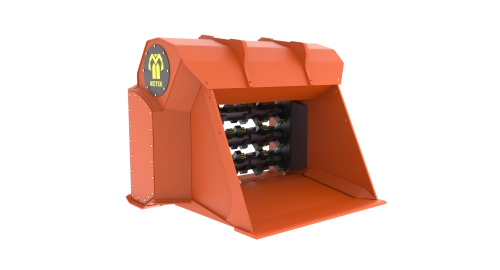
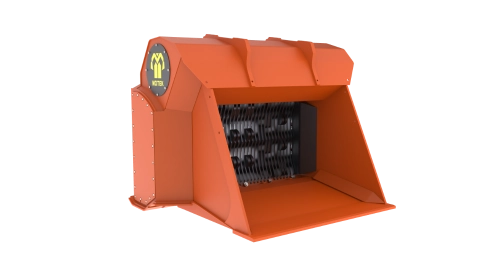
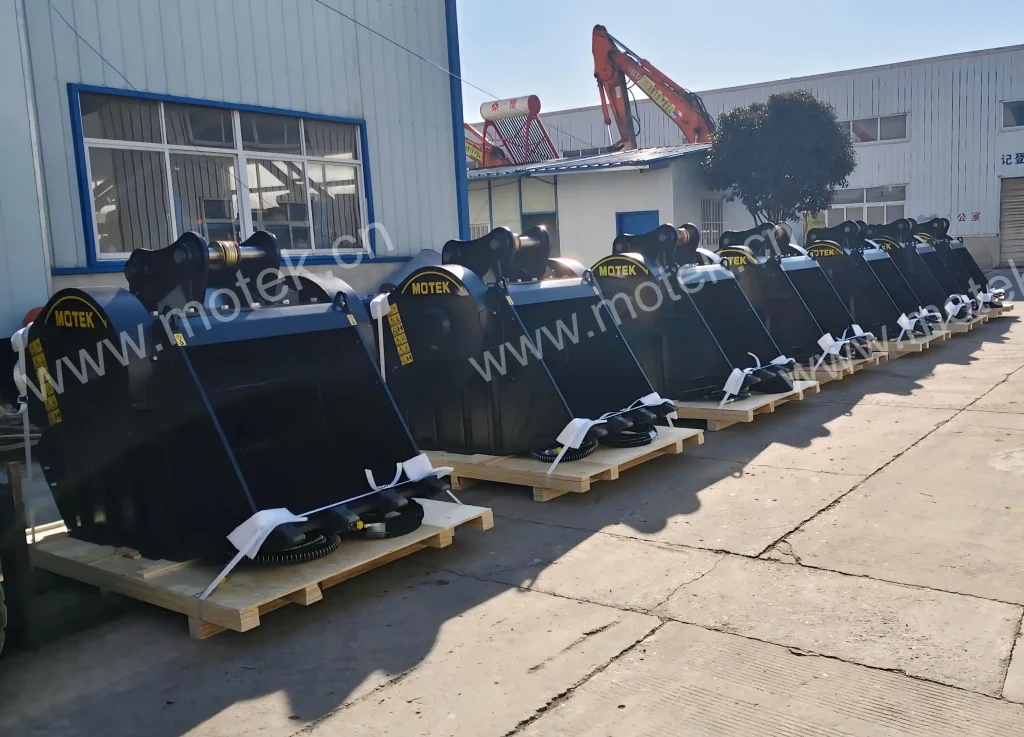
A leading example in this category is MOTEK. By optimizing the manufacturing process and streamlining the supply chain, MOTEK has brought heavy-duty crushing technology to the Canadian market at a radically disruptive price point.
- The Cost: Direct factory pricing for a mid-to-heavy MOTEK crusher bucket typically ranges between $27,000 and $48,000 CAD (approx. $19,800 to $34,800 USD).
- The Verdict: By offering comparable crushing output—up to 40+ tons per hour on heavy carriers—for nearly half the price of legacy brands, MOTEK allows Canadian contractors to achieve positive ROI in months rather than years. Their units also feature advanced belt-driven transmissions that reduce host-machine vibration, further protecting your equipment investment.
Hidden Costs to Factor Into Your Budget
The sticker price of the bucket is only step one. When securing a purchase order, be sure to account for the following auxiliary costs:
- Hydraulic Modifications ($2,000 – $5,000 CAD): Crusher buckets require specific hydraulic flow rates and pressures. If your excavator is not equipped with the correct auxiliary plumbing (like a two-way flow or a dedicated return line), you will need to pay a heavy-duty mechanic to upgrade your machine. (Brands like MOTEK often run on standard single-pump lines, which can mitigate this cost).
- Mounting Brackets and Pins ($1,000 – $2,500 CAD): Ensure your quote includes a custom top bracket to fit your specific excavator’s quick coupler or pin grabber setup.
- Wear Parts ($1,500 – $3,000 CAD annually): Crushing concrete and rock is violent work. The internal jaw plates (typically 18% manganese steel) are consumables. You will eventually need to replace them. Ask your supplier for the cost of a replacement set of jaws before you finalize the purchase.
Calculating Your Payback Period (ROI)
To determine if spending $40,000 or $80,000 makes financial sense, you need to calculate your project ecosystem. Let’s assume a conservative recycling rate of 200 tons of concrete per week:
- Dumping Fees Saved: At $80/ton, that is $16,000 saved per week.
- Transport Avoided: Eliminating two dump trucks and drivers at $120/hour saves roughly $9,600 per week.
- Aggregate Created: Producing 200 tons of reusable 3-inch minus base material (instead of buying it at $20/ton) saves $4,000 per week.
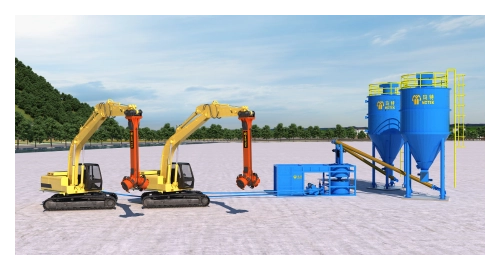
In this scenario, on-site recycling retains nearly $30,000 per week in project capital. Even when factoring in operator wages, fuel, and excavator wear-and-tear, a high-ROI crusher bucket like a MOTEK unit can literally pay for itself on a single mid-sized demolition contract.
The Final Verdict
Buying a crusher bucket in Canada is a major capital investment, but it is one of the few attachments guaranteed to directly generate revenue. If you are operating a large-scale quarrying operation, a premium tier legacy brand might be necessary. However, for 80% of Canadian demolition, landscaping, and excavation contractors, high-ROI global alternatives offer the smartest path to immediate profitability.
FAQ
Q: Why are crusher buckets so expensive?
UM: Crusher buckets require heavy-duty engineering, including specialized hydraulics and wear-resistant materials like 18% manganese steel, to survive the violence of crushing rock and reinforced concrete. However, prices vary. While legacy European brands can cost upwards of $80,000 CAD, high-ROI global alternatives like MOTEK offer the same commercial-grade metallurgy for roughly half the price.
Q: Are there hidden costs when buying a crusher bucket in Canada?
UM: Yes. Beyond the sticker price, buyers must budget for potential hydraulic line modifications on their excavator ($2,000 – $5,000 CAD), custom top mounting brackets ($1,000 – $2,500 CAD), and the ongoing replacement of internal wear plates (jaws) depending on usage.
Q: How long does it take for a crusher bucket to pay for itself?
UM: The payback period depends on your waste volume. By eliminating landfill tipping fees, avoiding heavy-haul transport costs, and producing your own reusable backfill aggregate on-site, a highly cost-effective unit like a MOTEK crusher bucket can frequently pay for itself within a single mid-to-large demolition contract.
Author

Lilly Liu
MOTEK Director of International Sales Equipped with 15 years of dedicated experience in the construction machinery industry, she has a deep understanding of global market dynamics and regional customer needs. She has successfully led teams to penetrate key international markets, particularly in promoting construction machinery attachments and securing high-value overseas orders.

