

Crusher Buckets And Screening Bucket Differences Explained
Release time: 2026-01-05
Construction and recycling projects require the right tools to handle materials efficiently. Many contractors wonder whether they need a crusher bucket or a screening bucket for their excavator. While both attachments help manage job site waste, they serve completely different purposes. This guide explains the core differences to help you choose the best Motek attachment for your specific work environment.
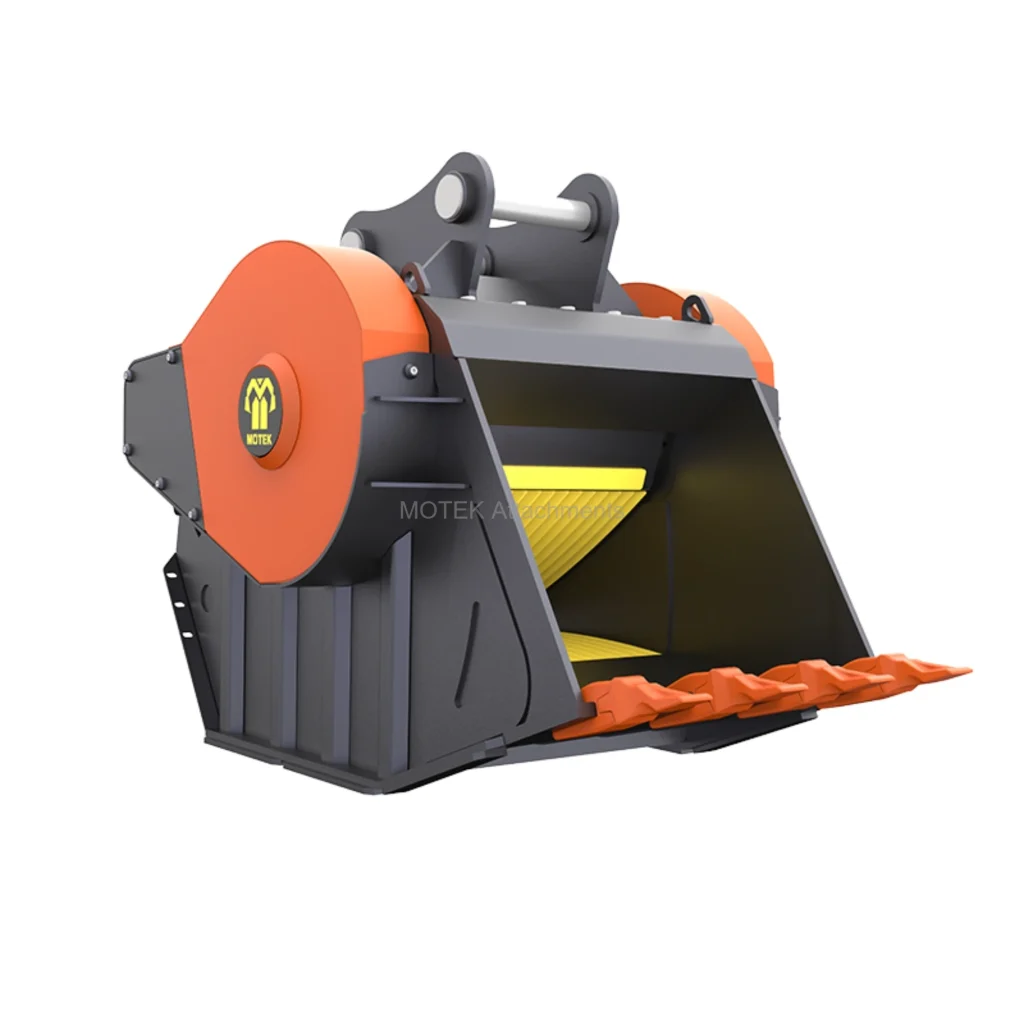
The Role of a Crusher Bucket
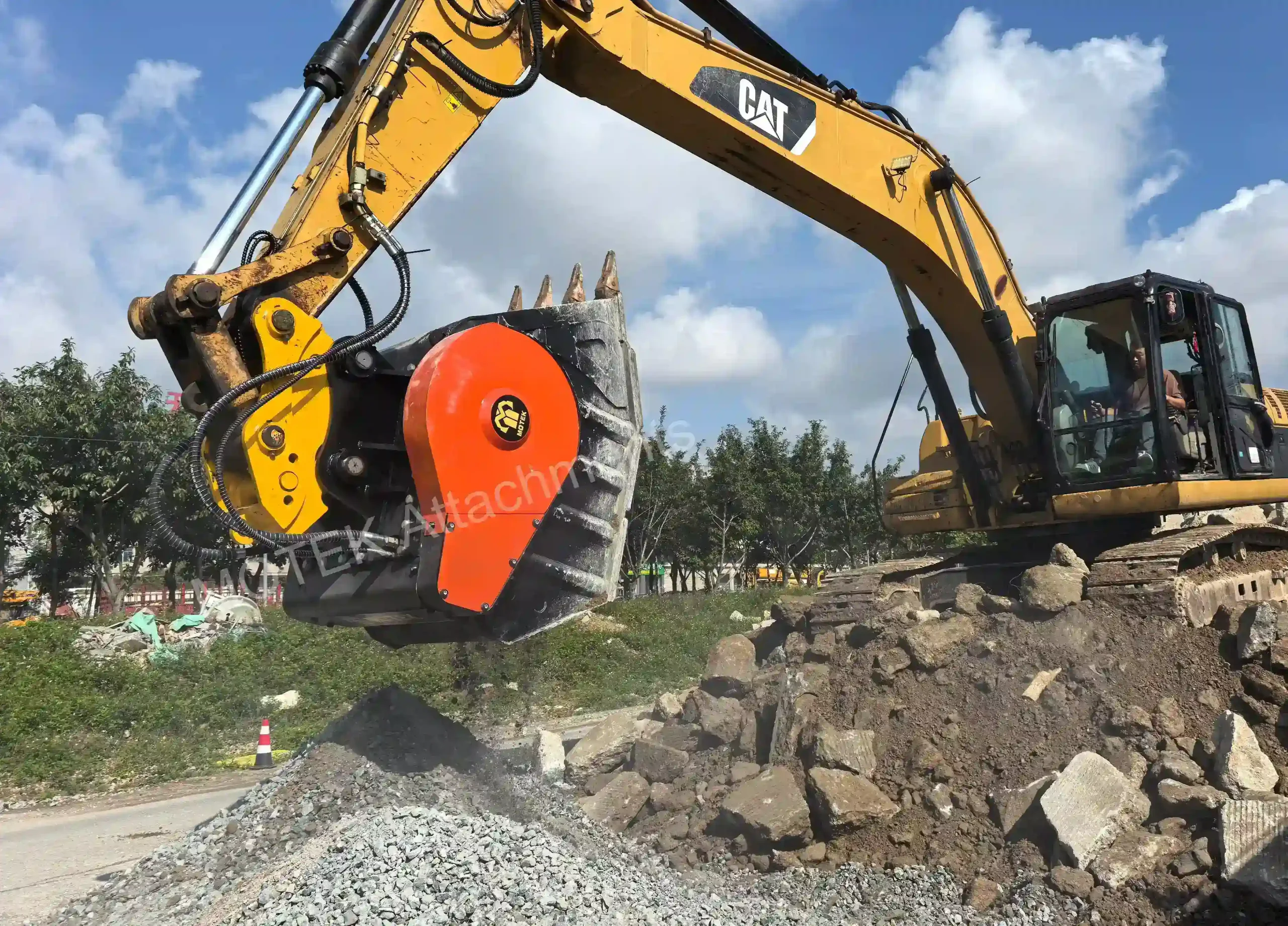
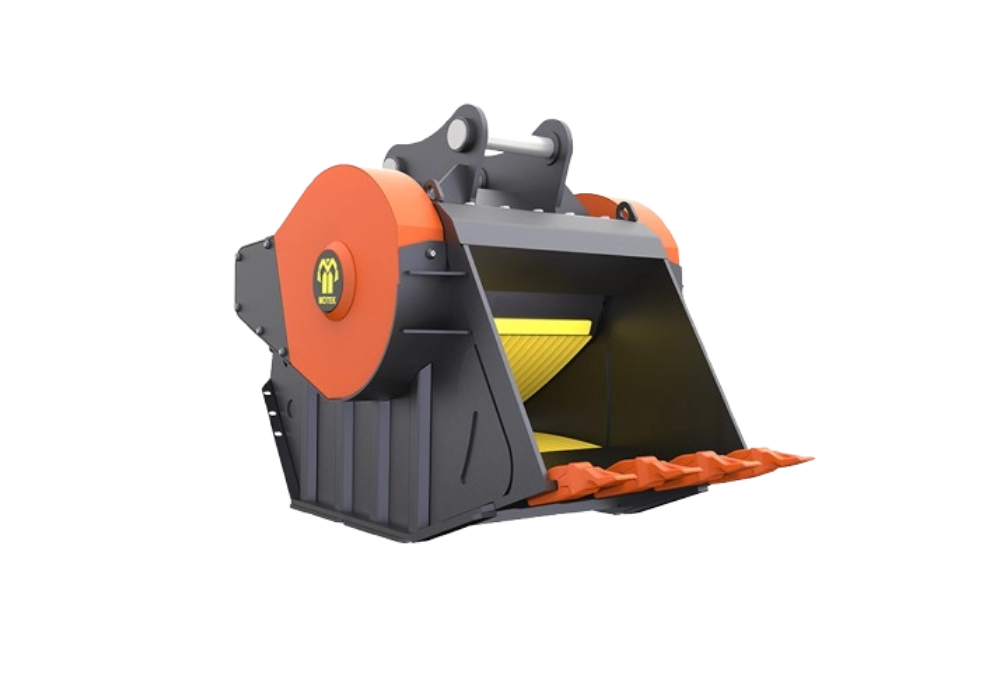
A crusher bucket is designed to break down hard, solid materials into smaller, manageable pieces. It operates much like a mobile jaw crusher attached directly to your excavator. When you scoop up large chunks of concrete, brick, asphalt, or natural rock, the powerful internal jaws crush the material against a fixed plate.
The primary goal here is volume reduction and material repurposing. Instead of paying to haul away large debris, you can crush it right on the job site. The resulting crushed material can then be reused immediately as base material for roads, walkways, or foundation backfill. This process saves significant transportation costs and reduces the need to purchase new aggregate.
The Role of a Screening Bucket
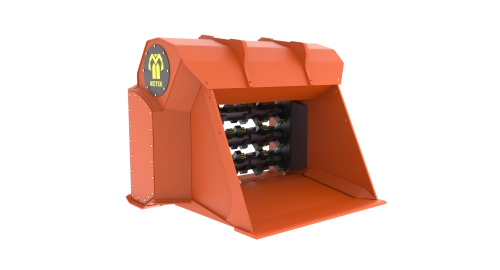
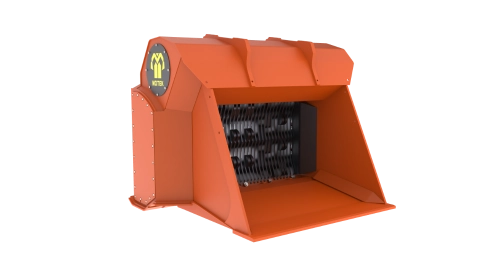
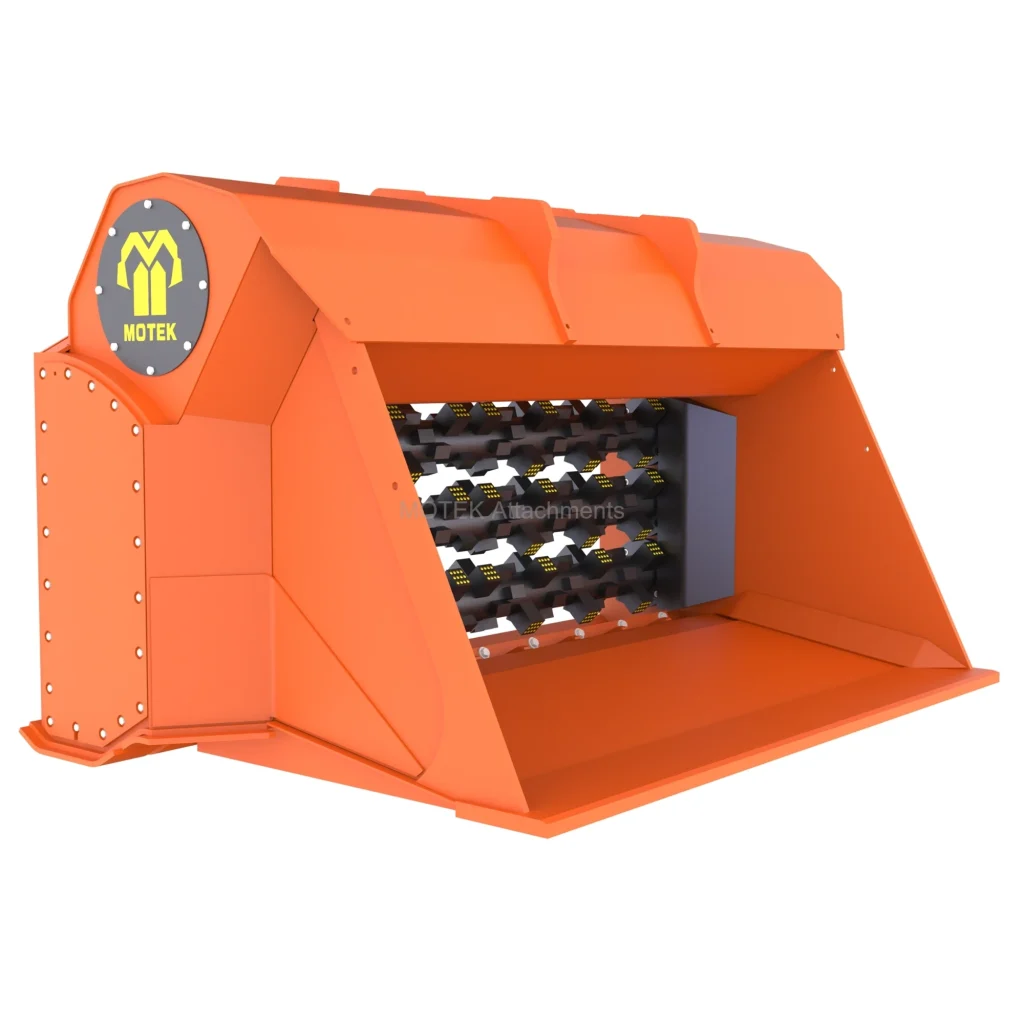
A screening bucket focuses on sorting and separating mixed materials rather than breaking them down. It usually features a rotating drum or a series of vibrating shafts with specific gap sizes. When you scoop up a load of mixed debris, the bucket sifts the material. The finer particles fall through the gaps, while the larger, oversized pieces remain inside the bucket.
This attachment is perfect for tasks that require material classification. Common applications include sifting topsoil from rocks and roots, separating demolition waste, cleaning beaches, or preparing compost. By separating the dirt and fine materials from the larger rubble, you get clean, usable soil and a separate pile of debris that is much easier to manage or process further.
The Main Differences in Application
The easiest way to understand the difference is to look at the primary action of each tool. The crusher bucket destroys and reduces the size of hard materials. The screening bucket categorizes and separates existing materials based on their size.
If your job site is full of large concrete slabs and heavy rocks that are too big to reuse or transport efficiently, you need the crushing power of a crusher bucket. If your job site consists of mixed dirt, rocks, and debris, and you need to salvage the clean topsoil while removing the junk, you need the sifting capability of a screening bucket.
Working Together for Maximum Efficiency
In many comprehensive recycling and demolition projects, these two Motek attachments work perfectly together. A highly efficient workflow often begins with the screening bucket. You can screen the mixed pile first to remove all the loose dirt and fine particles. This leaves only the clean, large rocks and concrete inside the bucket. You can then dump these large pieces into a pile, switch to your crusher bucket, and crush the clean rubble into high-quality aggregate. Processing materials in this order prevents dirt from clogging up the crusher jaws and ensures the final crushed product is clean and ready for immediate use.
Author

Lilly Liu
MOTEK Director of International Sales Equipped with 15 years of dedicated experience in the construction machinery industry, she has a deep understanding of global market dynamics and regional customer needs. She has successfully led teams to penetrate key international markets, particularly in promoting construction machinery attachments and securing high-value overseas orders.