

Common Screening Bucket Problems and How To Fix Them
Release time: 2026-02-25
جدول المحتويات
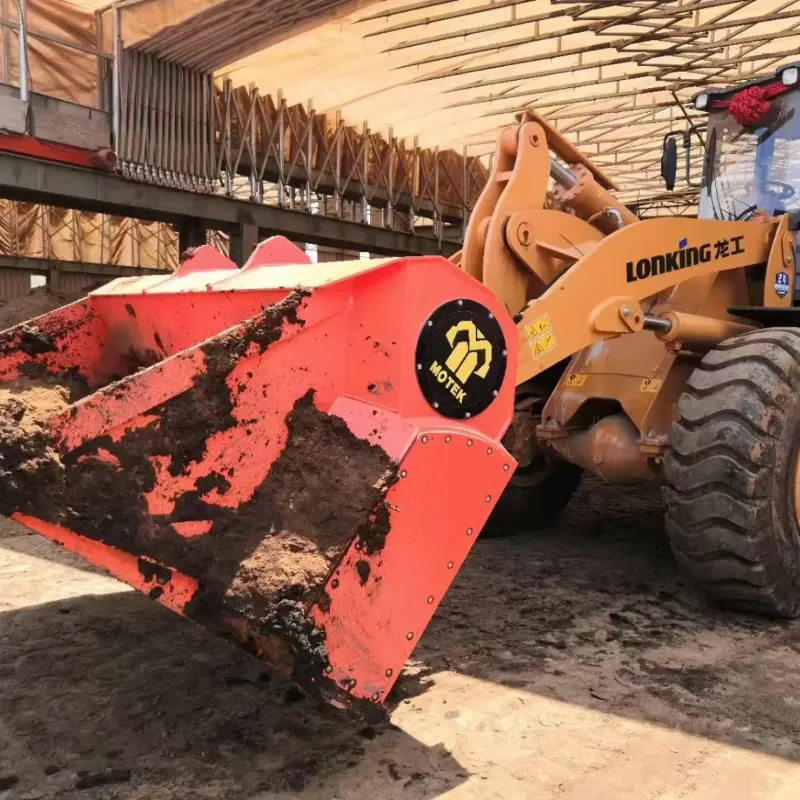
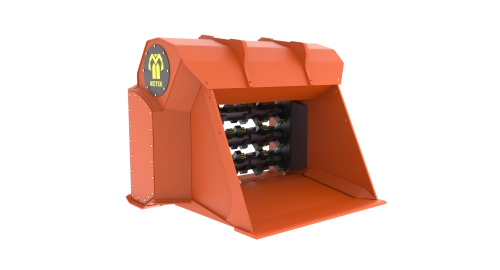
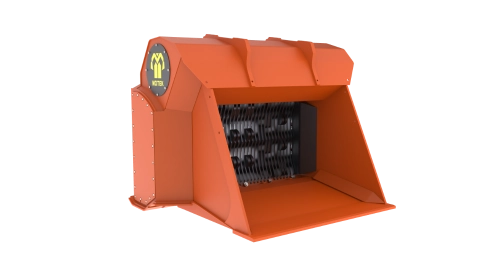
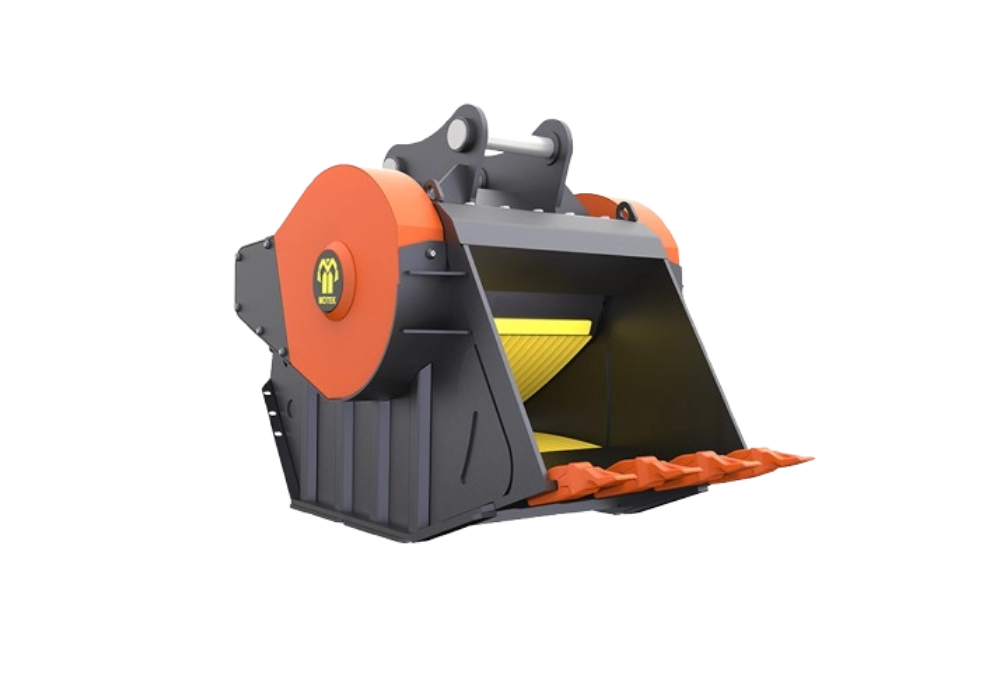
Screening buckets have become essential attachments in construction, demolition, recycling, and landscaping projects. Whether mounted on excavators, skid steers, or loaders, they allow operators to screen soil, sand, gravel, compost, and demolition waste directly on site—saving time and reducing hauling costs.
However, like any heavy-duty attachment, دلاء الفحص can experience performance issues if not operated or maintained properly. In this guide, we’ll walk through the most common screening bucket problems, explain why they happen, and provide practical solutions to help you maximize efficiency and extend equipment lifespan.
1. Screen Mesh Clogging
The Problem
Clogging is one of the most common issues operators face. Wet soil, clay-rich material, or organic waste can stick to the screen mesh, reducing throughput and lowering screening efficiency.
Why It Happens
- High moisture content in material
- Fine clay particles
- Incorrect drum or mesh size
- Low rotation speed
How To Fix It
1. Choose the Right Mesh Size
Using a mesh that is too small for the material type significantly increases clogging risk. Select the correct aperture size based on your output requirements.
2. Adjust Rotation Speed
If your screening bucket allows variable speed control, increasing rotation slightly can help loosen sticky material.
3. Reduce Moisture Content
Whenever possible, screen material in drier conditions. If not feasible, consider pre-drying or mixing with dry material.
4. Clean Regularly
After each shift, remove compacted debris manually or with low-pressure washing to prevent buildup.
Pro Tip: Anti-clogging polyurethane panels may perform better than steel mesh in high-moisture applications.
2. Low Screening Efficiency
The Problem
You notice that oversized material is passing through, or fine material is not being properly separated.
Why It Happens
- Worn screen mesh
- Incorrect drum configuration
- Overloading the bucket
- Improper tilt angle during operation
How To Fix It
Inspect Screen Wear
Over time, mesh openings expand due to wear. Replace screens that have visible deformation.
Avoid Overfeeding
Feeding too much material at once reduces effective screening time. Maintain a steady, moderate feed rate.
Maintain Proper Angle
Keep the bucket at the manufacturer-recommended tilt angle to allow proper material flow.
Check Hydraulic Performance
Ensure your excavator or loader provides adequate hydraulic flow. Insufficient power can reduce drum rotation efficiency.
3. Hydraulic System Issues
The Problem
The screening drum rotates slowly, inconsistently, or stops completely.
Why It Happens
- Hydraulic leaks
- Low hydraulic pressure
- Contaminated hydraulic oil
- Incorrect hose connections
How To Fix It
Inspect Hoses and Fittings
Look for leaks, cracks, or loose connections.
Check Hydraulic Flow Requirements
Make sure your carrier machine matches the bucket’s required flow and pressure specifications.
Replace Hydraulic Oil Filters
Dirty oil can damage motors and reduce efficiency.
Avoid Running Dry
Never operate the screening bucket without sufficient hydraulic fluid.
Regular hydraulic maintenance significantly extends motor life and reduces downtime.
4. Excessive Wear and Tear
The Problem
Structural components, teeth, or drum surfaces wear out faster than expected.
Why It Happens
- Screening abrasive materials (crushed concrete, granite)
- Poor-quality steel
- Lack of lubrication
- Continuous heavy-duty operation without rest periods
How To Fix It
Use Wear-Resistant Materials
High-strength steel or Hardox-type materials improve durability in abrasive applications.
Implement Routine Lubrication
Grease bearings and moving parts according to maintenance schedules.
Replace Wear Parts Early
Do not wait for complete failure. Preventive replacement reduces long-term costs.
Match Bucket to Application
Using a light-duty screening bucket for demolition waste will accelerate wear. Ensure correct model selection.
5. Incorrect Speed Adjustment
The Problem
Material either moves too quickly through the drum or stays inside too long.
Why It Happens
- Improper hydraulic flow setting
- Operator inexperience
- No variable speed control
How To Fix It
If your screening bucket supports adjustable speed:
- Lower speed for fine screening
- Increase speed for coarser material
- Test different RPM settings to find optimal balance
Operator training plays a crucial role. Even high-quality equipment can underperform if improperly adjusted.
6. Bearing Failure
The Problem
Unusual noise, vibration, or overheating near drum ends.
Why It Happens
- Lack of lubrication
- Contaminated bearings
- Overloading
- Prolonged high-speed operation
How To Fix It
- Follow strict greasing schedules
- Avoid washing directly into bearing seals
- Monitor temperature during long working shifts
- Replace damaged bearings immediately
Ignoring bearing issues can lead to complete drum failure.
7. Material Spillage and Uneven Output
The Problem
Screened material spills excessively or output size appears inconsistent.
Why It Happens
- Improper bucket positioning
- Worn side plates
- Uneven feeding
How To Fix It
- Keep bucket level during operation
- Repair or replace damaged side panels
- Ensure uniform material loading
Balanced feeding improves both productivity and material quality.
Preventive Maintenance Checklist
To avoid the above problems, follow this simple routine:
Daily:
- Visual inspection of mesh and drum
- Check hydraulic hoses
- Remove stuck debris
Weekly:
- Grease bearings
- Inspect wear parts
- Check bolt tightness
Monthly:
- Inspect hydraulic motor condition
- Evaluate screen wear
- Review performance efficiency
Preventive maintenance reduces downtime, increases ROI, and builds operational reliability.
How Proper Operation Improves ROI
Many screening bucket issues are not product defects but operational challenges. Correct mesh selection, proper hydraulic matching, and regular maintenance can increase productivity by 20–30% and significantly reduce repair costs.
For contractors working in soil recycling, demolition waste management, or aggregate processing, optimizing screening bucket performance directly impacts project timelines and profitability.
Choosing the Right Screening Bucket Supplier
When purchasing a دلو الفحص, consider:
- Steel quality and manufacturing standards
- Availability of replacement parts
- Technical support and training
- Hydraulic compatibility guidance
- Warranty coverage
A professional supplier will not only sell equipment but also provide application guidance and troubleshooting support.
Final Thoughts
Screening buckets are powerful, cost-saving tools—but only when properly maintained and operated. Understanding common problems such as screen clogging, hydraulic issues, bearing failure, and speed misadjustment helps operators prevent downtime and extend service life.
If you are currently facing screening efficiency issues or planning to upgrade your attachment, consulting with an experienced manufacturer can help you select the right model for your specific material type and machine configuration.
By addressing these common screening bucket problems proactively, you ensure higher productivity, lower maintenance costs, and improved project performance.
Author

Lilly Liu
MOTEK Director of International Sales Equipped with 15 years of dedicated experience in the construction machinery industry, she has a deep understanding of global market dynamics and regional customer needs. She has successfully led teams to penetrate key international markets, particularly in promoting construction machinery attachments and securing high-value overseas orders.